
Can You Install Carpet Tiles Over Concrete? A Commercial Project Guide
How moisture testing, slab preparation, adhesive selection, layout, and replacement planning shape a reliable commercial installation.
Pain Point Addressed
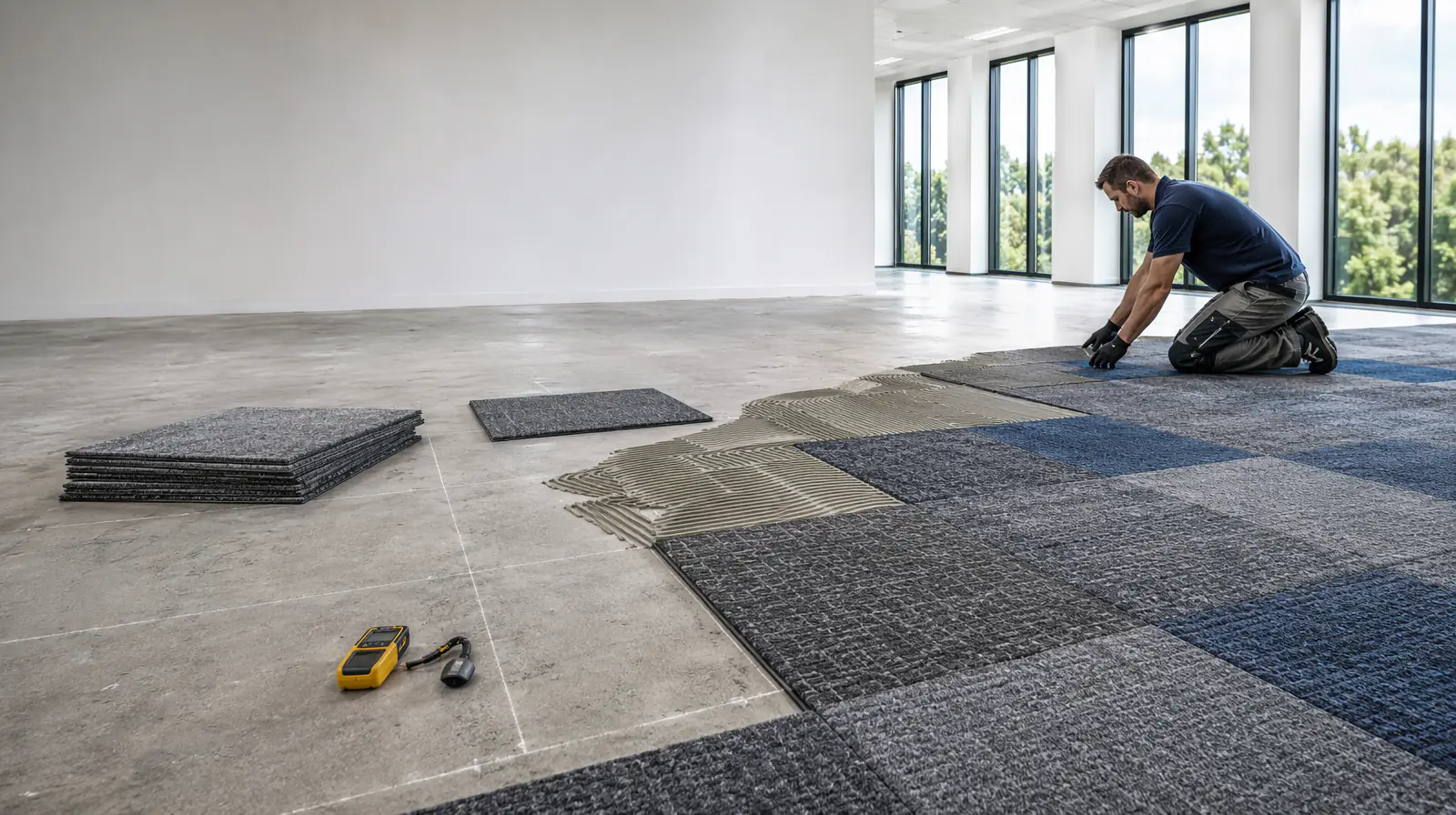
Concrete that looks dry can still transmit moisture, while old adhesive, uneven slabs, or an unapproved loose-lay method can cause movement, open joints, and curled tile edges.
Why This Installation Question Keeps Appearing
Flooring discussions on Reddit often begin with a simple question: can a project install carpet tiles over concrete without removing every trace of old glue or spreading a new layer of permanent adhesive?
The short answer is yes, but only when the slab, moisture level, backing system, and installation method are compatible. Concrete that looks dry can still transmit moisture. Old adhesive can create ridges or react with a new product. A loose tile may appear stable on day one but shift when exposed to rolling chairs, carts, strong vacuuming, or concentrated foot traffic.
For a commercial project, the installation method should be selected as part of the carpet specification, not improvised after the material reaches the site.
- The floor still needs to be flat. Modular carpet follows the shape beneath it, so adhesive residue and slab irregularities can remain visible after installation.
- The project still needs moisture testing. An older slab is not automatically a dry slab, especially when vapor barriers, plumbing, or HVAC conditions are uncertain.
- A no-glue method must be an approved system. Manufacturer-approved tabs or high-friction backings are engineered systems, not simply an omission of adhesive.
Start With the Concrete, Not the Carpet
Before installing carpet tiles over concrete, inspect the slab as a flooring substrate rather than treating it as a neutral surface.
1. Check Moisture and Alkalinity
Concrete can release moisture long after it appears cured. The appropriate test method and acceptable limit depend on the carpet backing, adhesive, and manufacturer requirements. Commercial specifications commonly refer to in-situ relative humidity testing such as ASTM F2170, calcium chloride testing where applicable, and pH testing.
Do not assume an old slab is dry. Plumbing leaks, ground moisture, changes to HVAC operation, and a missing vapor barrier can all affect conditions. If readings exceed the approved limits, the project may require a moisture mitigation system or a different backing and adhesive combination.
2. Remove Contamination
Dust, oil, curing compounds, paint, incompatible sealers, and chemical adhesive removers can weaken the bond. Grinding, scraping, priming, or encapsulating may be required, but the correct method depends on what is already on the floor.
3. Make the Surface Flat
Modular flooring follows the shape beneath it. High spots can create rocking corners, while depressions can show as uneven joints. Old adhesive ridges should be reduced to a thin, stable residue or covered using a compatible patching system when permitted.
Flat does not mean visually acceptable from standing height. Use the tolerance required by the product manufacturer and check the floor with the appropriate straightedge or laser method.
4. Stabilize Site Conditions
The building should be enclosed and the permanent HVAC system should be operating before installation. Carpet tiles, adhesive, and the slab need time to acclimate within the temperature and humidity range specified by the manufacturer.
Glue-Down, Releasable Adhesive, or Adhesive Tabs?
There is no single correct method for all carpet tiles over concrete. The right choice depends on traffic, tile backing, access requirements, and the approved installation system.
| Installation method | Best suited to | Main advantage | Main risk to manage |
|---|---|---|---|
| Pressure-sensitive adhesive | Offices, corridors, and larger commercial floors | Stable grid with individual tile replacement | Wrong coverage or open time can cause movement or difficult removal |
| Releasable adhesive | Flexible offices and projects expecting future replacement | Tiles can be lifted while remaining stable in use | Requires compatible backing, primer, and slab condition |
| Manufacturer-approved tabs | Raised access floors and selected modular systems | Less adhesive on the substrate and easier access | Not every tile or traffic condition is approved |
| Full-spread wet adhesive | Specific heavy-use systems where the manufacturer requires it | Strong permanent bond | More difficult future removal and strict adhesive control |
| Unapproved loose lay | Not recommended for normal commercial procurement | Fast initial placement | Edge curl, tile movement, open joints, and warranty problems |
The phrase loose lay can be misleading. Some modular systems are engineered to work with corner tabs or high-friction backings. That is different from placing a conventional tile on the slab with no restraint. Ask for written installation instructions for the exact product and backing.
Old Adhesive: Remove, Cover, or Reuse?
Old adhesive is one of the most common causes of disagreement when installing carpet tiles over concrete. The correct treatment depends on four questions:
- Is the old adhesive firmly bonded?
- Is it chemically compatible with the new adhesive?
- Are there ridges that prevent full tile contact?
- Is hazardous material suspected?
Reusing old adhesive as if it were a fresh pressure-sensitive layer is rarely a sound specification. Even when the surface still feels tacky, contamination and aging may have changed its performance.
The practical options are usually to scrape it to a stable residue, mechanically prepare the slab when safe, apply an approved sealer, or cover it with a compatible cementitious skim coat. The adhesive and carpet tile suppliers should confirm the final system in writing.
Tile Direction Matters
Reddit installation questions also frequently mention arrows printed on the back of the tile. Those arrows show pile direction and help create the intended visual result.
- Monolithic. All arrows face the same direction.
- Quarter turn. Each tile rotates 90 degrees from the next.
- Ashlar. Tiles run in the same direction with staggered joints.
- Brick. Joints are offset across the width.
- Random. Use only when the product is designed and approved for random installation.
Lay out a trial area before committing the full floor. Check the appearance from the main entrance and under the actual lighting. A correctly bonded floor can still look defective when pile direction is inconsistent with the selected pattern.
Plan for Replacement From Day One
One reason buyers choose commercial carpet tiles is the ability to replace a damaged section without removing an entire room. That advantage only works when replacement stock, dye-lot control, and adhesive access are planned.
For projects using carpet tiles over concrete, retain attic stock from the original production lot. Store it flat and dry, and document the product code, color, backing, installation direction, and adhesive.
A facilities team should also know how to release a tile without damaging adjacent joints. Replacing a stained tile with one from a different production lot or orientation can make the repair more visible than the original mark.
What to Include in the RFQ
Send the following information before requesting a final quotation:
- Total area and floor plan.
- Building type and expected traffic.
- Slab age and whether it is on, above, or below grade.
- Available moisture and pH test results.
- Existing coating, adhesive, or floor covering.
- Tile size, fiber, and backing preference.
- Required installation method.
- Rolling-chair, trolley, or raised-access-floor conditions.
- Destination and required delivery date.
- Quantity of replacement stock.
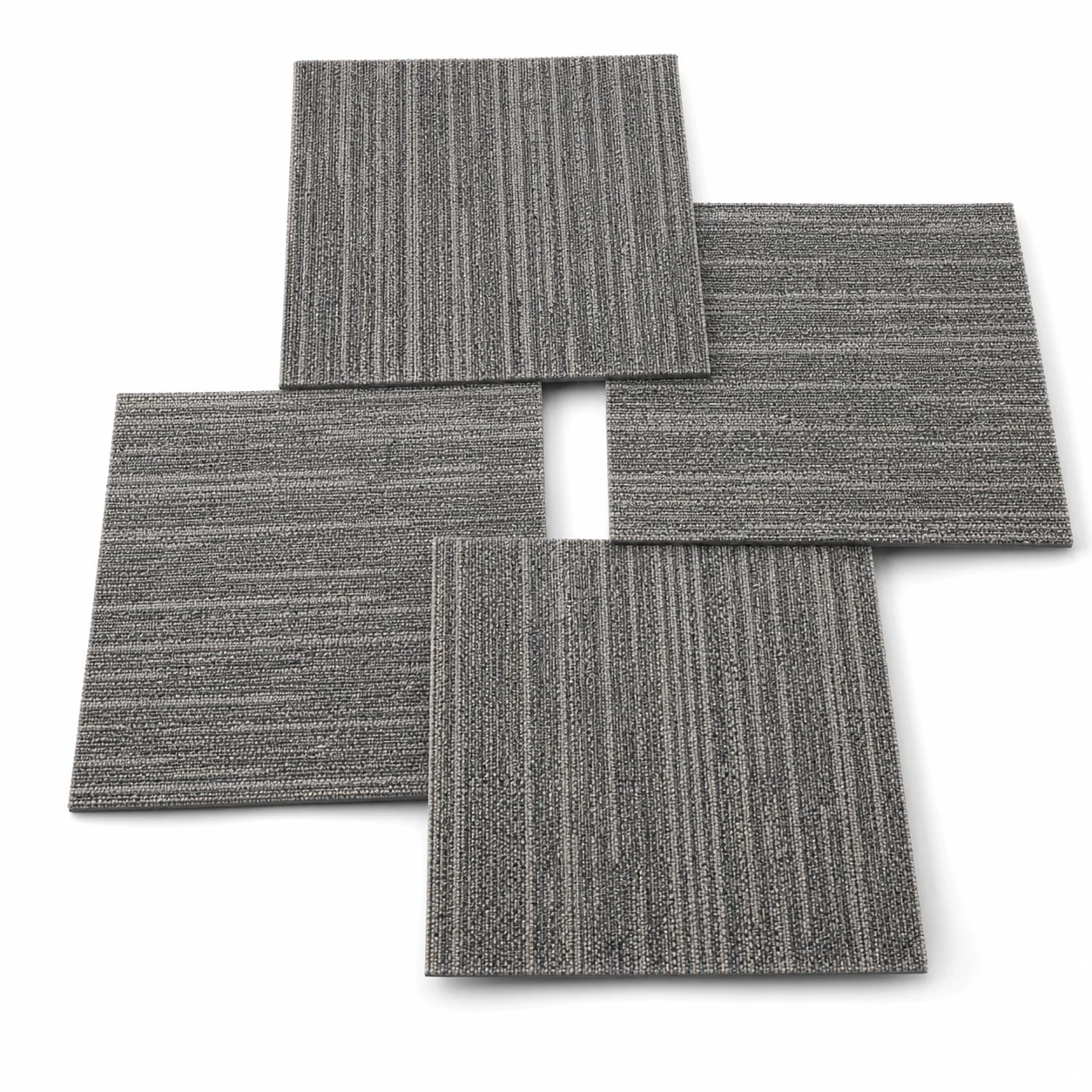
Vishome offers 50 x 50 cm carpet tile options and project-specific commercial nylon carpet tiles. Final installation requirements must be confirmed against the selected backing, adhesive, and site conditions.
Final Decision
Installing carpet tiles over concrete is a proven commercial flooring approach when the slab is tested, prepared, and matched to an approved system. The decision is not simply glue versus no glue. It is a coordinated choice involving moisture, surface condition, backing, adhesive, traffic, and future replacement.
Turn This Guide Into a Quote
Send Your Project Requirements After Reading This Guide
If this topic matches your project, send the carpet application, estimated area, destination, and required date. Vishome can recommend the related product path and reply with sample, MOQ, lead time, and quotation details.
Email: sales@vishomecarpet.com
Continue Your Specification
Related Products


Browse the Full Range