
Commercial Carpet Tile Backing Comparison: Bitumen, PVC-Free PE, and Cushion-Backed Systems
How procurement teams can compare backing by chair-wheel movement, moisture risk, installation method, comfort, replacement and project documentation.
Pain Point Addressed
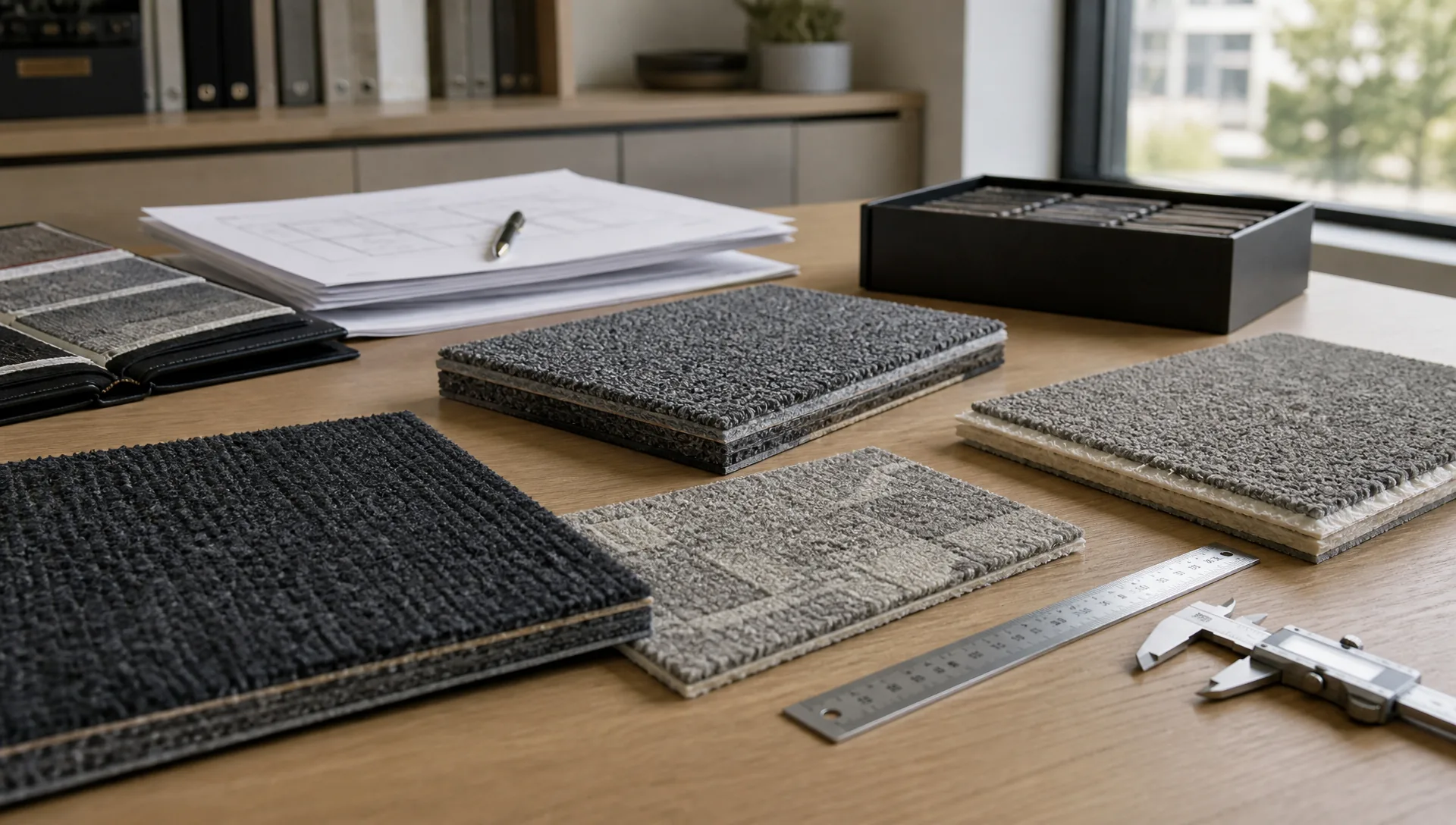
Commercial carpet tile quotations often look similar from the top. The risk appears underneath when backing, substrate, adhesive, traffic and replacement planning were never compared as one specification.
Answer First: Choose the Backing for the Project Risk
Commercial carpet tile backing should be selected from the way the floor will be used, installed and maintained, not from the visible color or a low unit price. A stable bitumen-backed construction may suit a busy office or circulation zone. A PVC-free PE-backed system may be useful when the project has specific material, sustainability or weight requirements. A cushion-backed construction may be worth considering when comfort and acoustic feel matter more than repeated chair-wheel movement.
Those are starting points, not universal rules. The exact fiber, pile, total thickness, backing build-up, adhesive and subfloor must be reviewed together. The same backing label can also cover different constructions from different manufacturers, so the quotation should identify the actual product and supporting documents.
| Backing direction | Often considered for | Main checks before approval |
|---|---|---|
| Bitumen-backed carpet tiles | Open offices, circulation zones and projects that value a dense, stable commercial tile construction | Tile stability, total weight, adhesive recommendation, substrate condition, moisture risk and removal expectations |
| PVC-free PE-backed carpet tiles | Projects with a PVC-free material preference, specific environmental documentation or a lighter modular system requirement | Exact construction, dimensional stability, fire and VOC documents, installation method and chair-wheel suitability |
| Cushion-backed or attached-cushion systems | Meeting rooms, hospitality areas and spaces where underfoot comfort or acoustic feel is important | Compression behavior, rolling-load suitability, moisture response, adhesive compatibility and replacement method |
The table is a procurement framework, not a substitute for the technical data of the nominated product. Ask the supplier to quote one exact construction and state any assumptions.
What the Backing Changes Under Real Project Conditions
The backing is the interface between the visible carpet surface and the building. It influences how the tile sits on the floor, how the adhesive or tackifier is selected, how the product reacts to moisture and temperature, and how a replacement tile behaves next to the original installation.
| Project factor | Why backing matters | What to ask in the RFQ |
|---|---|---|
| Rolling chairs and carts | Repeated movement can expose weak stability, edge movement or a construction that is too soft for the use zone. | Is the quoted tile intended for repeated caster or cart traffic? What pile, backing and installation conditions support that use? |
| Concrete and moisture | A slab can look dry while still transmitting moisture. Backing and adhesive assumptions must match the tested site condition. | What moisture limits, primer requirements, adhesive system and subfloor preparation are required? |
| Comfort and acoustics | A cushion layer can change underfoot feel and acoustic behavior, but it may also change compression and replacement expectations. | Is comfort or acoustic performance a project requirement? Which construction and test data support the recommendation? |
| Phased installation | Tiles may be installed in sections while the building remains occupied. Consistent batch, storage and replacement planning become important. | Can the supplier identify the production batch, reserve spare tiles and support later phases with the same specification? |
| Lease make-good or removal | The installation system may leave different residues or require different removal work at handover. | What installation and removal assumptions apply to this substrate and landlord requirement? |
| Technical approval | The project may need fire, VOC, sustainability, maintenance or product data documents tied to the exact construction. | Which documents are available for the quoted backing and product code, and are any limits or test conditions stated? |
When Bitumen-Backed Carpet Tiles May Be the Better Fit
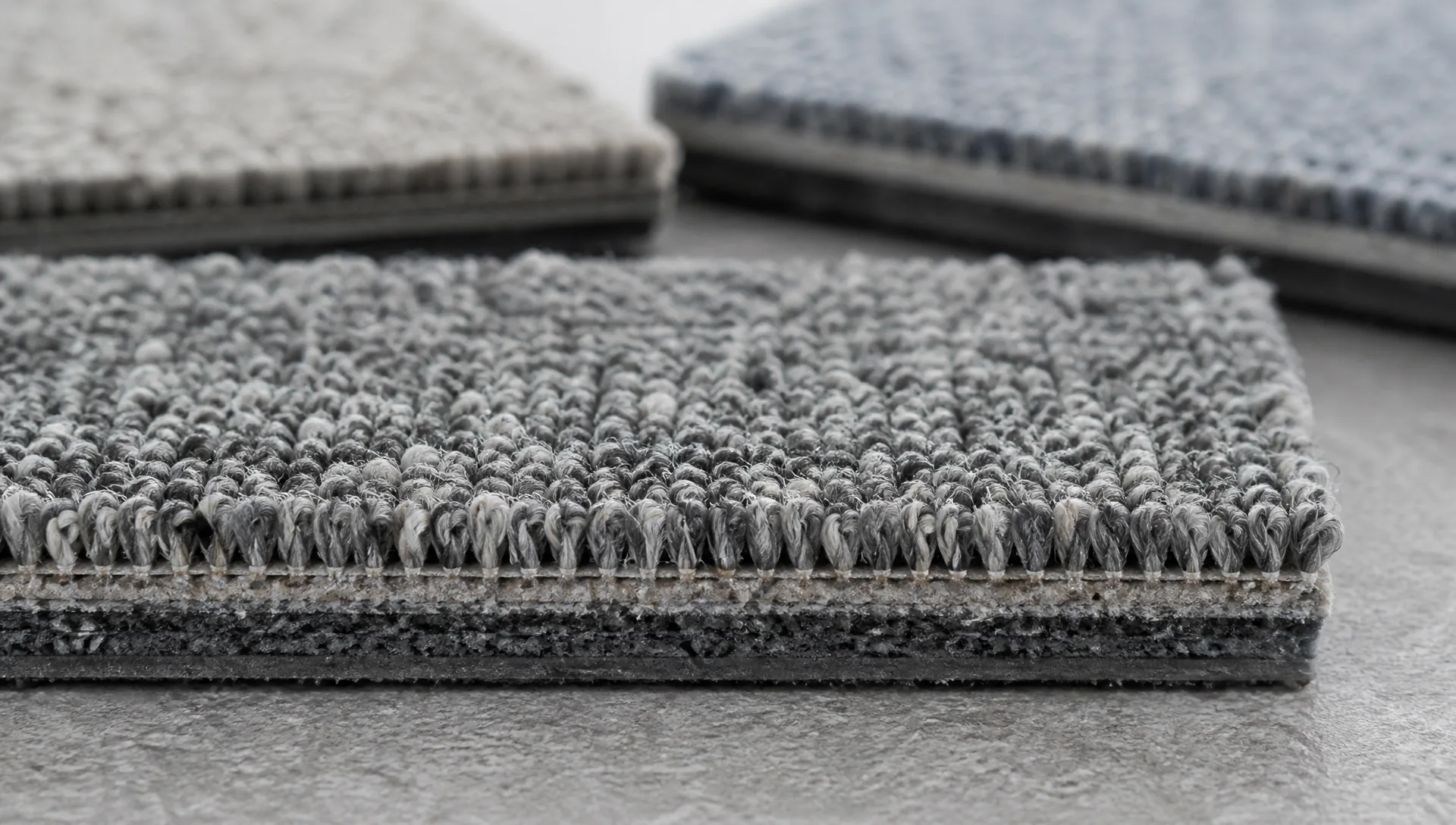
Bitumen-backed carpet tiles are commonly considered for commercial projects that need a dense modular tile construction, clear replacement planning and a floor that will see regular traffic. They can be a practical starting point for open offices, circulation routes and other areas where the buyer wants a stable tile system rather than a soft residential-style floor covering.
- Office workstations. Review the tile with the expected chair-wheel movement, pile profile, maintenance route and furniture layout rather than approving it from a loose color swatch.
- Circulation zones. Entrances, corridors and printer routes may need stronger appearance-retention and a spare-stock plan for concentrated wear.
- Modular replacement. Keep matching tiles from the approved batch and label cartons by product, color, batch and installation zone.
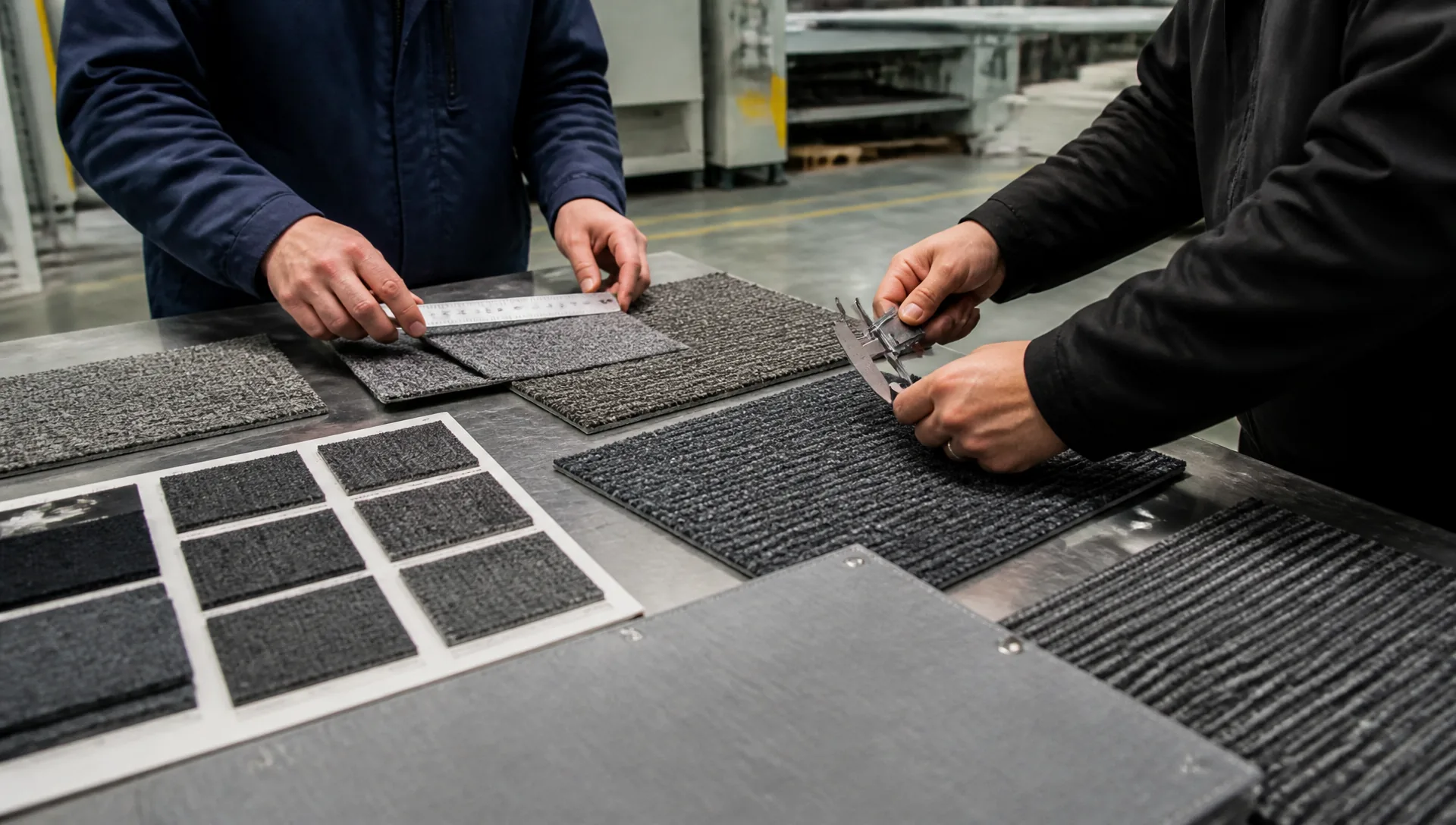
- Specification control. The quotation should state the exact tile size, fiber, pile, backing, total thickness, installation system and documents instead of only saying commercial carpet tile.
When PVC-Free PE Backing May Be the Better Fit
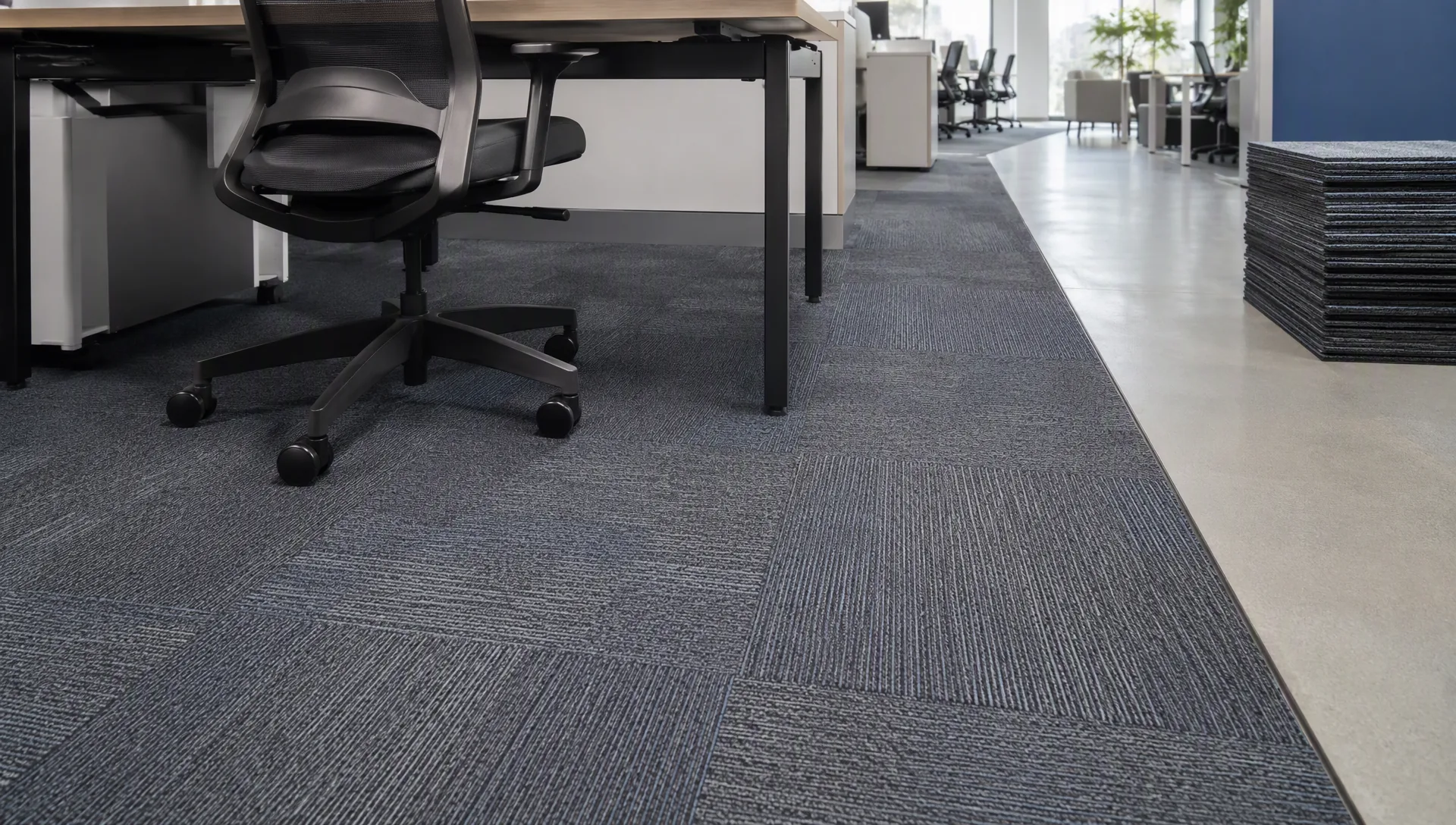
PVC-free PE-backed carpet tiles are often shortlisted when a project has a PVC-free material preference, a sustainability review or a specific product construction that uses PE as the backing system. The correct procurement question is not whether PE is automatically better. It is whether the nominated construction meets the project's traffic, installation, document and replacement requirements.
- Confirm the exact material statement. Ask the supplier to identify the backing material, product code and any relevant recycled-content, VOC or sustainability documentation that applies to the quoted product.
- Check stability in the real zone. For rolling chairs, public circulation and phased installation, review dimensional stability, pile construction and installation instructions together.
- Do not compare on material name alone. Two PE-backed tiles can differ in pile, total thickness, weight, adhesive requirement, fire documentation and intended use.
- Review end-of-life assumptions. If recyclability or take-back is part of the tender, ask what evidence is available for the exact construction and what the local project can realistically document.
For a project that needs a PVC-free route, the supplier should quote the material choice together with the technical data, sample reference, installation method and commercial terms. This gives the consultant or contractor something concrete to approve instead of a general environmental claim.
When Cushion-Backed Systems Deserve a Closer Look
Cushion-backed or attached-cushion carpet tiles can be useful when underfoot comfort, impact feel or acoustic character is important. They may be considered for meeting rooms, hospitality spaces, quiet offices and selected public interiors. The decision becomes more complicated in zones with heavy rolling loads, frequent furniture movement or uneven substrate conditions.
- Comfort is not the only requirement. Ask how the cushion responds to repeated compression and whether the construction is recommended for the actual traffic pattern.
- Check movement and transitions. Doorways, ramps, floor boxes and changes in flooring level must be reviewed with the total tile thickness and installation system.
- Confirm cleaning and drying conditions. A project with frequent wet cleaning or moisture exposure should follow the exact manufacturer's maintenance and installation guidance.
- Plan replacement before approval. A cushioned tile still needs matching spare stock, batch records and a replacement method that the facility team can carry out.
A Backing Comparison Checklist for Your RFQ
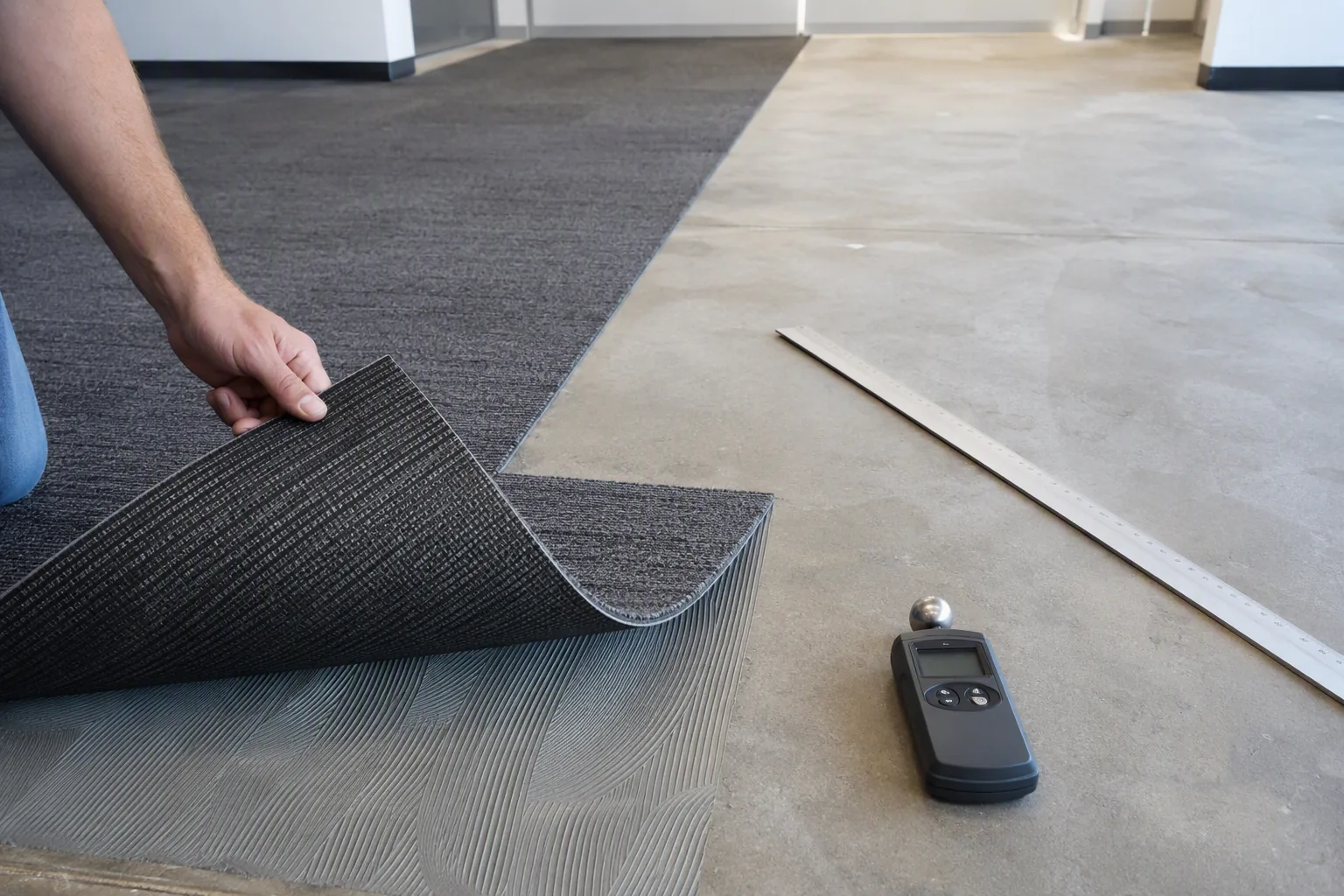
A useful RFQ makes suppliers quote the same construction. Include the questions below before requesting a unit price or approving a sample.
| RFQ field | What the buyer should state | Supplier response needed |
|---|---|---|
| Project zones | Open office, corridor, meeting room, retail, hotel support area or mixed use | Recommended backing and pile by zone, including any exceptions |
| Traffic | Foot traffic, rolling chairs, carts, furniture movement and concentrated wear areas | Suitability statement for the quoted construction and any limitations |
| Subfloor | Concrete, raised access floor, renovation substrate, moisture condition and flatness status | Preparation, primer, adhesive and installation assumptions |
| Backing | Preferred or required bitumen, PVC-free PE, cushion-backed or open comparison | Exact backing material, product code, total thickness and technical data |
| Documents | Fire, VOC, sustainability, TDS, maintenance and project approval requirements | Available documents tied to the exact product and construction |
| Samples | Swatch, full tile, mock-up, chair-wheel trial or trial area | Sample route, identification, delivery timing and approval steps |
| Commercial terms | Quantity, MOQ, spare stock, destination, target date, packing and Incoterm | Price basis, lead time, packing plan, quotation validity and assumptions |
If the supplier cannot identify the backing and installation assumptions, the price is not ready for a reliable comparison.
Buyer FAQ
Is a thicker carpet tile backing always better?
No. Thickness must be matched to traffic, chair movement, transitions, doors, installation method, comfort goals and the subfloor. A thicker construction can create a problem if it does not fit the surrounding floor levels or the project maintenance plan.
Which backing is best for rolling office chairs?
There is no universal answer. Start with a low-profile commercial pile and a dimensionally stable backing, then confirm the exact product's rolling-load suitability, installation method and maintenance requirements. A chair-wheel trial is more useful than judging from a decorative sample alone.
Are PVC-free PE-backed tiles automatically more sustainable?
Not automatically. Sustainability should be reviewed through the exact material statement, recycled-content or environmental documents, service life, replacement plan and end-of-life route available for the project. Ask for evidence tied to the quoted construction.
Can I use the same backing throughout an office?
Sometimes, but a single office may contain workstation lanes, entrances, corridors, meeting rooms and refreshment areas with different risks. A zone-based specification can be more reliable than forcing one construction into every location.
What should I send to get a useful backing recommendation?
Send the floor plan or area by zone, traffic description, chair or cart use, subfloor condition, target tile size, preferred materials, document requirements, destination, target delivery date and whether you need samples or a trial area.
Request a Commercial Carpet Tile Backing Comparison
Vishome can help compare commercial carpet tile constructions against the actual project use case. Send your zone map, area, traffic, backing preference, subfloor condition, sample requirement, destination and target date. The project team can then prepare a clearer product, documentation and quotation path instead of sending a generic tile price.
Turn This Guide Into a Quote
Send Your Project Requirements After Reading This Guide
If this topic matches your project, send the carpet application, estimated area, destination, and required date. Vishome can recommend the related product path and reply with sample, MOQ, lead time, and quotation details.
Email: sales@vishomecarpet.com
Continue Your Specification
Related Products


Browse the Full Range