
The Hidden Cost of Cheap Carpets: Why Replacing Floor Coverings After 3 Years Destroys Hospitality ROI
Lifecycle economics behind flooring decisions in hospitality assets.
Pain Point Addressed
Low upfront price but high replacement frequency and service disruption.
Direct Answer: Compare Hospitality Carpet by Total Cost and Risk
A low carpet quotation is not automatically a low-cost hospitality decision. Hotel buyers should compare the exact construction, expected service conditions, replacement scope, installation access, cleaning program, spare material, freight, and documentation. The lowest initial figure becomes expensive when it creates premature replacement, repeated closure, visible mismatch, or a specification dispute.
| Tender question | Low-bid risk | Procurement control |
|---|---|---|
| Is the construction identical? | Different fiber, pile weight, backing, or density is hidden behind a similar image | Require a construction schedule and approved physical sample |
| Is the application defined? | Guestroom, corridor, ballroom, and lobby traffic are treated as one specification | Create zone-specific requirements and quantities |
| Are documents included? | Required fire or material documents are assumed but not identified | List the exact destination standard and documents in the RFQ |
| Is replacement planned? | Roll layout, pattern repeat, attic stock, and future matching are ignored | Approve the roll plan, waste allowance, batch record, and spare material |
This framework identifies cost exposure. It does not predict a universal service life because traffic, cleaning, installation, and construction vary by project.
Separate the Hotel into Performance Zones
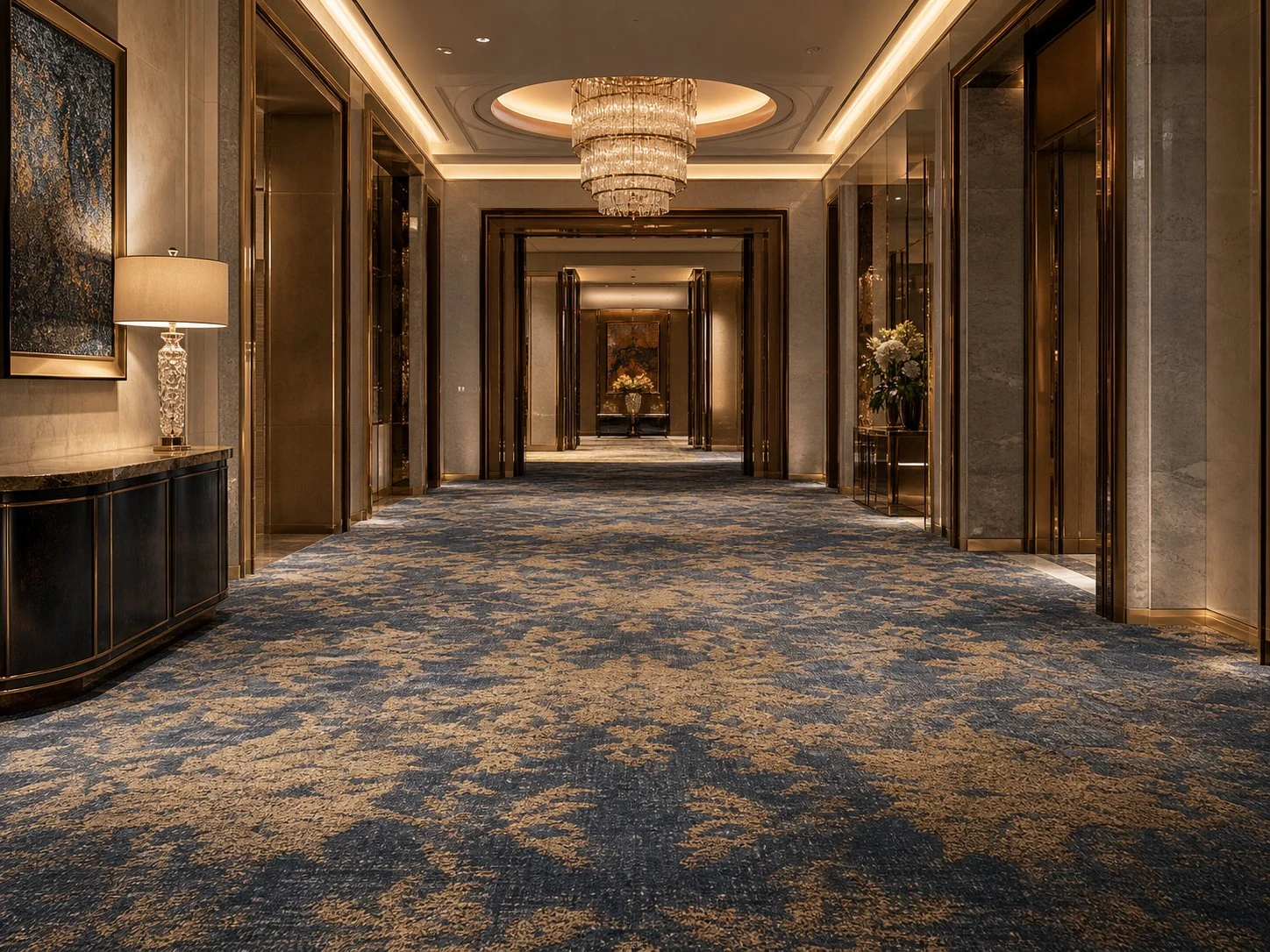
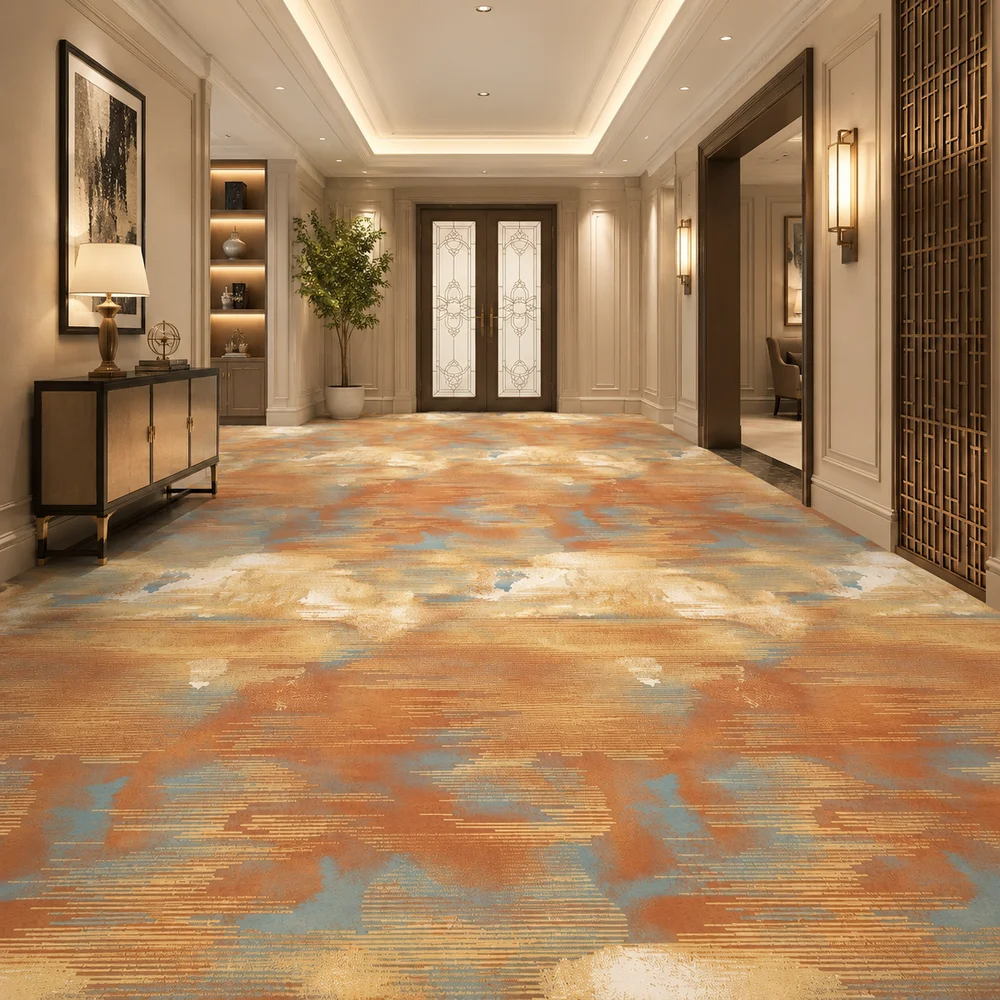
A hotel carpet specification should not use one generic requirement for every area. Guestrooms may prioritize comfort and design coordination; corridors add luggage-wheel traffic and long roll planning; ballrooms add dense event traffic and pattern-scale control; lobby and public circulation zones need their own soil, cleaning, and appearance-retention review.
| Hotel zone | Main buyer concern | Information to send for quotation |
|---|---|---|
| Guestrooms and suites | Comfort, visual coordination, room-by-room installation | Room plans, area, construction preference, color direction, and renovation schedule |
| Corridors and lift lobbies | Continuous traffic, luggage wheels, repeat alignment, roll waste | Corridor dimensions, door positions, roll width, artwork, and installation sequence |
| Ballrooms and banquet areas | Dense traffic, movable furniture, event operations, pattern scale | Floor plan, event use, construction, artwork, fire requirement, and deadline |
| Lobby and public circulation | Soil entry, appearance retention, cleaning access, local repair strategy | Entrance conditions, traffic routes, cleaning method, material brief, and required documents |
When areas have different risks, they may need different carpet constructions even if the visual language is coordinated. A supplier should explain the proposed build for each zone rather than applying a decorative image to an unspecified base product.
Build a Defensible Hotel Carpet Cost Model
- Supply Record the quoted construction, price unit, project quantity, waste, packing, and Incoterm.
- Approval Include artwork development, strike-off or sample, color approval, testing, and project-document review.
- Installation Include subfloor preparation, adhesive or underlay, roll planning, pattern alignment, labor, access, and protection.
- Operation Estimate routine cleaning, periodic extraction, stain response, drying, equipment, and restricted-area time.
- Replacement Model local repair or zone replacement, removal, disposal, freight, matching risk, and operating disruption.
Frequently Asked Hospitality Procurement Questions
Does a higher carpet price guarantee a longer service life?
No. Price alone does not prove construction, suitability, installation quality, cleaning compatibility, or service life. Compare the written specification, sample, project documents, and operating conditions.
Should guestrooms and corridors use the same carpet?
They may share a design direction, but the construction and roll planning should be checked separately. Corridors usually add sustained circulation, luggage wheels, long pattern runs, doors, turns, and higher replacement disruption.
What is the most common tender comparison mistake?
Comparing unit prices without confirming that fiber, pile, backing, weight, width, pattern repeat, test documents, quantity, packing, and trade terms are equivalent.
When should a hotel request a sample or strike-off?
Before bulk approval. The buyer should use the sample or strike-off to review color, pattern scale, surface, construction, and the reference used for production approval.
What information produces a more accurate quotation?
Provide the destination, floor plans, zone areas, construction preference, pattern files, color references, roll-width constraints, fire standard, project schedule, quantity, packing, and preferred Incoterm.
Turn This Guide Into a Quote
Send Your Project Requirements After Reading This Guide
If this topic matches your project, send the carpet application, estimated area, destination, and required date. Vishome can recommend the related product path and reply with sample, MOQ, lead time, and quotation details.
Email: sales@vishomecarpet.com
Continue Your Specification
Related Products

Browse the Full Range