
Hotel Corridor Carpet Design: Noise, Stains, and Guest Experience
A practical hotel flooring guide for balancing acoustic comfort, visible soil control, pattern selection, durability, and maintenance planning.
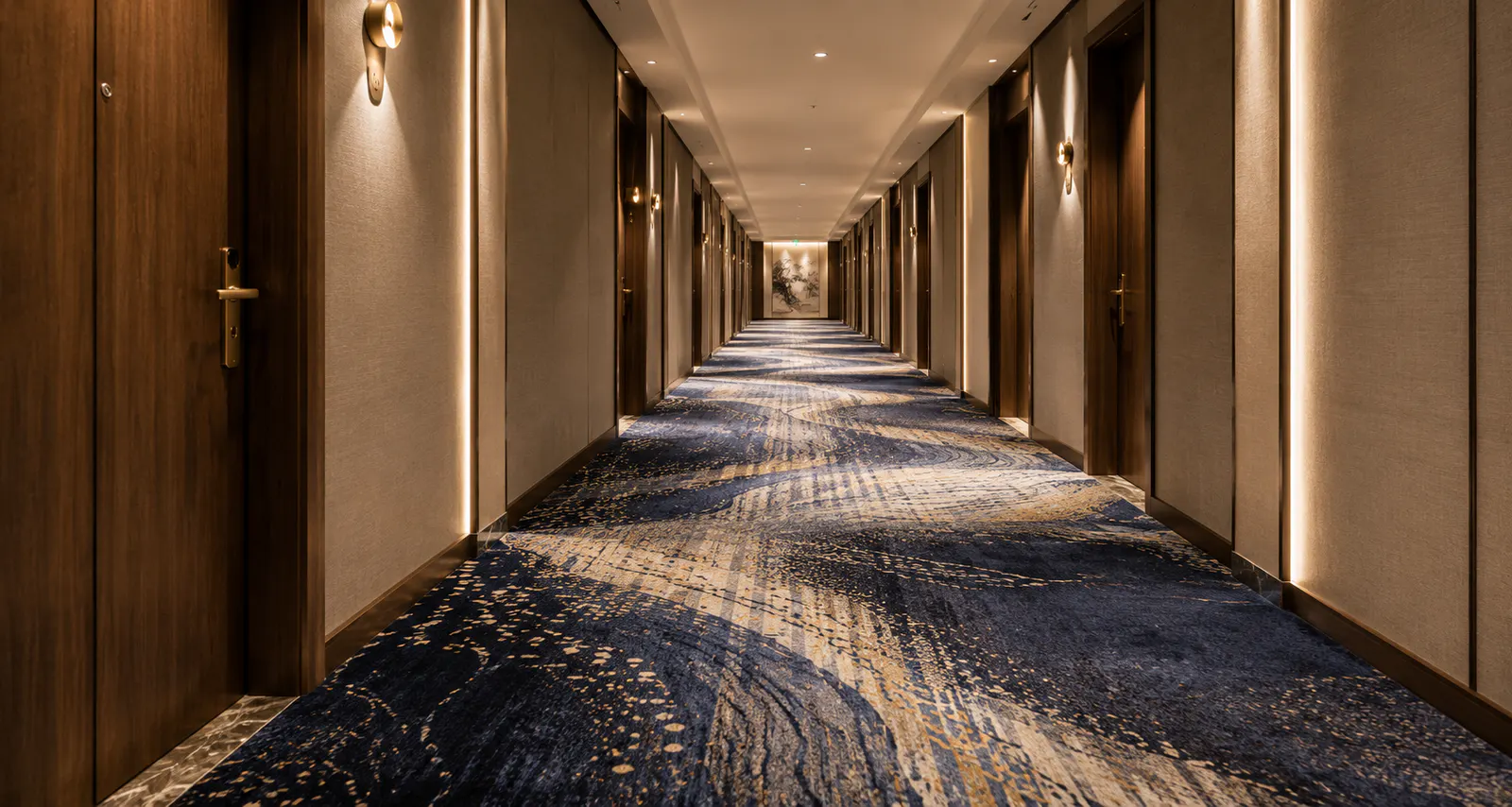
Pain Point Addressed
Hotel corridor flooring must reduce guest noise complaints, hide daily soil, survive luggage and housekeeping traffic, and still support the property's design identity.
Why Corridors Need a Different Carpet Strategy
Hotel guests rarely talk about flooring when everything is working well. But when the flooring is wrong, they notice it quickly. Online hotel discussions often mention hallway noise, luggage wheels, door slams, visible stains, and dated corridor design.
For hotel owners, these complaints are not only decoration problems. They affect reviews, comfort, maintenance cost, and brand perception. A well-planned hotel corridor carpet can solve several of these problems at once.
Corridors receive different traffic from guestrooms. They handle rolling luggage, housekeeping carts, food service movement, late-night footsteps, and repeated cleaning. The carpet must look good under artificial lighting, reduce noise near guestroom doors, and hide everyday soil without making the corridor feel heavy.
Noise Is Part of the Guest Experience
Many guests complain about hallway noise more than they complain about visual design. Footsteps, conversations, and luggage wheels can travel through long corridors, especially when the floor surface is hard.
Carpet helps soften this experience. A properly selected hotel corridor carpet can reduce the sharp sound of movement and make the corridor feel calmer. This is especially important near guestrooms, elevator halls, and long passageways where sound can echo.
Pattern Choice: Hide Soil Without Looking Chaotic
Hotel carpet patterns often fail in two opposite ways. Some are too plain, so stains and wheel marks become obvious. Others are too busy, making the corridor feel dated or visually uncomfortable.
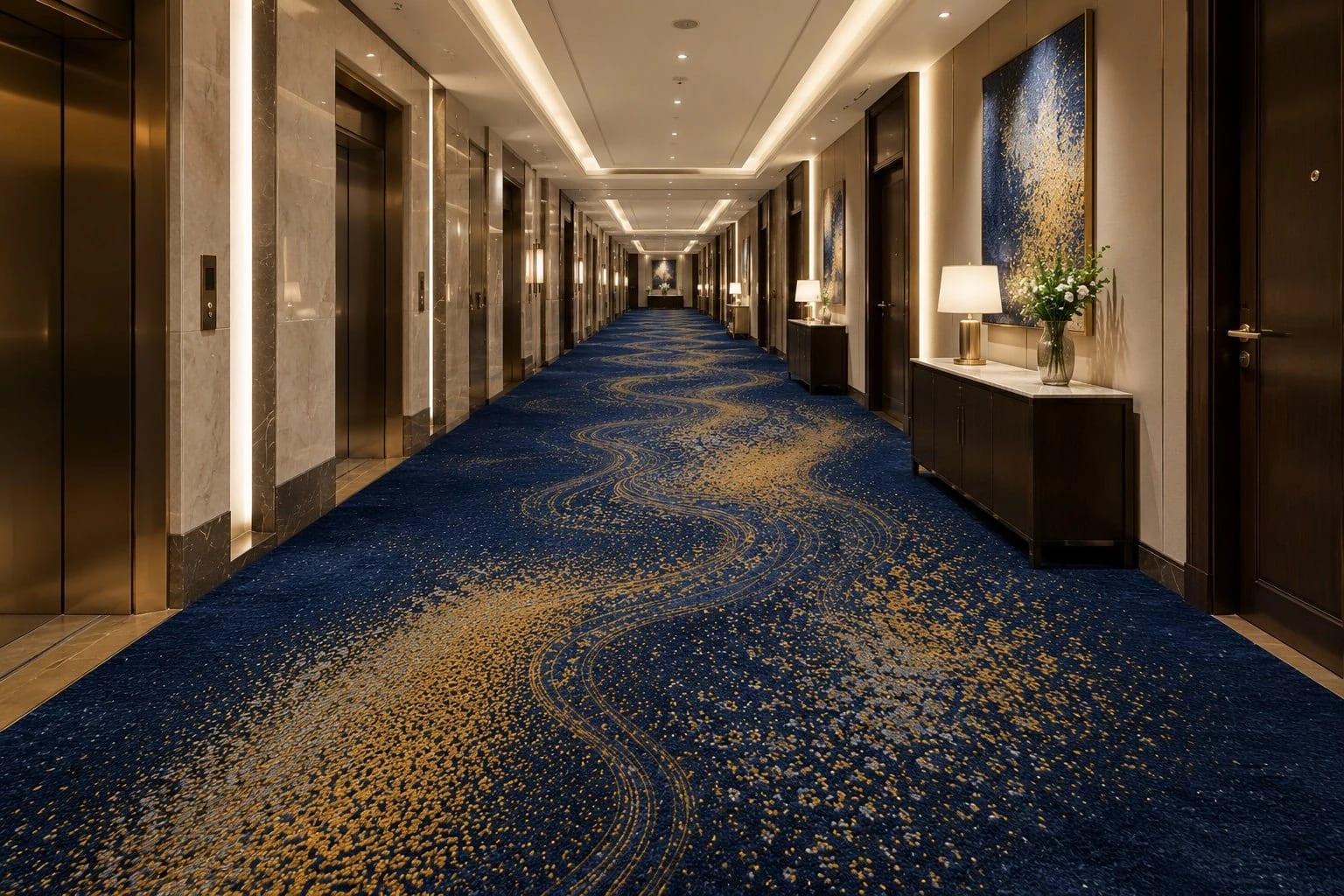
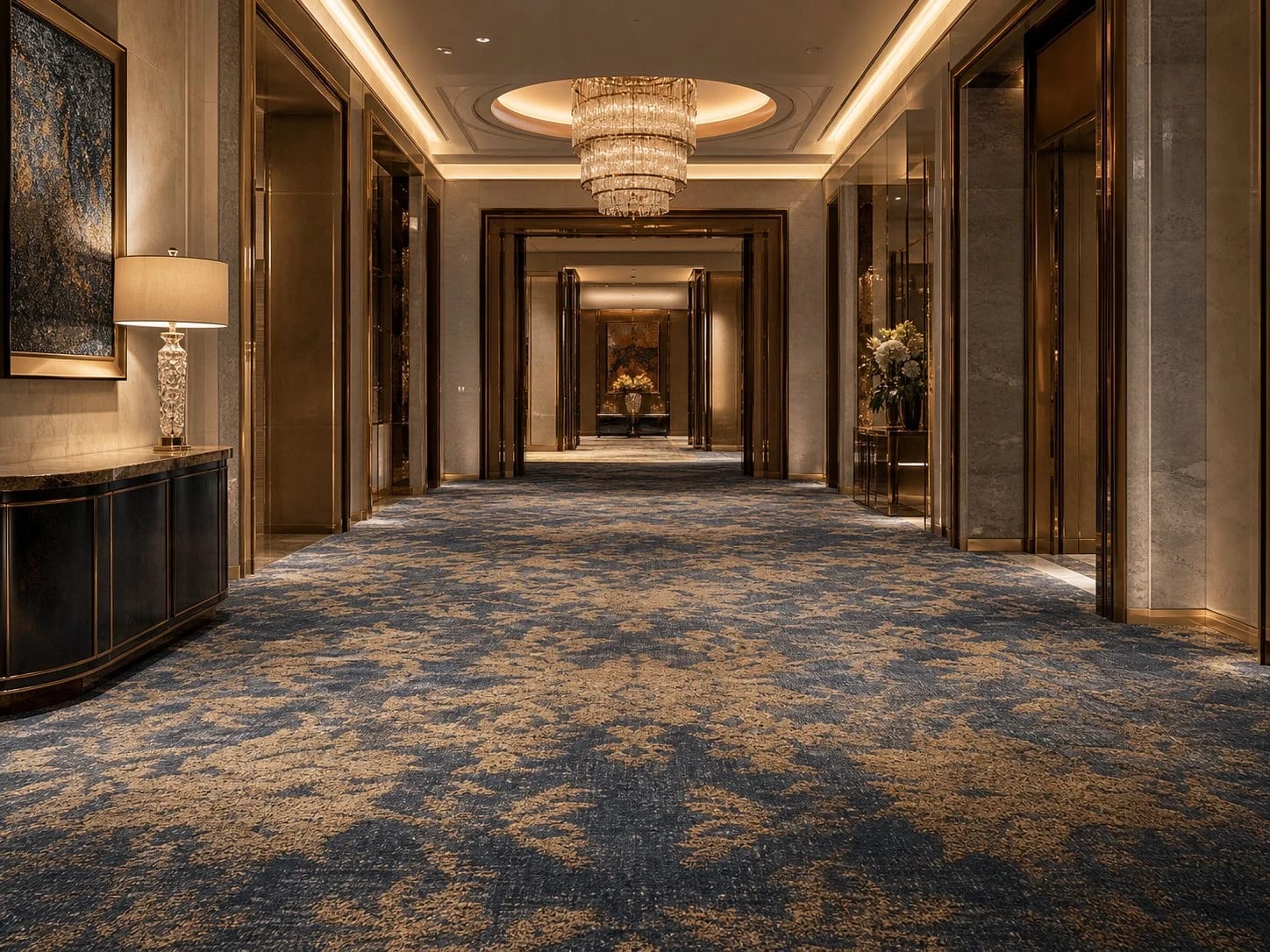
The best hotel corridor carpet pattern usually sits in the middle: enough movement to hide traffic soil, but controlled enough to support the hotel brand. For business hotels, this may mean quiet geometric lines. For luxury hotels, it may mean layered texture, soft contrast, and custom colors. For resort hotels, the pattern can be warmer and more expressive.
- Too plain. Wheel marks, soil, spot cleaning edges, and color variation become easier to see.
- Too chaotic. The corridor can look visually dated and may compete with doors, lighting, and wall finishes.
- Balanced pattern. Controlled contrast hides daily use while still feeling intentional and premium.
Durability Comes From Specification, Not Just Thickness
A thicker carpet is not automatically a better carpet. For corridors, density, fiber performance, backing stability, and installation method matter more than a soft surface feel. Corridors need carpet that can handle repeated compression from luggage wheels and carts.
When selecting hotel corridor carpet, buyers should ask whether the fiber is suitable for commercial traffic, whether the pattern hides daily soil, whether the backing is stable for long corridor installation, and whether repair can be handled without large downtime.
| Specification area | Why it matters | Buyer question |
|---|---|---|
| Fiber and pile construction | Controls crush resistance, appearance retention, and cleaning response | Is this construction suitable for corridor traffic and luggage wheels? |
| Pattern and color depth | Helps hide soil, spot-cleaning marks, and trolley paths | Will this design still look clean under corridor lighting? |
| Backing and installation | Keeps long runs stable and helps manage joins and edge details | What backing and installation method are recommended for this corridor? |
| Spare material | Supports future repair and phased maintenance | How much attic stock should the hotel keep from the same batch? |
Maintenance Planning Before Installation
Maintenance should be planned before the first roll is installed. Hotels should keep spare material, define cleaning schedules, and identify high-risk zones such as elevator entrances, service doors, breakfast routes, and housekeeping paths.
A good hotel corridor carpet maintenance plan includes regular vacuuming, spot cleaning, periodic deep cleaning, and quick repair of damaged sections. When the design includes a practical pattern and suitable color depth, the corridor can look clean for longer between maintenance cycles.
- Confirm corridor traffic type and service routes before final design approval.
- Use a pattern scale that works from both room doors and elevator lobbies.
- Keep spare roll material or tiles from the same production batch.
- Set cleaning frequency for high-use zones instead of treating the corridor as one uniform area.
- Review lighting temperature because warm or cool light can change how carpet colors read.
Matching Corridor Carpet With Guestrooms and Public Areas
The corridor is the transition between public space and private guestroom. It should not feel like an afterthought. The carpet design should connect visually with the lobby, elevator hall, and guestroom entrance.
For hotels using wall-to-wall carpet in guestrooms, the hotel corridor carpet can share a color family while using a stronger pattern for traffic control. For hotels using hard flooring in guestrooms, corridor carpet becomes even more important for softening the acoustic feel of the floor.
A strong hospitality flooring plan treats corridors as part of the guest journey. The floor should guide movement, protect comfort, support the brand, and stay maintainable for the operations team.
Final Recommendation
A hotel corridor floor has to work harder than most people realize. It must reduce noise, hide soil, support brand design, and survive constant traffic. The right hotel corridor carpet helps the hotel feel quieter, cleaner, and more carefully managed.
Vishome Carpet provides wall-to-wall hotel carpet and custom hospitality carpet solutions for corridors, guestrooms, and public areas. Buyers can prepare floor plans, corridor widths, target design style, traffic conditions, and delivery schedule before requesting a quotation.
Continue Your Specification
Related Products
Browse the Full Range