
How to Choose Hotel Corridor Carpet That Hides Stains Without Looking Dirty
A procurement-first guide for hotel corridor carpet buyers who need stain control, guest confidence, realistic maintenance, and a corridor that still feels premium after daily traffic.
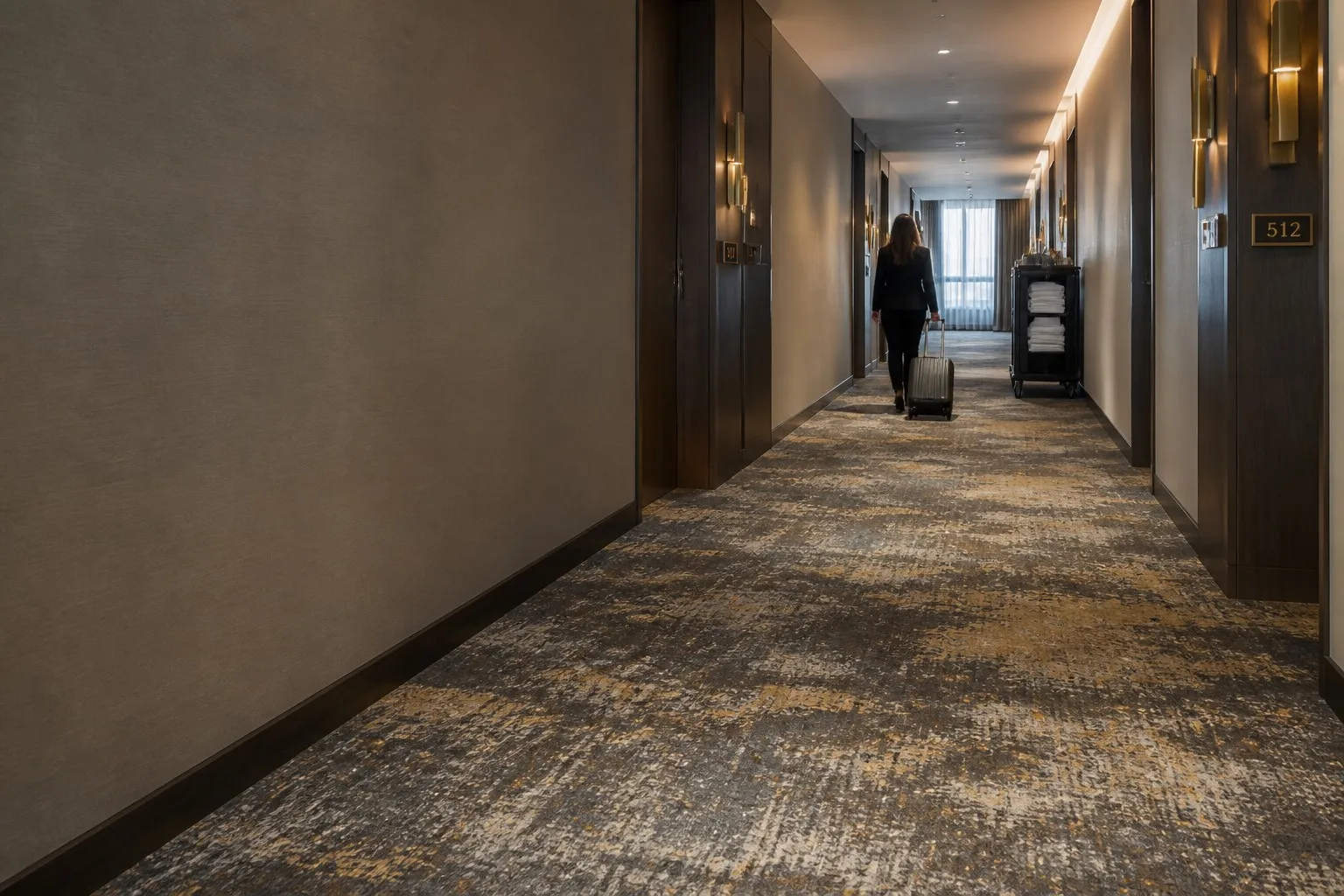
Pain Point Addressed
Hotel carpet complaints often come from the gap between showroom approval and real corridor operation: luggage wheels, coffee drips, wet shoes, dim lighting, and cleaning schedules can make the wrong carpet look dirty even when the hotel is maintained.
Answer First: Stain Hiding Is a Full Specification
The best hotel corridor carpet for stain hiding is not the darkest carpet or the busiest pattern. It is a balanced specification that combines medium-to-deep color depth, multi-tone pattern movement, commercial fiber, stable backing, realistic cleaning access, and a replacement plan for high-traffic zones.
For procurement teams, the practical question is simple: will the corridor still look acceptable after luggage wheels, wet shoes, coffee drips, vacuum paths, cleaning cycles, and lighting changes? A good hotel corridor carpet specification answers that question before the purchase order is approved.
Why Guests Notice Carpet Even When They Do Not Name It
Reddit discussions from hotel guests and front-desk staff often return to the same feeling: some hotel carpets look dirty even when the room or corridor has technically been cleaned. People mention dark patches, musty impressions, sticky floor feel, visible spill marks, and the uncomfortable suspicion that old carpet is hiding too much.
Those conversations are useful for buyers because they separate two problems. The first is actual cleaning failure. The second is visual failure. A carpet may be vacuumed and maintained, yet still communicate neglect if the color, pattern, pile, and lighting make normal wear look like dirt.
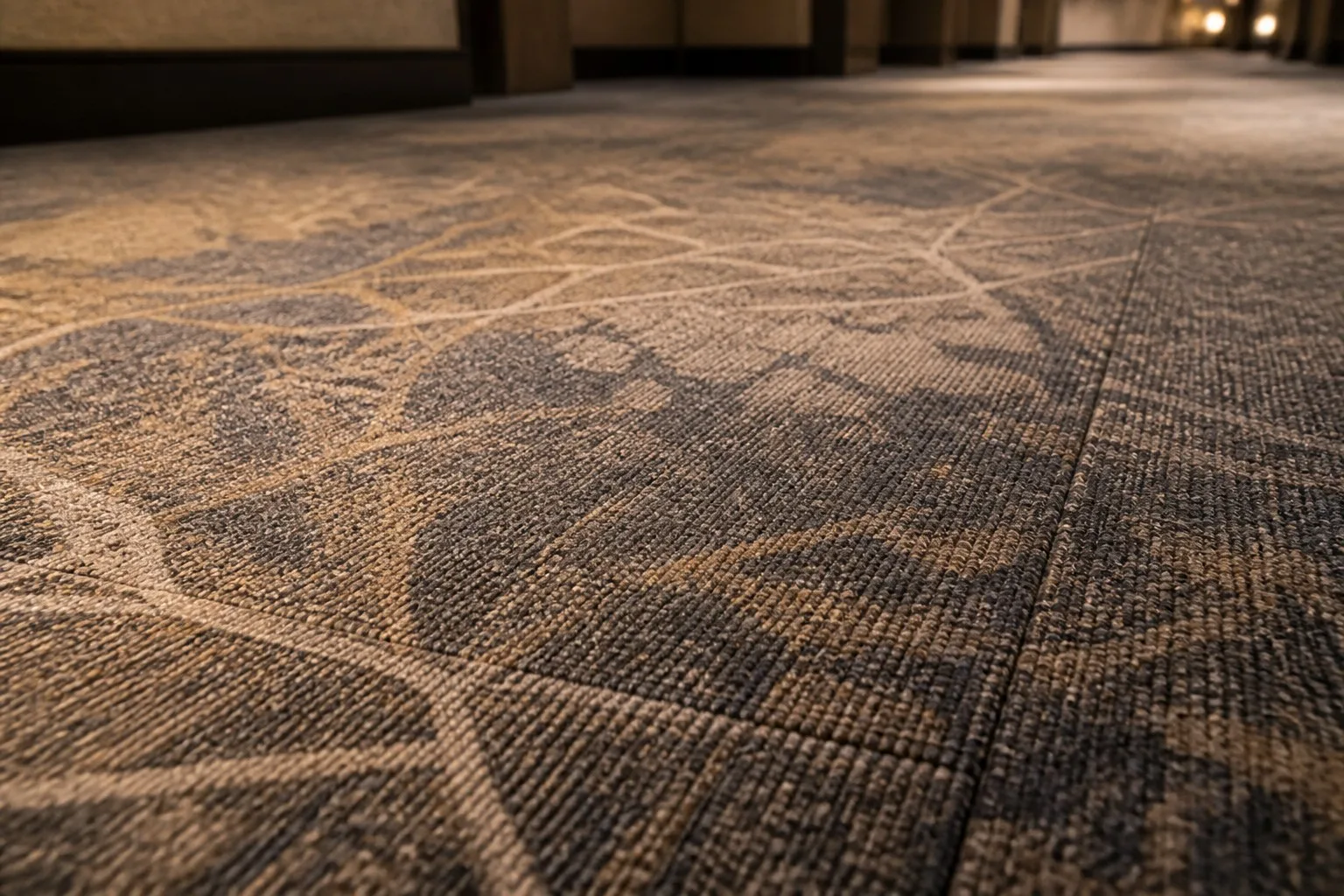
Procurement Comparison Table
| Decision point | Lower-risk specification | Higher-risk shortcut | Buyer question |
|---|---|---|---|
| Base color | Medium-to-deep neutral matched to lighting | Very light beige, flat black, or one solid tone | How does the color look after real traffic? |
| Pattern | Layered tonal movement with controlled contrast | Extremely busy pattern or plain solid field | Does it hide soil without looking chaotic? |
| Fiber and pile | Commercial construction matched to traffic and cleaning | Residential-style surface chosen by sample beauty | Can it handle luggage wheels and frequent vacuuming? |
| Backing | Stable backing suitable for corridor installation | Unclear backing chosen only by price | Will it stay flat through cleaning cycles? |
| Maintenance | Cleaning method and drying access defined before order | Cleaning process discussed after purchase | Can the hotel maintain it with real staffing? |
| Replacement | Extra material and batch records reserved | No attic stock or production record | What happens when one zone is damaged? |
Stain hiding should support proper housekeeping. It should never be used as a substitute for cleaning or operational control.
Color, Pattern, and Corridor Lighting
Dark carpet can hide some marks, but it can also show lint, powder, dust, and vacuum paths. Very dark corridors may feel smaller and older, especially when wall lighting is warm and ceiling light is limited. Very light carpets create the opposite problem: footprints, wheel tracks, and small stains become visible quickly.
The safer middle ground is controlled color variation. A hotel corridor carpet stain hiding strategy usually works better when the base is medium-to-deep, the pattern has tonal movement, and the contrast is strong enough to break up marks but not so strong that it becomes visually noisy.
- Directly above. Check pile, texture, and color depth from close range.
- Two meters away. Judge vacuum paths, minor marks, and cleaning visibility.
- Down the corridor. Review the standing guest impression, especially near door rows and lighting lines.
Maintenance and Replacement Planning
Most hotel corridor carpet problems concentrate in predictable places: elevator landings, ice machine areas, turns, housekeeping routes, guestroom thresholds, and restaurant-adjacent corridors. The buyer should plan for these zones before ordering.
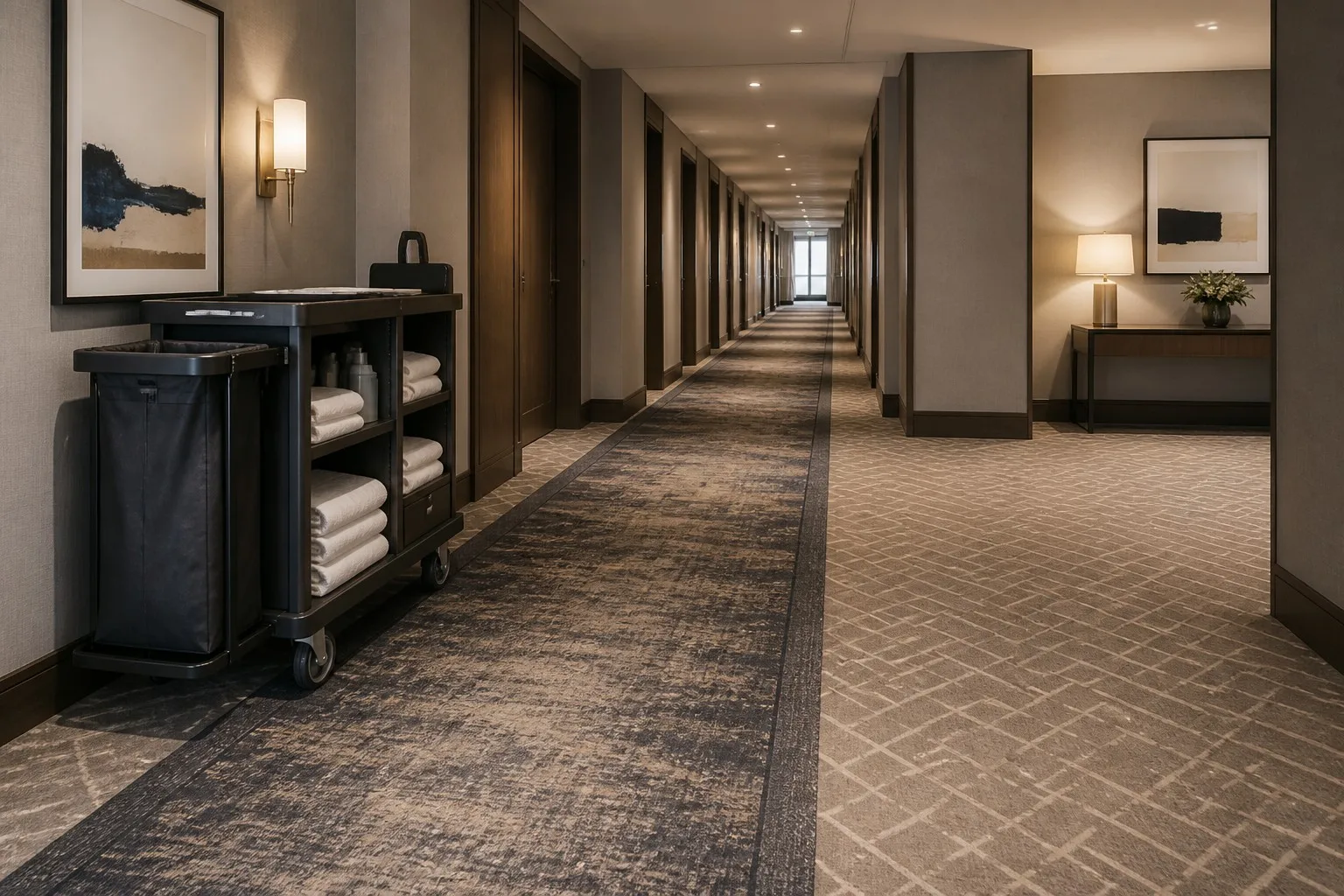
- Cleaning access. Confirm whether wet cleaning can dry before guest traffic returns.
- High-soil zones. Map elevator, service, breakfast, and housekeeping routes before approval.
- Spare material. Reserve extra stock or batch records for local replacement instead of repeated spot cleaning.
- Operational fit. A high-quality carpet can still fail if it needs a maintenance routine the hotel cannot execute.
Risk Checklist for Hotel Buyers
- Choosing by showroom beauty only. A sample can look premium but perform poorly under corridor soil and luggage traffic.
- Using a plain solid color. Solid fields often show stains, footprints, and cleaning marks more clearly than tonal patterns.
- Overusing busy patterns. A chaotic pattern may hide dirt but damage the hotel design value.
- Ignoring lighting. Warm wall lights, dim ceilings, and daylight from corridor ends can change perceived color.
- No replacement stock. Without extra material, localized damage can force a larger renovation.
- No cleaning compatibility check. Fiber, backing, pile, and cleaning method must work together.
RFQ Information to Send the Supplier
| RFQ field | Why it matters |
|---|---|
| Corridor width and total area | Supports roll planning, seam layout, and quantity calculation |
| Guestroom door spacing | Helps judge pattern scale and visual interruption |
| Lighting type and color temperature | Affects color depth and stain visibility |
| Traffic routes | Identifies elevator, service, and high-soil zones |
| Cleaning method | Confirms fiber, backing, and drying assumptions |
| Desired design style | Balances stain hiding with brand positioning |
| Extra stock requirement | Protects future repair and replacement |
Buyer FAQ
Is dark hotel corridor carpet always better for hiding stains?
No. Dark carpet can hide some spills but show lint, dust, and vacuum marks. A medium-to-deep multi-tone pattern is often safer than a flat dark solid.
Should hotel corridors use very busy patterns?
Not necessarily. Controlled tonal movement usually looks more premium than extreme pattern density. The goal is to hide normal soil without making the corridor look messy.
Can carpet tiles work in hotel corridors?
They can work in some projects, especially where replacement access matters. Seam visibility, installation method, pattern direction, and batch control must be reviewed.
What should buyers test before ordering?
Test color under corridor lighting, check pile feel, review cleaning compatibility, confirm backing, and reserve extra material for future repair.
How can procurement reduce guest complaints?
Specify the carpet together with cleaning method, drying access, soil zones, pattern scale, and replacement stock. Complaints often come from the gap between design choice and real hotel operations.
Recommended Vishomecarpet Pages
- Compare hotel broadloom options: /products/wall-to-wall
- Review corridor-focused product options: /products/wall-to-wall/glitter-hotel-corridor-broadloom-carpet
- Start from the hotel carpet solution page: /hotel-carpet
- Check maintenance planning resources: /resources/maintenance-guides
- Review quality control approach: /quality-control
Request a Corridor Carpet Quote
For a hotel corridor carpet recommendation, send corridor width, total area, lighting photos, traffic zones, cleaning method, preferred color direction, and target delivery date. Vishomecarpet can review whether a patterned broadloom carpet, corridor carpet tile, or another construction is the safer procurement route.
Turn This Guide Into a Quote
Send Your Project Requirements After Reading This Guide
If this topic matches your project, send the carpet application, estimated area, destination, and required date. Vishome can recommend the related product path and reply with sample, MOQ, lead time, and quotation details.
Email: sales@vishomecarpet.com
Continue Your Specification
Related Products


Browse the Full Range