
Office Carpet Tiles Renovation Cycle: A Procurement Guide for Refresh Projects
How landlords, fit-out contractors, and procurement teams can plan office carpet tile replacement around phased work, rolling chairs, spare stock, and handover timing.
Pain Point Addressed
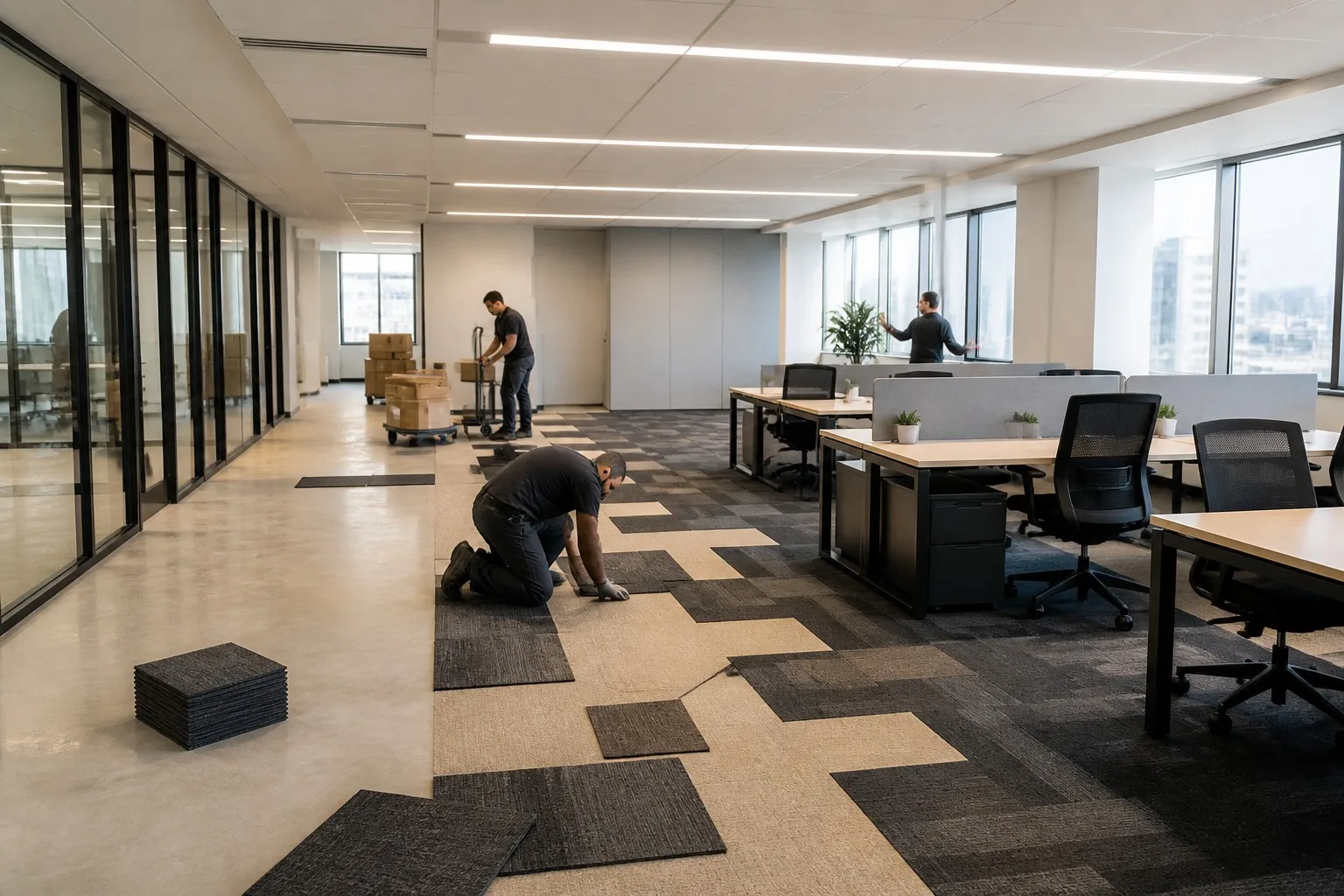
Office carpet tile projects often fail when the buyer treats renovation as a simple square-meter purchase. The real risk is usually timing, tenant access, chair traffic, substrate condition, spare stock, and whether the floor can be repaired after occupancy.
Answer First: Renovation Buyers Need a Cycle Plan
Office carpet tiles are strongest when the buyer plans them as a renovation cycle, not a one-time decoration purchase. A good modular flooring plan covers the current refresh, future tenant change, selective repair, rolling-chair traffic, and spare stock before the first order is placed.
For occupied offices, phased work matters as much as product selection. Procurement should confirm which zones can be cleared, when furniture moves, how the substrate will be checked, how tiles will be staged, and what material will be stored for future replacement.
Why Office Renovation Timing Drives the Specification
Reddit and workplace discussions about office flooring often focus on disruption: noisy work, rolling chairs catching on poor flooring, uneven replacements, and the frustration of renovating while people still need to work. These concerns are not only installation problems. They should influence the carpet tile specification from the beginning.
A landlord preparing a vacant suite, a contractor refreshing one department, and a company replacing worn desk paths all need different ordering logic. The product may be similar, but the schedule, packing, spare-stock percentage, and installation method can change the risk level.
Procurement Table for Renovation Buyers
| Specification item | Recommended buying approach | Risk if ignored |
|---|---|---|
| Tile size | Confirm standard format such as 50x50 cm according to project need | Mixed formats complicate replacement and layout |
| Backing | Match backing to traffic, installation method, and substrate | Tiles may shift, curl, or feel unstable |
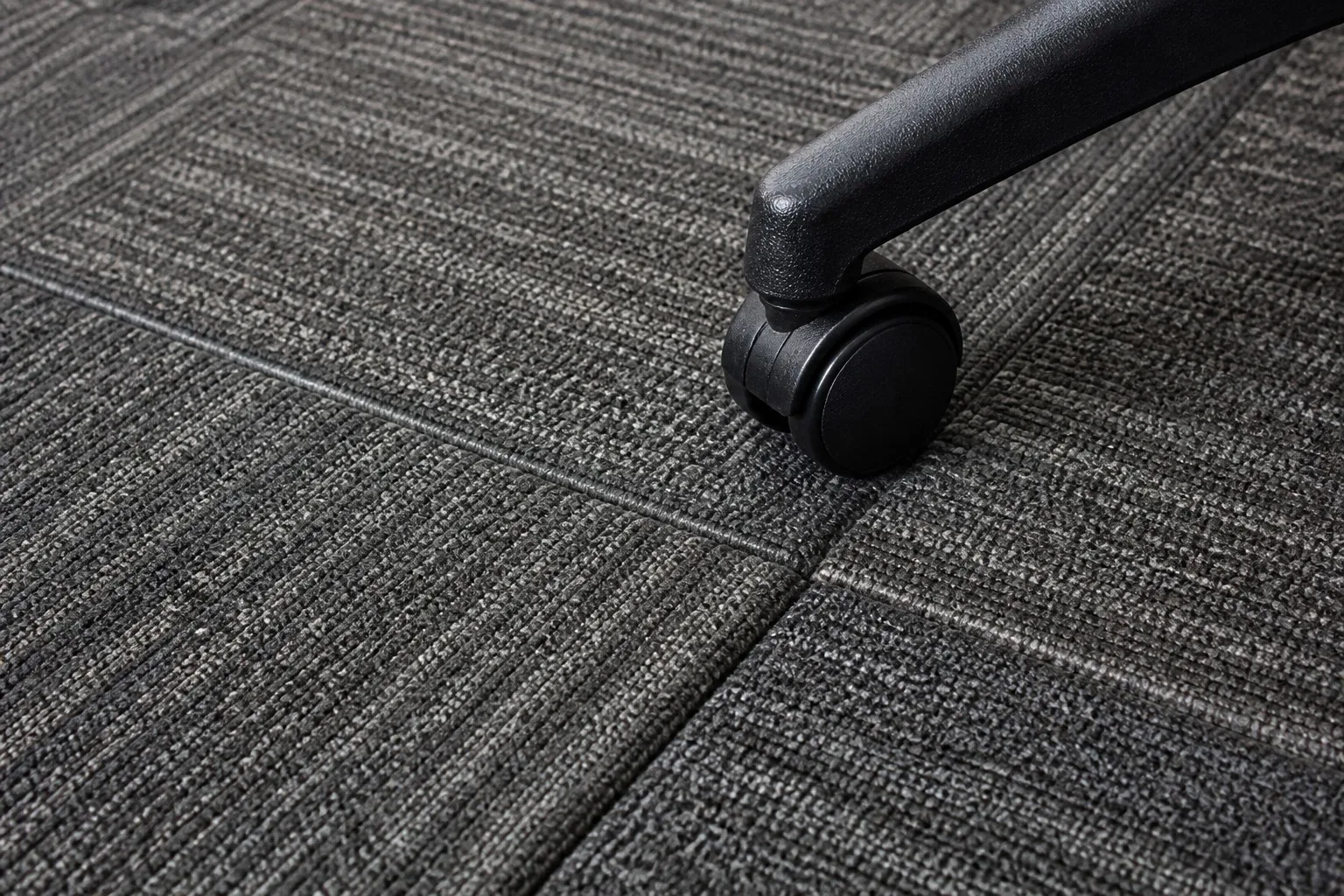
| Pile height | Keep rolling-chair zones practical and low-profile | Chairs drag, mats become necessary, and wear accelerates |
| Batch control | Order project quantity plus spare stock together | Future replacement may not match color or texture |
| Installation method | Confirm adhesive, tackifier, or access-floor requirements | Removal or handover may become expensive |
| Zone map | Separate workstations, corridors, meeting rooms, and pantry paths | High-wear zones are under-specified |
| Delivery plan | Match packing, elevator access, and installation sequence | Material arrives before site is ready or after the deadline |
When Carpet Tiles Beat Hard Flooring in Office Refresh Projects
Hard flooring can be attractive in reception or cafe-style office areas, but it is not automatically better for office renovation. Carpet tiles offer specific advantages when the project needs acoustic comfort, faster repair, workstation comfort, and lower visual disruption.
Office teams also care about rolling chair behavior. A poorly chosen soft surface can drag under casters, while a properly specified commercial carpet tile can support normal chair movement without making the office feel cold or noisy.
The choice should be based on how the office will be used: workstation density, phone rooms, meeting traffic, cleaning staff, chair type, substrate, and lease requirements.
Phased Installation and Occupied Office Control
In occupied offices, the floor is rarely replaced in one clean movement. Furniture, people, meeting schedules, lifts, and security access all affect the work sequence. Procurement should ask for a staged plan instead of assuming the installer can solve everything on site.
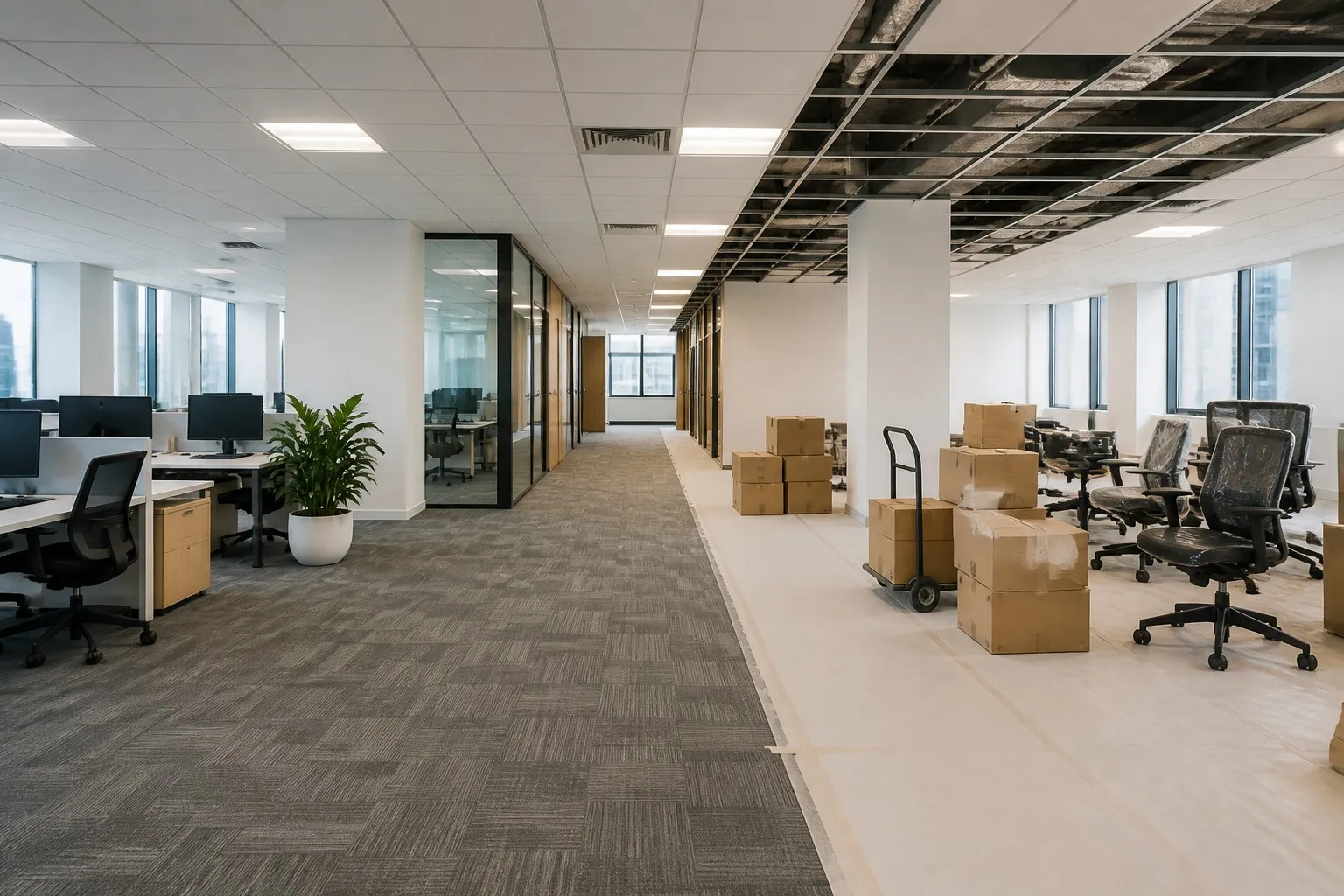
- Zone sequencing. Decide whether work starts from entrances, corridors, meeting rooms, or desk clusters.
- Furniture movement. Confirm who moves desks, chairs, cabinets, and cable trays before installation starts.
- Substrate review. Concrete, raised floors, old adhesive, and access floors need different installation assumptions.
- Same-batch spare stock. Store replacement tiles for desk paths, printer areas, and entry routes.
Risk Checklist for Office Renovation Procurement
- No phased plan. Ordering the right product is not enough if furniture movement, access, and installation sequence are unclear.
- No spare tile stock. Without attic stock, future repairs may look patchy.
- Choosing by price only. Low-cost tile can become expensive if backing, pile, or adhesive is unsuitable.
- Ignoring rolling chairs. Chair traffic should influence pile height, density, and backing choice.
- No substrate review. Concrete, raised floors, and old adhesive residues need different installation assumptions.
- No tenant handover requirement. Lease rules may affect adhesive, removability, and make-good cost.
Office Carpet Tiles Renovation RFQ Template
| RFQ field | Why it matters |
|---|---|
| Country, city, and building type | Supports delivery, compliance, and installation assumptions |
| Total area and zone map | Separates high-wear and low-wear spaces |
| Occupied or vacant site | Determines phased work and timing |
| Chair type and workstation density | Guides pile and backing selection |
| Existing substrate | Affects installation method and risk |
| Design direction | Confirms neutral, branded, or multi-zone layout |
| Spare tile percentage | Protects future repair |
| Target handover date | Aligns production, shipping, and installation |
A strong RFQ turns a flooring quote into a project plan. It helps the supplier avoid recommending a tile that only looks good in a sample photo.
Buyer FAQ
Are office carpet tiles still worth considering when office demand is weak?
Yes. Many orders come from refresh, repair, make-ready, and tenant fit-out needs, not only from new office expansion.
Why do landlords use carpet tiles for vacant offices?
They can improve the appearance of a leasable suite, control renovation cost, and support future tenant changes.
Can carpet tiles be installed in phases?
Yes, but the installation sequence, tile direction, batch control, and furniture movement plan should be defined before ordering.
How much spare stock should be ordered?
The percentage depends on project size and risk zones. Buyers should discuss attic stock during quotation instead of trying to match material years later.
What is the biggest mistake in office carpet tile renovation?
Treating carpet tile as a simple square-meter purchase. A good RFQ defines traffic, substrate, rolling chairs, installation method, spare stock, and handover requirements.
Recommended Vishomecarpet Pages
- Compare commercial carpet tile options: /products/carpet-tiles
- Start from the office carpet tile category: /commercial-carpet-tiles
- Review office-focused product options: /products/carpet-tiles/nylon-office-carpet-tile
- Read the rolling-chair guide: /blog/office-carpet-tiles-rolling-chairs-fitout-guide
- Review an office carpet tile project reference: /projects/multi-floor-office-carpet-tiles-tokyo
Request an Office Renovation Carpet Tile Quote
For an office carpet tiles renovation quote, send the floor area, site status, zone map, chair type, substrate, installation schedule, destination, and spare-stock requirement. Vishomecarpet can review a practical modular carpet tile specification before you compare only by square-meter price.
Turn This Guide Into a Quote
Send Your Project Requirements After Reading This Guide
If this topic matches your project, send the carpet application, estimated area, destination, and required date. Vishome can recommend the related product path and reply with sample, MOQ, lead time, and quotation details.
Email: sales@vishomecarpet.com
Continue Your Specification
Related Products


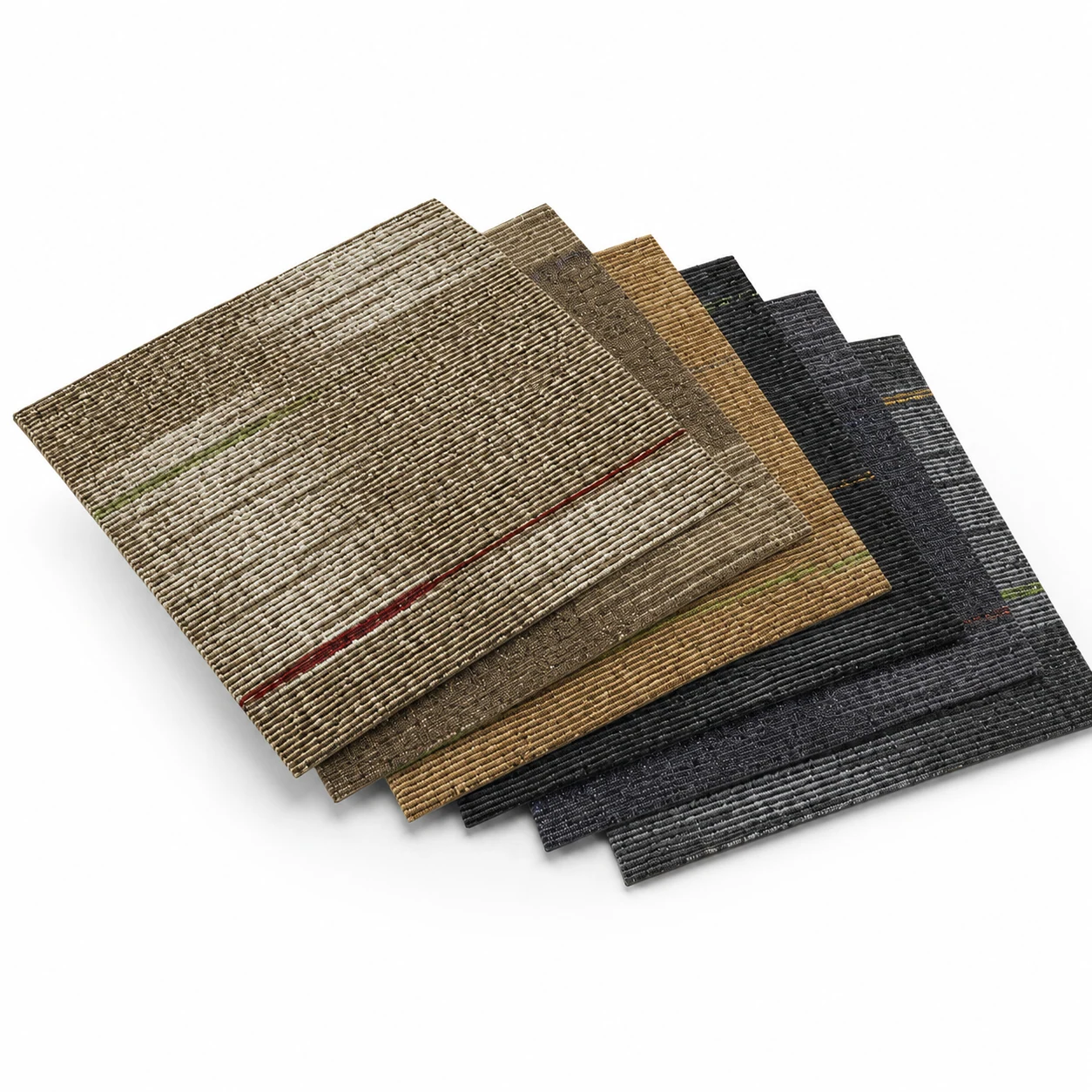
Browse the Full Range