
Sluice Carpet vs Miner's Moss vs Vortex Matting: A Fine Gold Recovery Buyer's Guide
How bulk buyers can compare recovery behavior, cleanup time, durability, and supplier quality before ordering sluice matting.
Pain Point Addressed
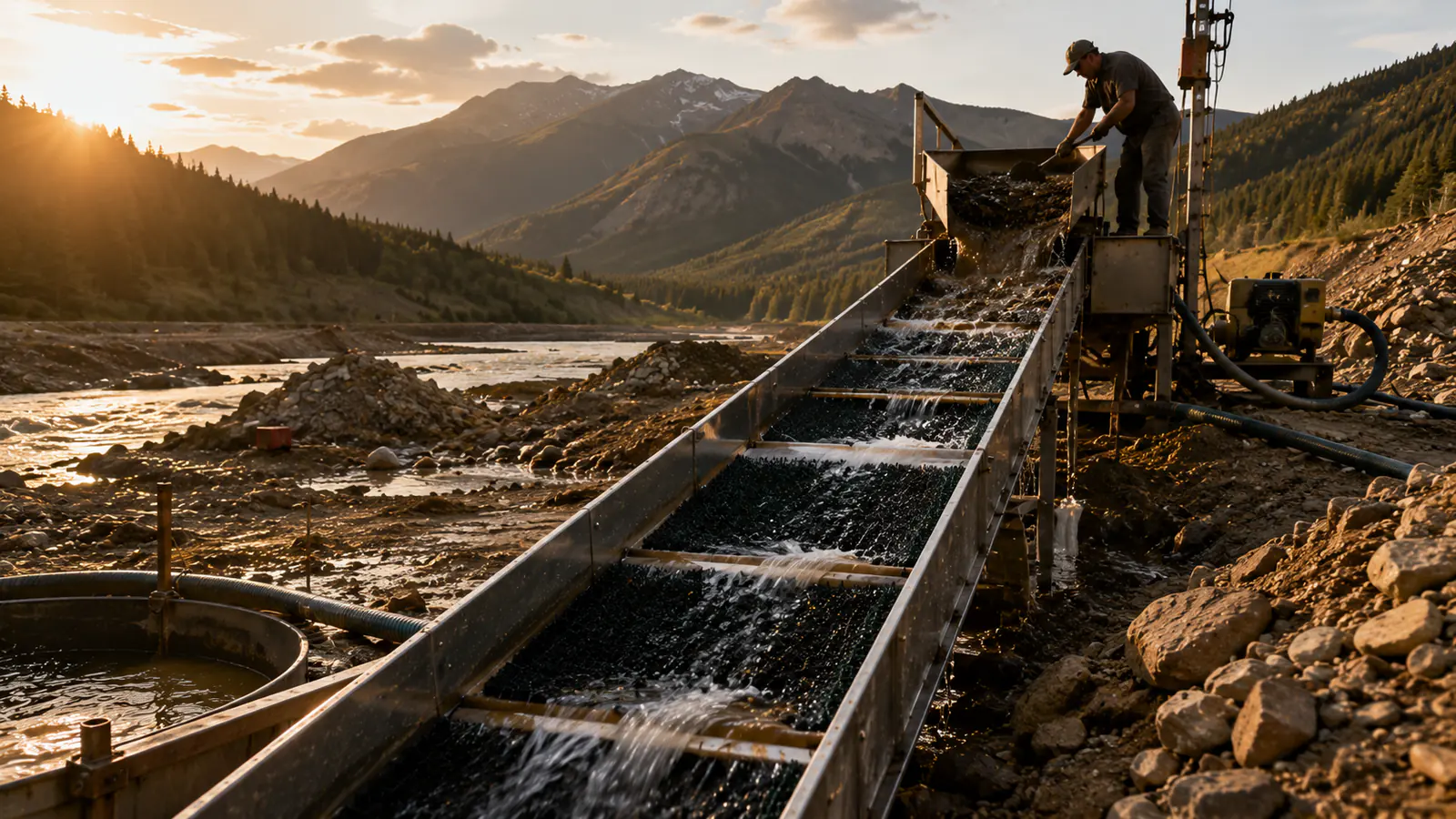
The wrong sluice matting can send fine gold out of the recovery system, increase cleanout labor, and create avoidable supplier complaints.
The Procurement Question Behind the Matting Debate
Prospecting communities have debated for years which sluice matting catches the most gold. Carpet loyalists, miner's moss defenders, and vortex-mat converts each have field results to support their setup.
For a mining supply distributor, equipment manufacturer, or operation buying matting by the container, the debate is a purchasing decision with real consequences. The wrong choice can send gold out the end of the sluice, add hours to every cleanup, and create warranty complaints for the supplier.
This guide translates the forum debate into procurement language: how each matting type traps gold, where each one wins, what the trade-offs are, and how to quality-test a supplier sample before committing to an order.
First Principles: How Matting Catches Gold
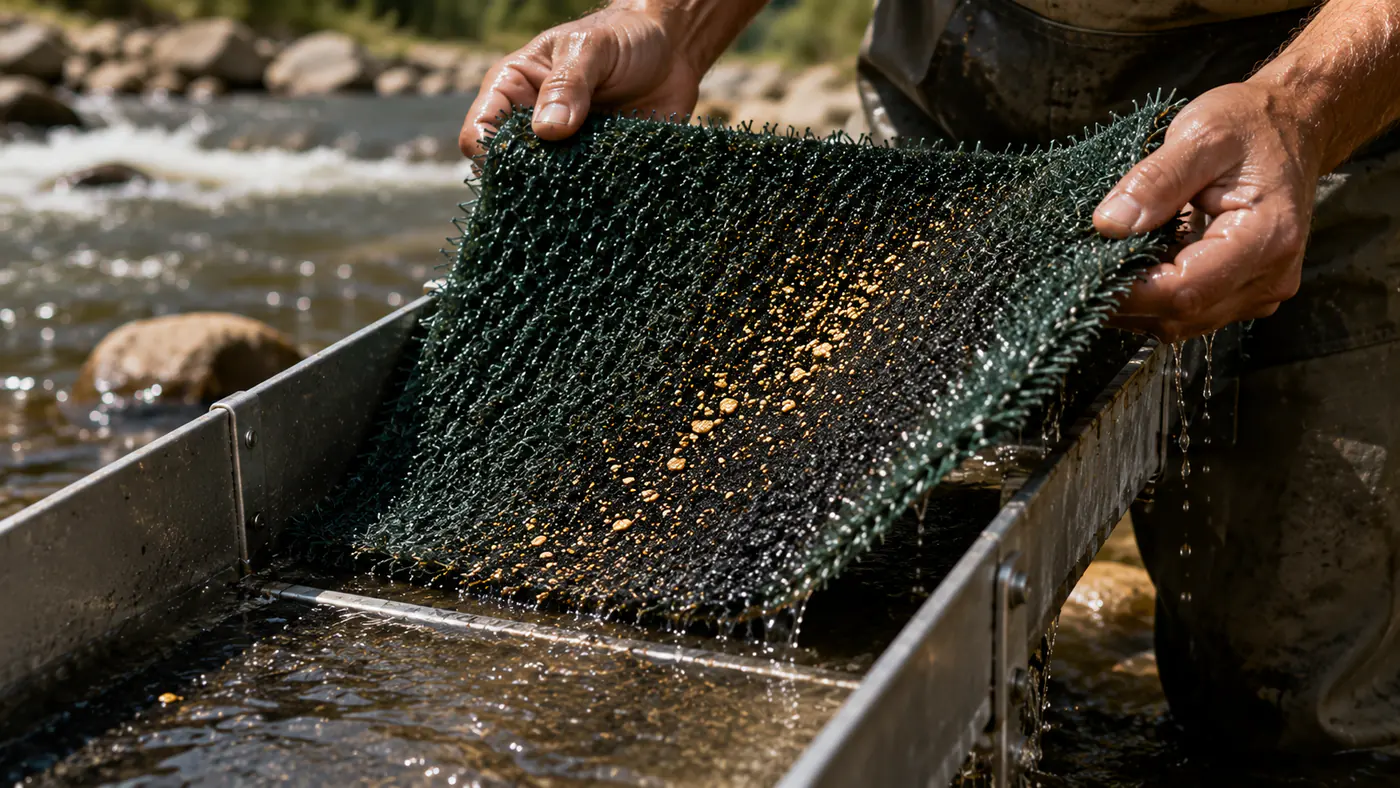
Every sluice matting system works on the same basic physics. Gold is much denser than the sand, gravel, and black sand it travels with. As water carries material across the sluice, the matting creates reduced-flow zones where heavy particles drop out of suspension while lighter material continues downstream.
- Trap geometry. The size, shape, and depth of the pockets created by fibers, ribs, or molded cups.
- The water column. Flow rate, sluice angle, and material feed rate. Setup matters as much as the matting, and a clogged riffle section can stop working entirely.
- The gold itself. Coarse pickers and nuggets behave differently from flour gold. Many arguments about the best mat are really arguments about particle size.
Matting that excels at coarse gold can underperform on -100 mesh fines, and vice versa. A serious operation matches the matting to the deposit, which is why distributors often need more than one answer in their inventory.
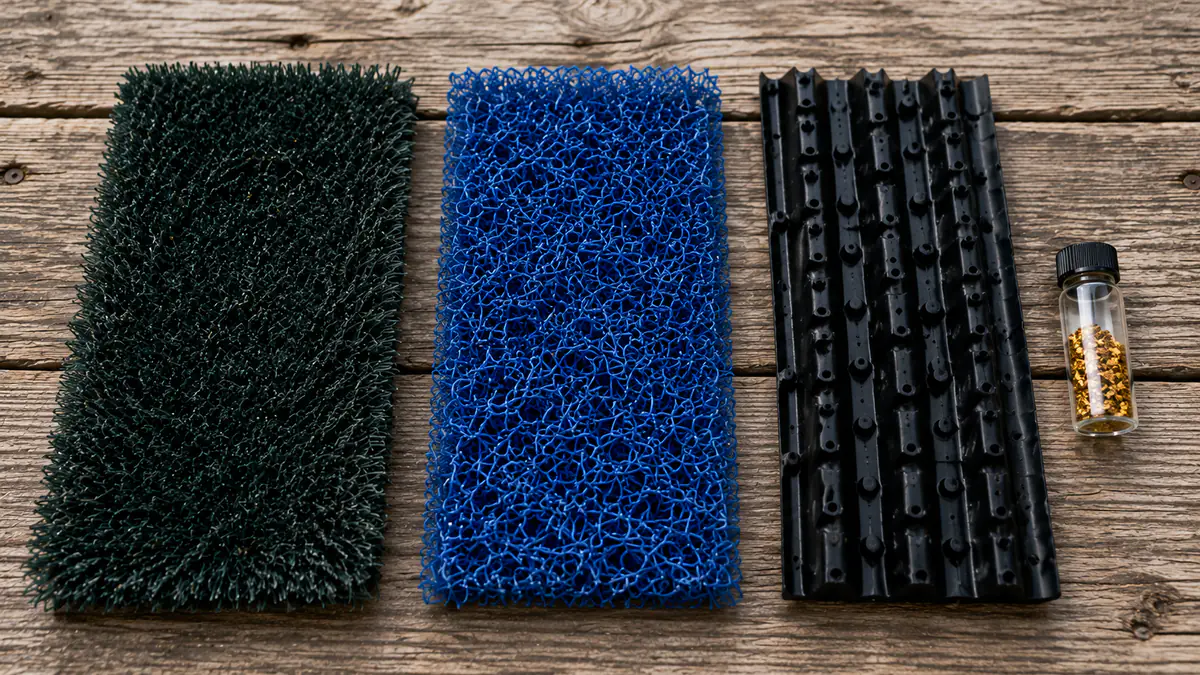
The Three Contenders
1. Gold Mining Carpet (Sluice Carpet)
Sluice carpet is typically a dense shaggy or ribbed synthetic pile, often polypropylene or nylon. Its deep fiber structure creates thousands of micro-pockets that physically hold gold particles.
- Holding power. Fine gold that works into the pile is difficult to blow out with a surge of water or an over-aggressive feed.
- Cost per square meter. Carpet is generally economical at volume, which matters when long sluice runs need regular replacement.
- Cutability and fit. It trims to almost any sluice width, wraps expansion-metal setups, and suits DIY and small-commercial users.
2. Miner's Moss (Woven Vinyl Matting)
Miner's moss is a thick, open spaghetti-weave vinyl matting used in many manufactured sluices and dredges because it balances trapping and release.
- Cleanup speed. The open weave releases concentrates with a few dunks and shakes, which is valuable when a commercial crew cleans out frequently.
- Works under riffles. Moss compresses under riffle systems and expanded mesh, creating a two-stage trap when the equipment is designed for that configuration.
- Continuous-flow durability. Quality vinyl weave can stand up to abrasive slurry over long operating runs.
3. Vortex or Ribbed Rubber Matting
The newest generation uses molded rubber or urethane with engineered ribs and cup profiles that generate controlled vortices. These miniature flow zones spin lighter material away and drop dense particles into the cups.
- Fine gold recovery. Engineered profiles are popular with fine-gold operators because they can retain particles that a coarse open weave may release.
- Fast cleanup. The non-porous surface rinses clean quickly without embedded fines, drying, or burning.
- Visual monitoring. Operators can see gold accumulating in the cups and judge when recovery zones are loading.
The Practical Answer: Zone Your Sluice
Commercial operators increasingly stop treating this as a single-winner question and instead zone the sluice. Different sections can use different retention behavior, and distributors can stock all three formats rather than picking one side of the debate.
| Sluice Zone | Typical Job | Common Matting Choice |
|---|---|---|
| Slick plate / feed section | Settle coarse gold immediately | Ribbed rubber or vortex matting |
| Mid-sluice under riffles/mesh | Main recovery bed | Miner's moss, per equipment design |
| Lower run / fine-gold section | Catch escaping fines | Deep-pile gold mining carpet or fine-profile vortex mat |
The correct combination depends on the equipment design, feed size, water flow, and cleanup process.
Carpet moves in volume as an economical liner and replacement item; moss serves the manufactured-sluice replacement market; vortex-style matting earns premium margin with fine-gold specialists. Stocking all three in cut sheets and rolls covers the whole argument.
The Fiber-Pull Test: How Bulk Buyers Should Vet Quality
Before discussing price, a buyer can grip a pinch of pile on two supplier samples and pull firmly. One sample may release a whole tuft of loose fibers while the other gives up almost nothing. That simple test reveals more than a polished brochure.
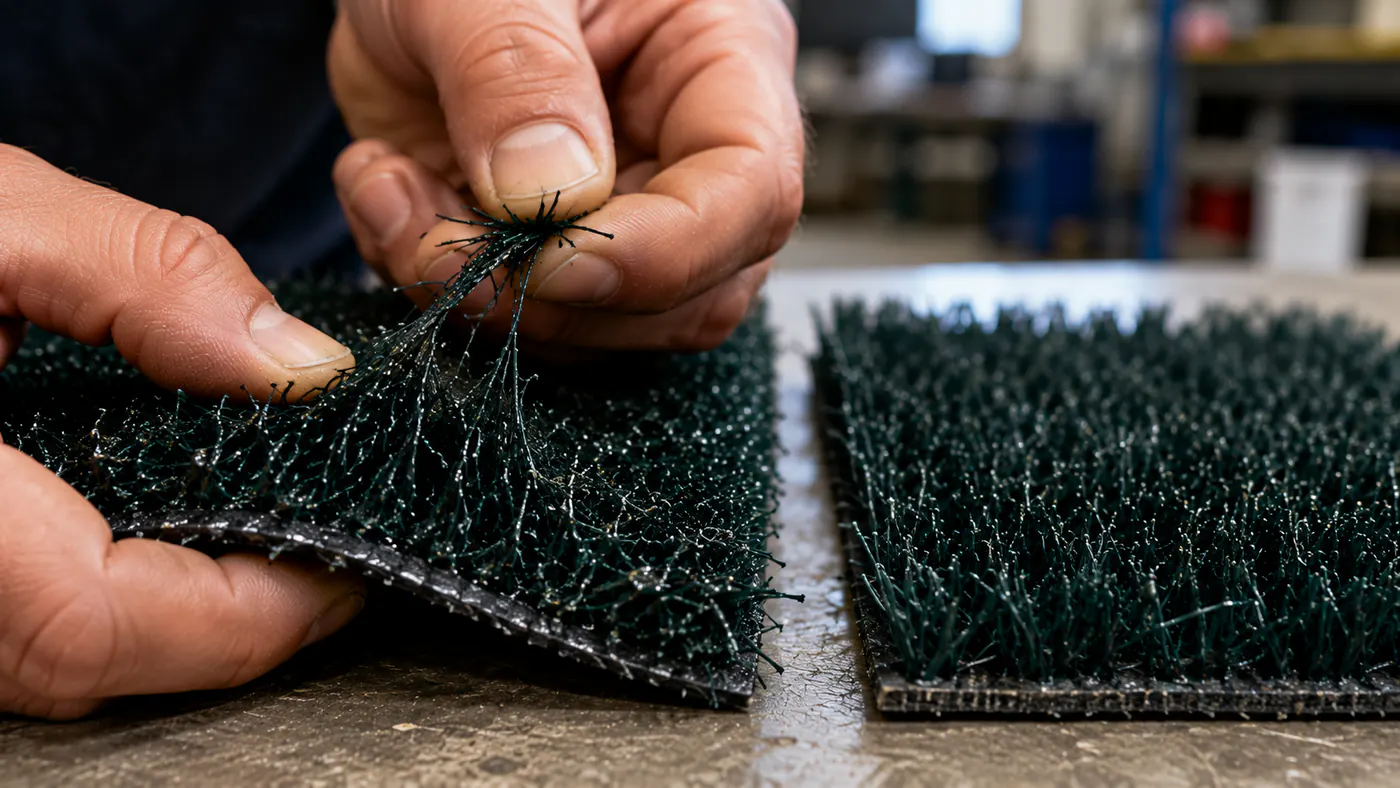
- Fiber shedding. Loose fibers migrate into the gold pan during cleanup, tangling with fine gold and black sand.
- Service life. A pile that sheds under a finger pull will shed under abrasive gravel flow, thinning the trap structure before the mat looks worn.
- Tuft bind and backing quality. Shedding indicates weak tuft anchoring or an inadequate backing bond, which can become delamination after repeated washing and re-laying.
At scale, also request fiber material and denier, pile weight and height, backing type and bond method, tuft bind strength, and colorfastness. Reputable factories can state these numbers; evasive answers on tuft bind are themselves an answer.
Climate matters too. Operations in Central Asia, Africa, Australia, and the Americas may expose mats to intense UV, temperature swings, and mineral-heavy water. UV stabilization and backing flexibility at low temperatures can determine whether a mat survives one season or three.
Sourcing Sluice Matting at Container Scale
For a distributorship, equipment line, or mining operation, a complete inquiry gives the supplier enough context to recommend a profile honestly instead of quoting blind.
- Product mix and quantities. State carpet, moss-style, and/or vortex-style matting, roll widths and lengths or cut-sheet dimensions, and total square meters.
- Application context. Identify hand sluices, highbankers, dredges, or fixed washplant runs, plus the typical gold size if known.
- Specification requirements. List fiber material, pile weight and height, backing, tuft bind, UV stabilization, and color requirements.
- Private label needs. Include printed edge branding, retail packaging, and barcoding if the product will be sold through a distribution channel.
- Logistics parameters. Provide destination port, target landed date, and whether mixed-SKU containers are needed.
Request physical samples and run the fiber-pull test yourself, alongside a simple wash test in silty water to observe shedding and how the sample releases fine sediment.
Turn This Guide Into a Quote
Send Your Project Requirements After Reading This Guide
If this topic matches your project, send the carpet application, estimated area, destination, and required date. Vishome can recommend the related product path and reply with sample, MOQ, lead time, and quotation details.
Email: sales@vishomecarpet.com
Continue Your Specification
Related Products

Browse the Full Range