
Why Hotel Carpet Patterns Look So Busy: A Design and Maintenance Guide
How layered color, pattern scale, wayfinding, cleaning requirements, and construction choices shape hospitality flooring.
Pain Point Addressed
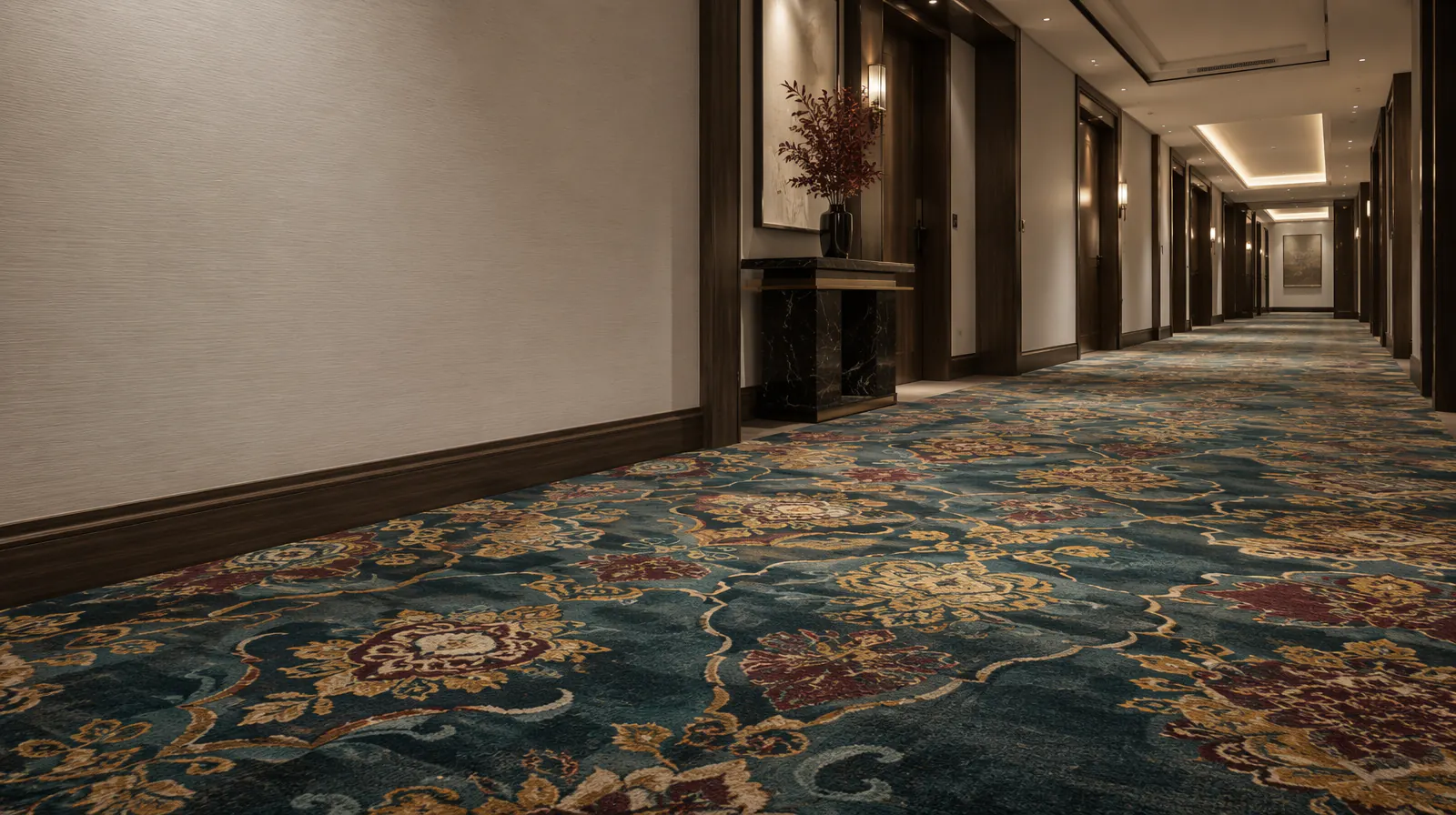
A hotel carpet pattern that is too plain can expose every traffic mark, while a poorly controlled concealment pattern can look dirty before the property even opens.
What Reddit Users Notice
Few flooring subjects produce as much online debate as hotel carpet patterns. Viral Reddit threads describe them as busy, strange, dated, or deliberately designed to look stained. Hospitality designers and operators, however, are solving a harder problem than selecting a decorative surface.
A hotel corridor or ballroom must remain presentable through luggage traffic, food and beverage service, cleaning cycles, spot treatment, repairs, and years of repeated movement along the same paths. The pattern has to support the interior concept while helping the floor age in a controlled way.
The best designs do not hide poor housekeeping. They reduce the visual disruption caused by ordinary traffic between scheduled cleaning and maintenance.
- Mixed colors make small stains less obvious. A controlled palette prevents one minor mark from becoming the visual center of a long corridor.
- Pattern variation reduces visible traffic lanes. Repeated movement is less likely to create one obvious line through a varied field.
- Carpet softens operational noise. Footsteps, luggage wheels, and service carts sound less harsh on an appropriate carpet construction.
- Large spaces can support a larger scale. A motif that would overpower a home can read correctly across a hotel corridor, lobby, or ballroom.
Pattern Is Part of the Maintenance Strategy
Plain, pale carpet creates a clean presentation in a sample book, but it can show every coffee drop, wheel mark, and dark traffic lane. A very dark solid color has the opposite problem: lint, dust, and light-colored debris become obvious.
Well-designed hotel carpet patterns use several related colors and controlled contrast. The eye reads the overall composition before focusing on a small mark. This gives housekeeping time to respond without making every minor incident the visual center of the corridor.
Pattern does not reduce the need for vacuuming, spot treatment, or periodic extraction. A visible stain can still affect guest perception, and soil left in the pile can abrade fibers. The operational benefit is appearance management, not permission to clean less.
Use the Right Scale for Each Hotel Zone
One pattern scale cannot serve every part of a property equally. The design brief should identify how guests see the floor, how the space is furnished, and which traffic or service conditions the carpet must handle.
Guestrooms
Guestroom carpet is viewed at close range and should support rest. Lower contrast, quieter repeats, and softer transitions usually feel more comfortable. The design must also work around beds and furniture rather than relying on a large uninterrupted field.
Corridors
Corridors need directional logic. The pattern can lead guests from elevator lobbies toward rooms, reduce the apparent length of a hallway, and soften the repetition of doors. Long linear motifs should be reviewed carefully because installation drift or pattern bow can become obvious over distance.
Ballrooms and Banquet Areas
Large repeats can organize a broad floor plate and support table or circulation zones. These areas also receive food, beverage, and equipment traffic, so color distribution and serviceability matter as much as visual impact.
Lobbies and Casinos
Public areas can carry stronger contrast and more expressive forms. The floor may help define seating, circulation, and activity zones without physical partitions. These applications often justify custom artwork because the carpet contributes directly to the guest experience.
Conceal Soil Without Looking Pre-Stained
Some hotel carpet patterns fail because they imitate irregular brown, gray, or faded marks too literally. Guests may interpret the intended texture as damage or poor cleaning, especially under uneven corridor lighting.
A stronger approach combines the following controls:
- Two to five coordinated colors. Use a related palette instead of one flat tone or unrelated accents.
- Variation across the full repeat. Avoid concentrating all dark or light areas in one band.
- Mid-value colors in traffic fields. Extremely light or dark fields reveal different kinds of everyday soil.
- Controlled dark accents. Small anchors can add depth without creating large muddy areas.
- Shapes related to the architecture. Motifs should connect with interior geometry or brand language.
- A clear standing-height hierarchy. The composition should still make sense when seen from normal guest eye level.
Review the design in a realistic rendering, but do not approve it from a screen alone. Printed color, yarn texture, pile direction, and lighting can change the result substantially.
Wayfinding Can Be Built Into the Floor
Pattern can do more than manage appearance change. It can help guests understand where to move.
For example, a stronger border may define the room-door side of a corridor, while a flowing center motif reinforces the walking path. Elevator lobbies can use a related but distinct field to signal arrival. Ballroom prefunction areas can use color transitions to separate waiting, registration, and circulation zones.
When hotel carpet patterns are used for wayfinding, the floor plan and roll plan must be coordinated. A motif that points correctly in one wing may point away from the destination when mirrored in another.
The pattern repeat, corridor width, seaming position, and installation direction should be reviewed together before production.
Fiber and Construction Still Control Performance
Pattern cannot compensate for a construction that is wrong for the application.
| Construction | Common hotel applications | Design strength | Specification focus |
|---|---|---|---|
| Custom printed nylon broadloom | Guestrooms, corridors, and function spaces | Flexible artwork and detailed color placement | Traffic class, dye system, backing, and pattern repeat |
| Tufted broadloom | Guestrooms, suites, and selected public areas | Texture and varied pile effects | Pile density, tuft bind, backing, and appearance retention |
| Wool-nylon Axminster | Premium corridors, casinos, and luxury public areas | Dense woven structure and strong design definition | Blend, pitch, rows, pile weight, fire performance, and maintenance |
The correct specification depends on traffic, maintenance capability, budget, fire-performance requirements, and expected service life.
Buyers should compare custom printed hotel carpet with wool-nylon luxury broadloom using the same project zone, traffic expectation, cleaning plan, and documentation requirements.
Cleaning Requirements Should Influence the Design Brief
A Reddit banquet manager described the difficulty of maintaining roughly 40,000 square feet of patterned wool carpet used for high-volume food and beverage events. Professional replies emphasized wool-safe chemistry, appropriate water temperature, trained cleaning, and avoiding untested consumer methods on an expensive commercial floor.
That discussion shows why the cleaning plan belongs in the original RFQ. Before approving hotel carpet patterns, ask:
- Which fiber and dye system is being quoted?
- Which spot-treatment chemistry is approved?
- What routine and restorative cleaning method is recommended?
- Can the supplier provide maintenance instructions?
- How will food, beverage, and entrance soil be managed by zone?
- Is a test area required before full extraction?
The supplier should not make a universal cleaning claim for every construction. A procedure suitable for solution-dyed nylon may not be appropriate for a wool-rich woven carpet.
Approve a Strike-Off, Not Just Artwork
A production strike-off allows the buyer to review real color, pattern scale, edge definition, and surface character. Place it under lighting similar to the final interior and view it from several distances.
For custom hotel carpet patterns, the approval record should identify:
- Artwork version and repeat dimensions.
- Color references and acceptable tolerance.
- Fiber, construction, pile weight, and backing.
- Fire-performance documentation required for the project.
- Roll width, seam plan, and installation direction.
- Approved strike-off date and signatory.
Keep one approved sample with the buyer and one with the factory. This gives both sides a physical reference during production and inspection.
What to Send for a Project Quotation
Prepare the following information before requesting samples and pricing:
- Hotel zone and total square meters.
- Floor plans and corridor widths.
- Artwork, mood board, or brand reference.
- Preferred printed, tufted, or woven construction.
- Expected traffic and cleaning program.
- Required fire or indoor-air documentation.
- Destination country and target installation date.
- Sample or strike-off deadline.
- FOB, CIF, or DAP quotation requirement.
The purpose of hotel carpet patterns is not to make dirt acceptable. It is to combine brand, wayfinding, and controlled appearance retention with a construction that housekeeping can maintain responsibly.
Turn This Guide Into a Quote
Send Your Project Requirements After Reading This Guide
If this topic matches your project, send the carpet application, estimated area, destination, and required date. Vishome can recommend the related product path and reply with sample, MOQ, lead time, and quotation details.
Email: sales@vishomecarpet.com
Continue Your Specification
Related Products


Browse the Full Range