
Commercial Carpet Tile Specification Checklist for B2B Buyers
A practical procurement checklist for office, education, retail and commercial projects that need carpet tiles with clear performance, installation and RFQ requirements.
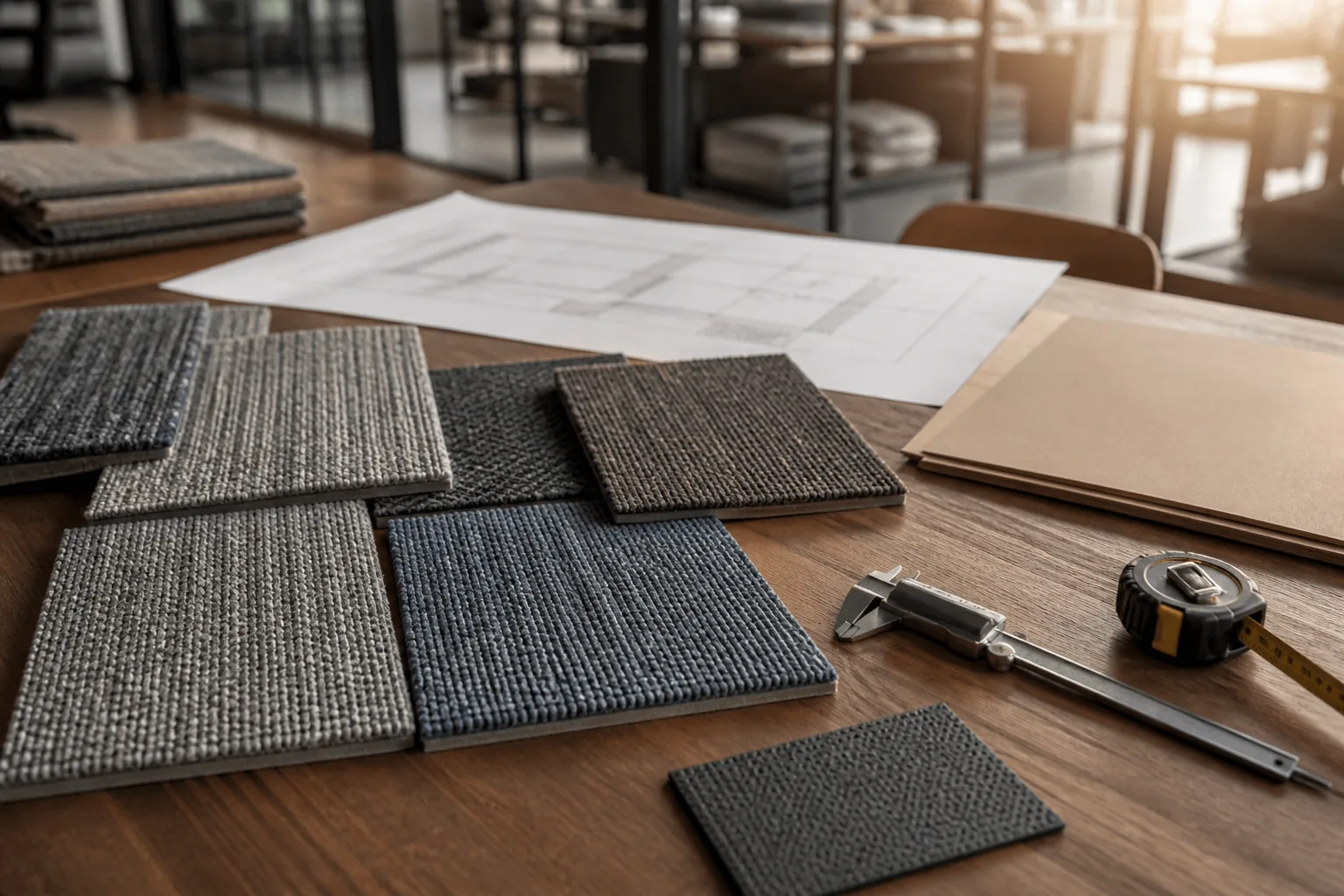
Pain Point Addressed
Many carpet tile quotations look comparable until the buyer checks backing, pile construction, fire class, VOC documents, concrete conditions, chair-wheel traffic and spare-stock planning.
The Short Answer
A commercial carpet tile specification should not start with color alone. For a real B2B project, the buyer should define the use area, expected traffic, tile size, fiber, pile construction, backing system, fire and VOC document requirements, subfloor condition, installation method, spare-stock percentage and quotation format before comparing suppliers.
If those points are missing, the quotation may be cheap but incomplete. The risk usually appears later as edge curling, visible color variation, poor chair-wheel performance, adhesive problems, missing certificates, difficult replacement or a shipment that does not match the installer’s plan.
- Use area. Define whether the tiles are for open office, corridor, meeting room, classroom, retail, hotel back-of-house or mixed commercial zones.
- Performance. Ask for fiber, pile, backing, dimensional stability, fire behavior, VOC documentation and maintenance guidance that match the project.
- Installation. Confirm subfloor readiness, adhesive type, layout direction, transition details and replacement strategy before bulk ordering.
- Commercial terms. Separate sample approval, MOQ, production lead time, packing, spare stock, destination and payment terms in the RFQ.
Start With the Project Zone, Not the Product Photo
The same 50x50 carpet tile can behave differently in a quiet meeting room, a rolling-chair workstation area, a hotel corridor, a school corridor or a retail fitting room. Before asking for samples, describe where the floor will be used and how it will be cleaned, moved across and replaced.
| Project zone | Common buyer concern | Specification focus |
|---|---|---|
| Open office workstations | Chair wheels, furniture moves and phased replacement | Nylon or suitable PP option, backing stability, spare tiles, modular replacement plan |
| Commercial corridors | Traffic lanes, edge wear and visible soiling | Pile density, pattern tolerance, entrance-zone planning, maintenance method |
| Meeting rooms | Professional appearance and acoustic comfort | Texture, color consistency, underfoot feel, cleaning schedule |
| Education or public buildings | Budget, durability and documentation | Fire class, VOC documents, stain resistance, simple replacement |
| Retail or showroom areas | Brand color, foot traffic and quick renovation | Pattern direction, layout plan, carton matching, rapid installation |
This zone-first method helps the supplier recommend a construction instead of guessing from a mood board. It also helps the buyer decide whether a lower-cost PP carpet tile is enough or whether a nylon option is safer for high-use areas.
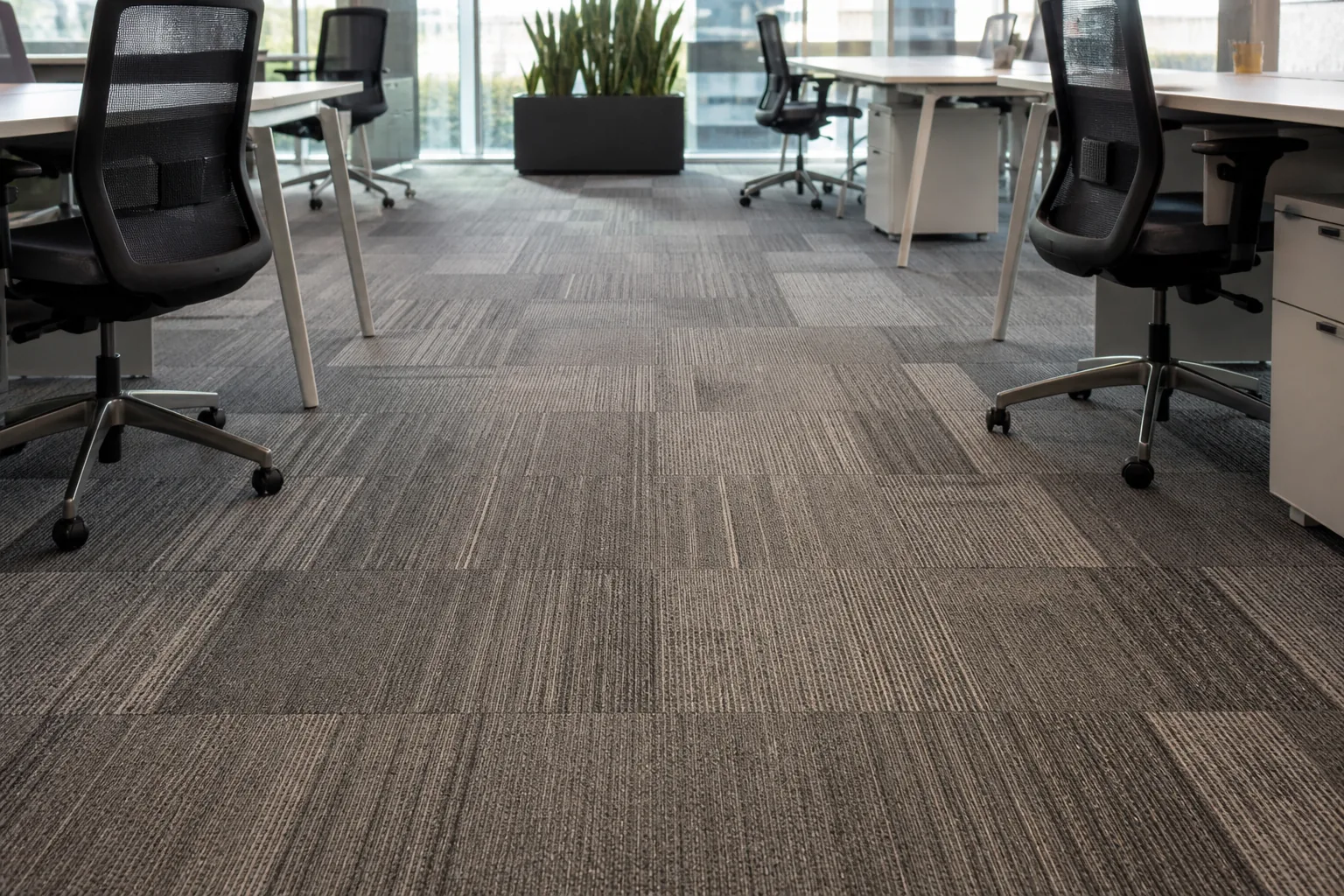
The Eight Specification Checks Buyers Should Ask For
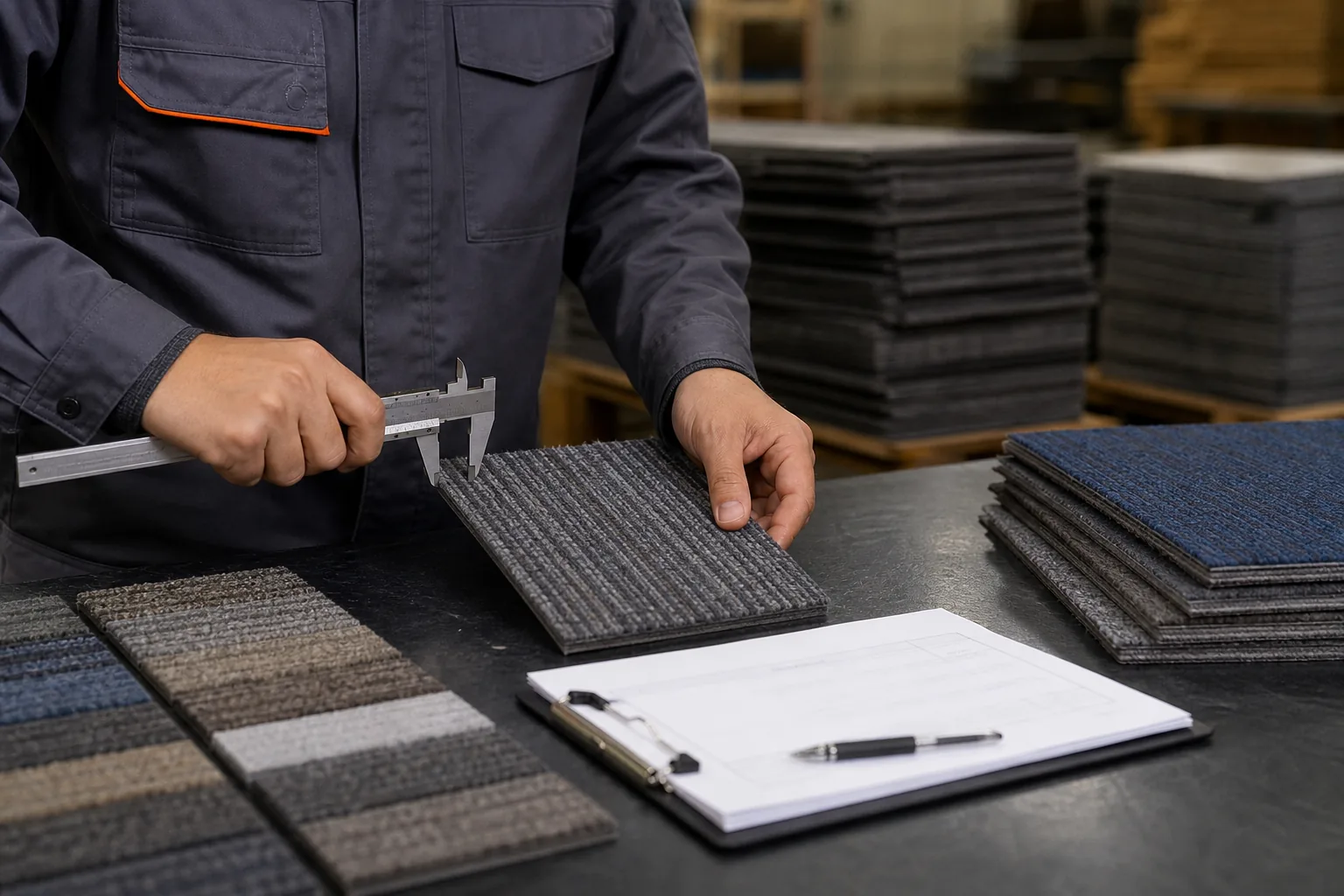
- Tile size and tolerance. Confirm size, thickness, carton quantity and whether the factory can provide consistent sizing for modular layouts.
- Fiber and yarn system. Compare nylon, PP and blended options by traffic expectation, appearance retention, budget and cleaning method.
- Pile construction. Ask for loop, cut, patterned or textured construction details, not only a product image.
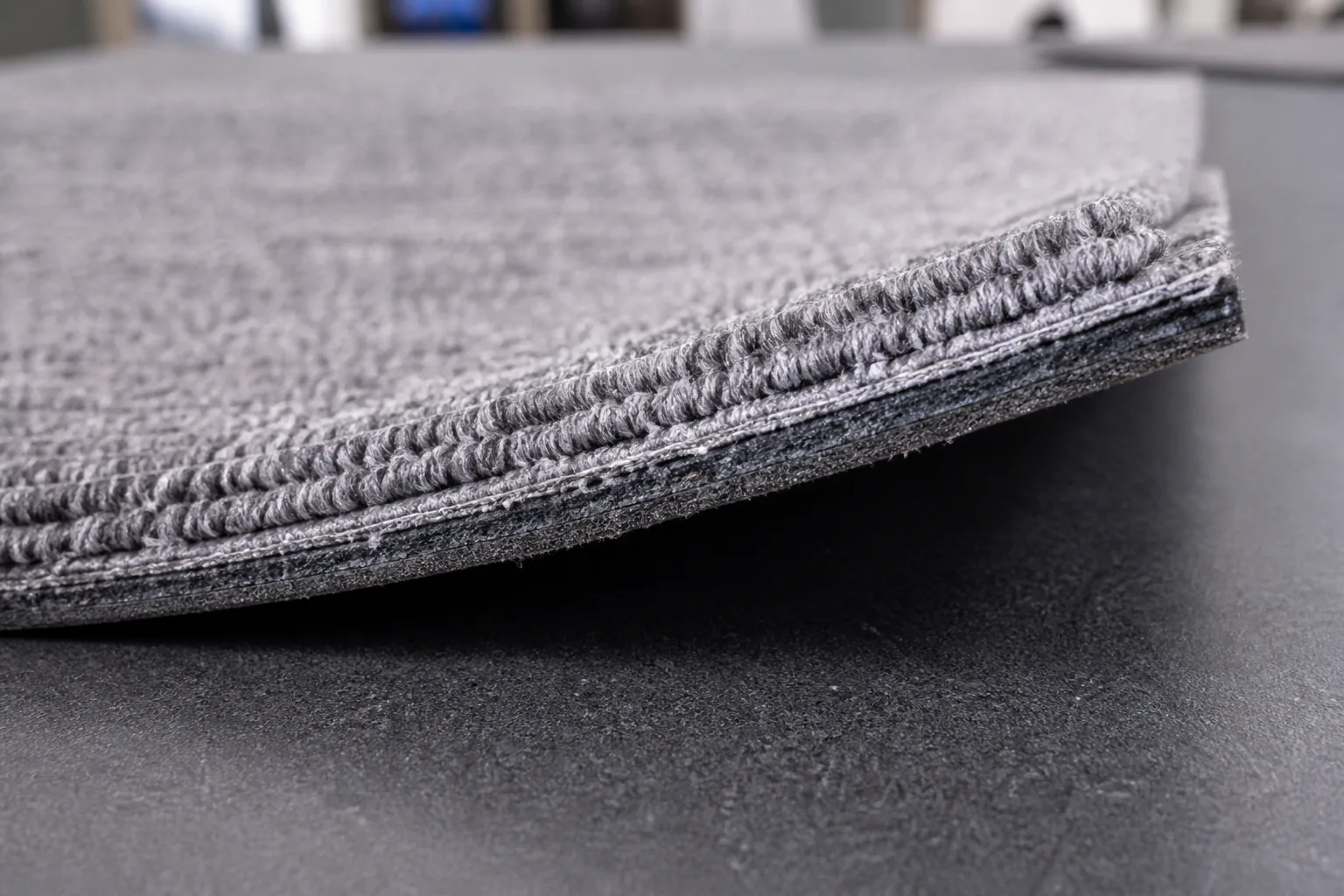
- Backing system. Confirm backing material, dimensional stability, weight, flexibility, recyclability considerations and replacement behavior.
- Traffic and chair-wheel suitability. For offices, ask specifically about rolling-chair zones, pivot points, meeting-room chairs and maintenance intervals.
- Fire behavior. If the project requires a standard such as ASTM E648 or a local building-code fire classification, state it in the RFQ and request matching documents.
- VOC and sustainability documents. If indoor air quality or green procurement matters, request available low-emission and sustainability documentation instead of assuming every option is identical.
- Installation and replacement plan. Ask for adhesive recommendation, layout direction, subfloor notes, attic stock and future replacement guidance.
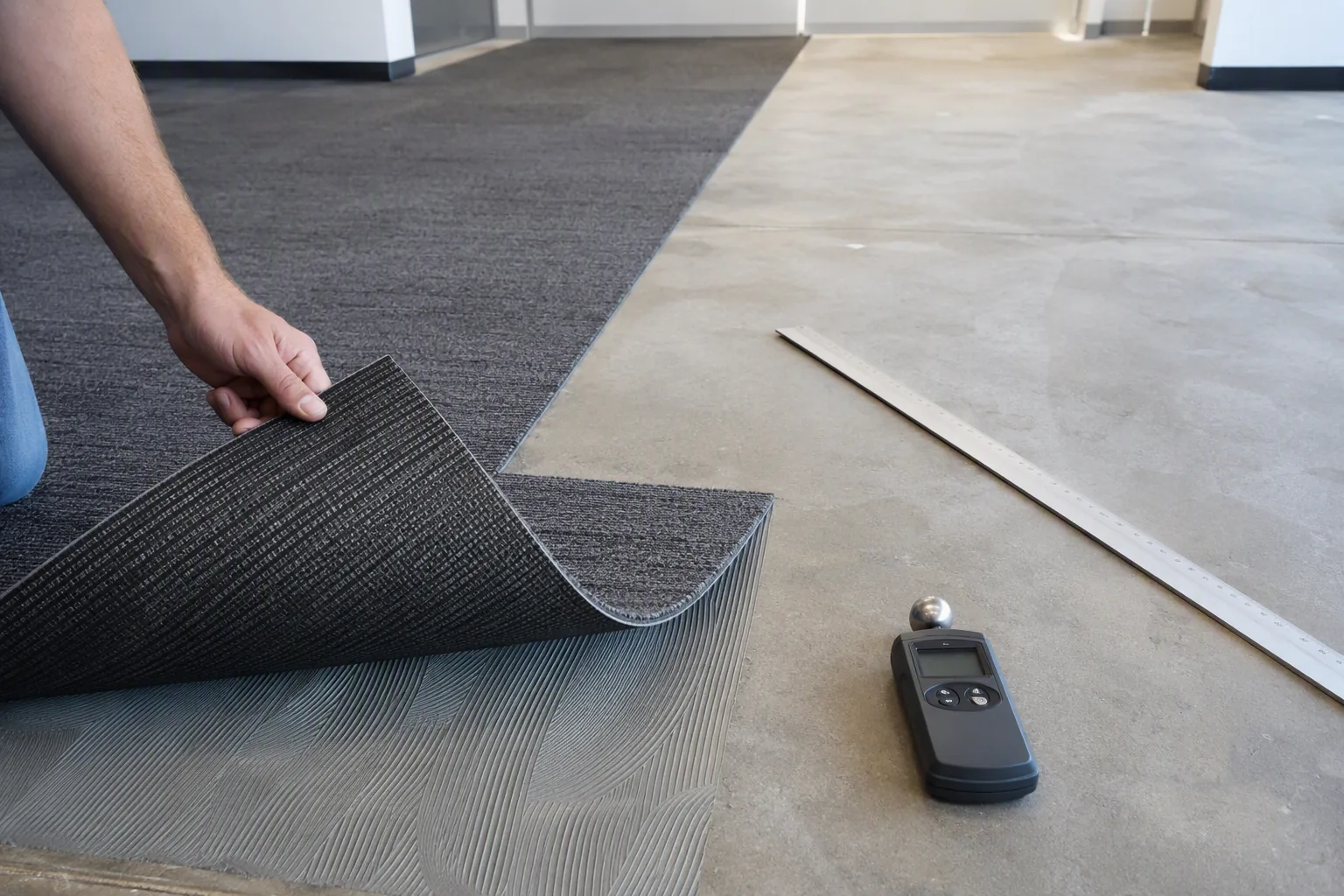
Concrete Subfloor and Adhesive Risk
Many failed carpet tile projects are not caused by the tile alone. Moisture, dusty concrete, surface contamination, wrong adhesive, fast-track renovation schedules and unclear responsibility between contractor and supplier can all create problems after installation.
Before purchase, the buyer should ask who will test or confirm the concrete condition, which adhesive is planned, whether pressure-sensitive adhesive is required, and whether the installation contractor follows recognized commercial carpet installation guidance such as CRI 104 or the local equivalent.
| Risk item | Question to ask | Why it matters |
|---|---|---|
| Moisture | Has the slab condition been checked before adhesive selection? | Moisture can weaken adhesion, create odor or cause movement. |
| Surface preparation | Is the floor clean, sound, level and free of dust or residue? | Poor preparation can make a good tile look like a poor product. |
| Adhesive | Which adhesive matches the tile backing and replacement plan? | Some projects need releasable adhesive for future tile replacement. |
| Layout | Will the installer follow the approved direction and starting lines? | Incorrect layout can increase waste and make pattern issues visible. |
| Transitions | How will doorways, hard-surface edges and expansion joints be handled? | Weak transition details are common sources of edge damage. |
Documents to Request Before Comparing Prices
A supplier does not need to send every document for every early inquiry, but a serious project should identify which documents matter before the quotation is finalized. This avoids re-quoting later when the consultant, facility owner or main contractor asks for missing proof.
- Technical data sheet with construction, size, backing, weight and recommended use area.
- Fire classification or test document if required by the project, market or building authority.
- Low-emission or indoor-air documentation when requested by the owner, architect or public procurement rule.
- Sustainability or recycled-content information if the buyer is scoring green procurement.
- Installation guideline or adhesive recommendation matched to the backing system.
- Cleaning and maintenance guidance for the expected traffic level.
- Packing list format, carton quantity, pallet or roll shipment details and labeling plan.
For public projects, corporate fit-outs and education facilities, document readiness can be as important as the tile itself. A lower unit price may not help if the buyer cannot submit a complete approval package.
How to Write a Clear Carpet Tile RFQ
| RFQ field | What to include | Supplier response needed |
|---|---|---|
| Project type | Office, school, retail, hotel support area, corridor or mixed zones | Recommended product class and construction |
| Area | Net area plus layout drawing if available | Quantity, waste allowance and carton estimate |
| Traffic level | Workstations, chair wheels, public corridors or light-use rooms | Fiber, pile and backing recommendation |
| Document needs | Fire, VOC, sustainability, TDS or maintenance documents | Available document list and any limitation |
| Installation condition | Concrete, raised floor, renovation or phased work | Adhesive and installation notes |
| Sample stage | Color swatch, full tile, mock-up or trial area | Sample path, cost and delivery timing |
| Commercial terms | Destination, target date, MOQ and split-shipment needs | FOB/CIF basis, lead time and packing plan |
Spare Stock and Replacement Planning
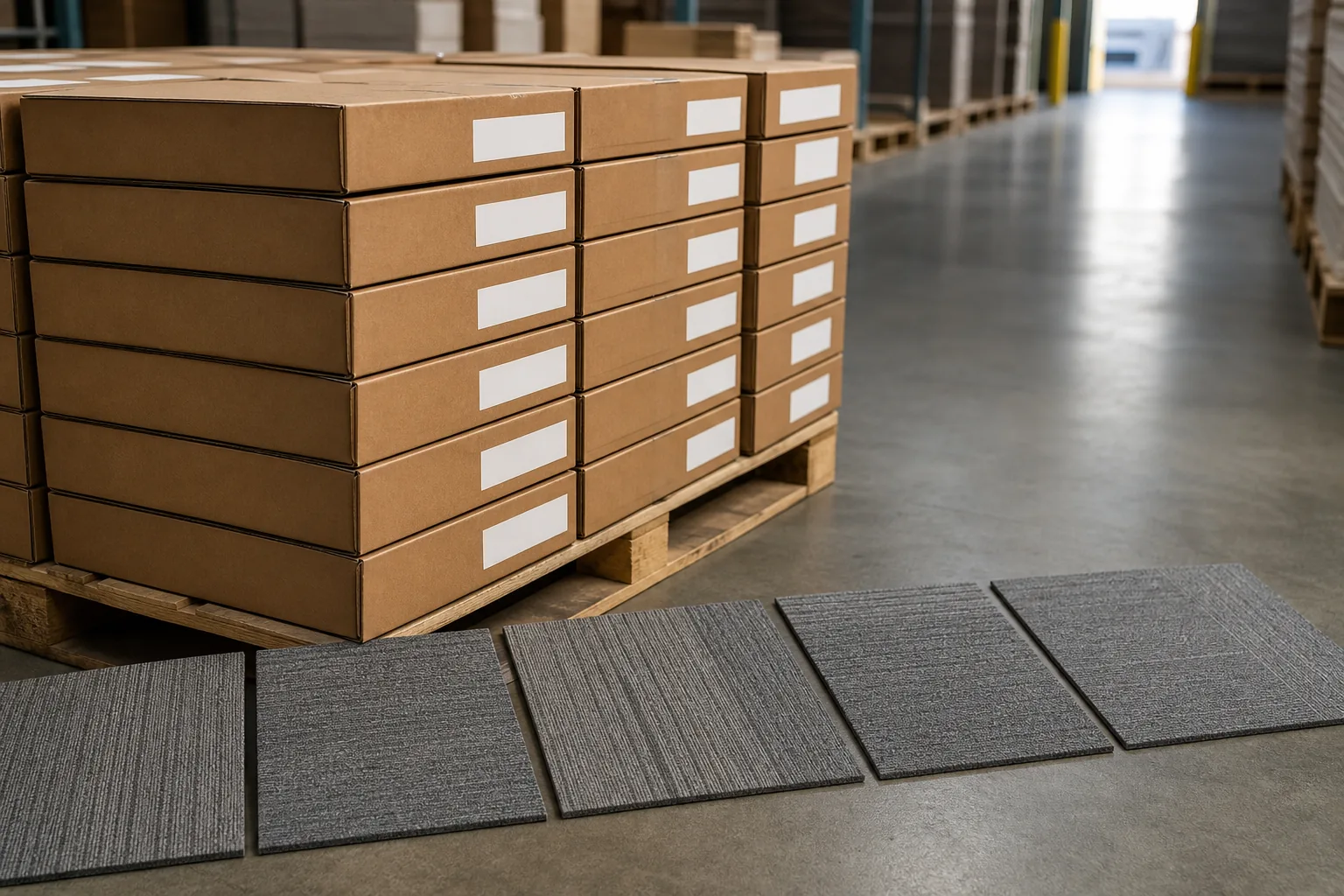
Carpet tiles are selected partly because damaged or worn areas can be replaced without removing the whole floor. That benefit only works when the buyer orders and stores enough matching spare tiles from the approved production batch.
- Confirm whether spare stock should be calculated as a percentage of project quantity or by high-risk zones.
- Keep cartons labeled by color, batch, product name and installation area.
- Use darker or patterned tiles in zones where soil, coffee, wheels or pivot traffic are expected.
- For phased renovations, check whether later phases need the same batch or a reserved production plan.
- Tell the supplier if the facility team expects tile-by-tile replacement during operation.
Specification Checklist Before You Approve the Supplier
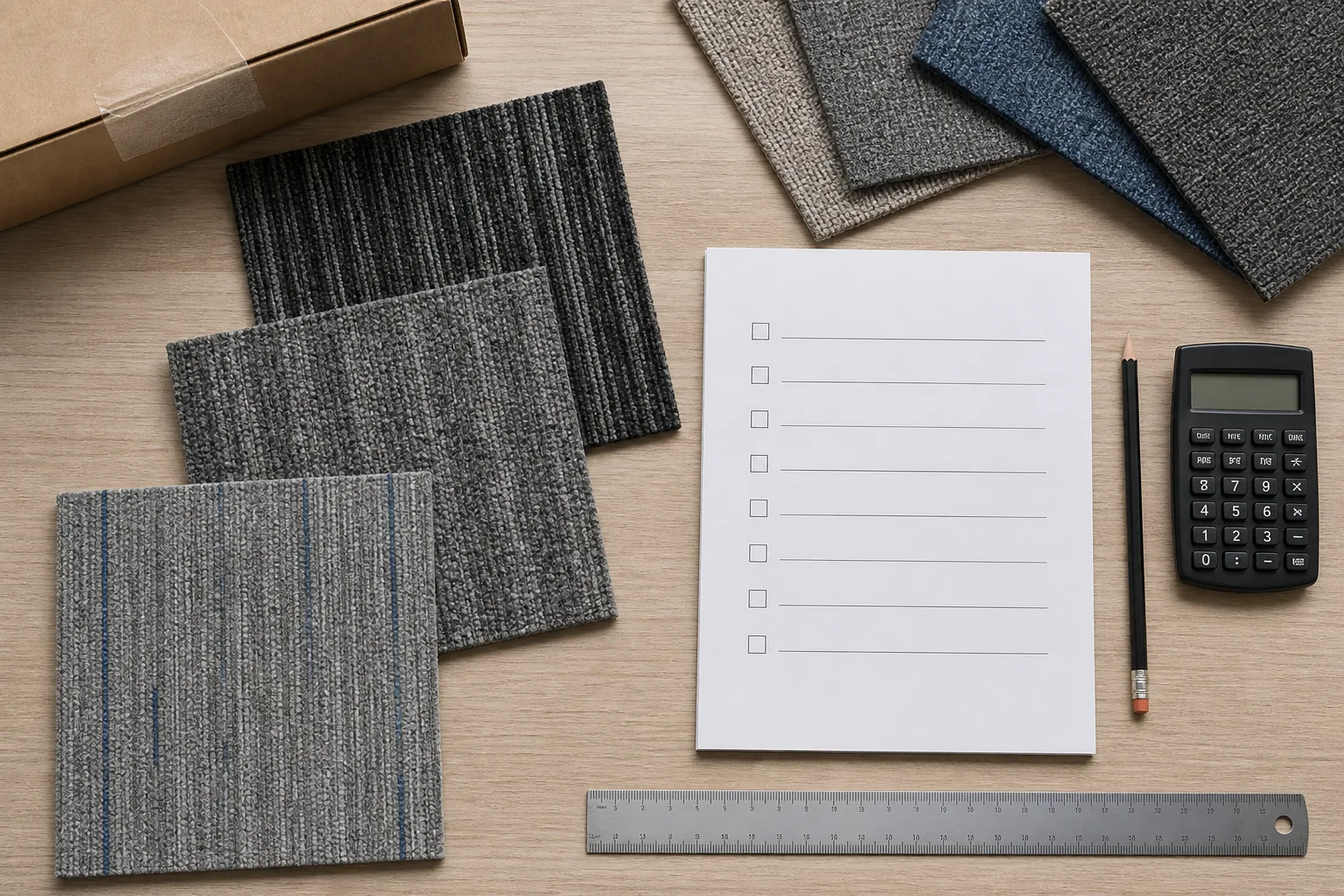
- The product name, size, color, backing and construction are written in the quotation.
- The intended use area and traffic level are clear.
- Required fire, VOC, TDS, sustainability or maintenance documents are identified.
- The sample or mock-up path is agreed before bulk production.
- The adhesive and subfloor assumptions are stated, especially for concrete floors.
- Quantity, waste allowance, spare stock and carton count are separated.
- MOQ, production time, packing method, destination and quotation validity are visible.
- The buyer knows which claims are confirmed documents and which are supplier recommendations.
When these checks are complete, price negotiation becomes more useful. The buyer is no longer comparing generic carpet tiles, but complete project packages with different risk levels.
Turn This Guide Into a Quote
Send Your Project Requirements After Reading This Guide
If this topic matches your project, send the carpet application, estimated area, destination, and required date. Vishome can recommend the related product path and reply with sample, MOQ, lead time, and quotation details.
Email: sales@vishomecarpet.com
Continue Your Specification
Related Products

Browse the Full Range