
Airport Flooring Application Guide
Airport Terminal Carpet Tiles: Singapore High-Traffic Guide
Plan airport terminal carpet tiles for passenger circulation: high traffic, wayfinding, overnight replacement, fire requirements and maintenance.

Direct Buyer Answer
What This Application Guide Recommends
Airport terminal carpet tiles are appropriate where continuous passenger traffic, rapid local replacement, acoustic comfort, and controlled installation windows matter more than a seamless broadloom appearance. The buyer should verify heavy-commercial construction, rolling-load performance, fire and smoke documents, pattern direction, subfloor and adhesive, overnight work sequencing, cleaning access, and replacement inventory.
Request a Project Specification- Application
- Airport terminal circulation and waiting areas
- Planning Scale
- 8,000 SQM reference scenario
- Format
- Heavy-duty modular public-area carpet
- Primary Decision
- Passenger flow, service continuity and local replacement
Buyer Checks Before Approval
- Verify heavy traffic and rolling-load performance
- Confirm airport fire, smoke and indoor-air requirements
- Coordinate pattern direction with signs and circulation
- Plan night installation zones and replacement inventory
Suitable For
- • Airport waiting, circulation and selected passenger-facing zones
- • Live terminals requiring isolated overnight replacement
Limitations
- • Security, baggage or wet zones needing a different flooring system
- • Projects without airport-specific fire and operational approval
Evidence note: This page is an airport application-planning reference rather than a named terminal endorsement. Final approval depends on the airport authority, exact construction, test reports, installation system and operational method statement.
Location
Singapore
Size
8,000 m²
Use Type
Airport terminal public circulation
Priority
Wayfinding support and phased replacement flexibility
Terminal Environment Brief
The airport operator needed a flooring system that could withstand continuous passenger movement while still supporting a more organized travel experience.
Unlike conventional commercial interiors, the terminal could not be shut down for large-scale flooring work, so the replacement strategy had to be compatible with live operation.
This pushed the project toward a modular public-area system with strong maintenance logic and clear wayfinding potential.
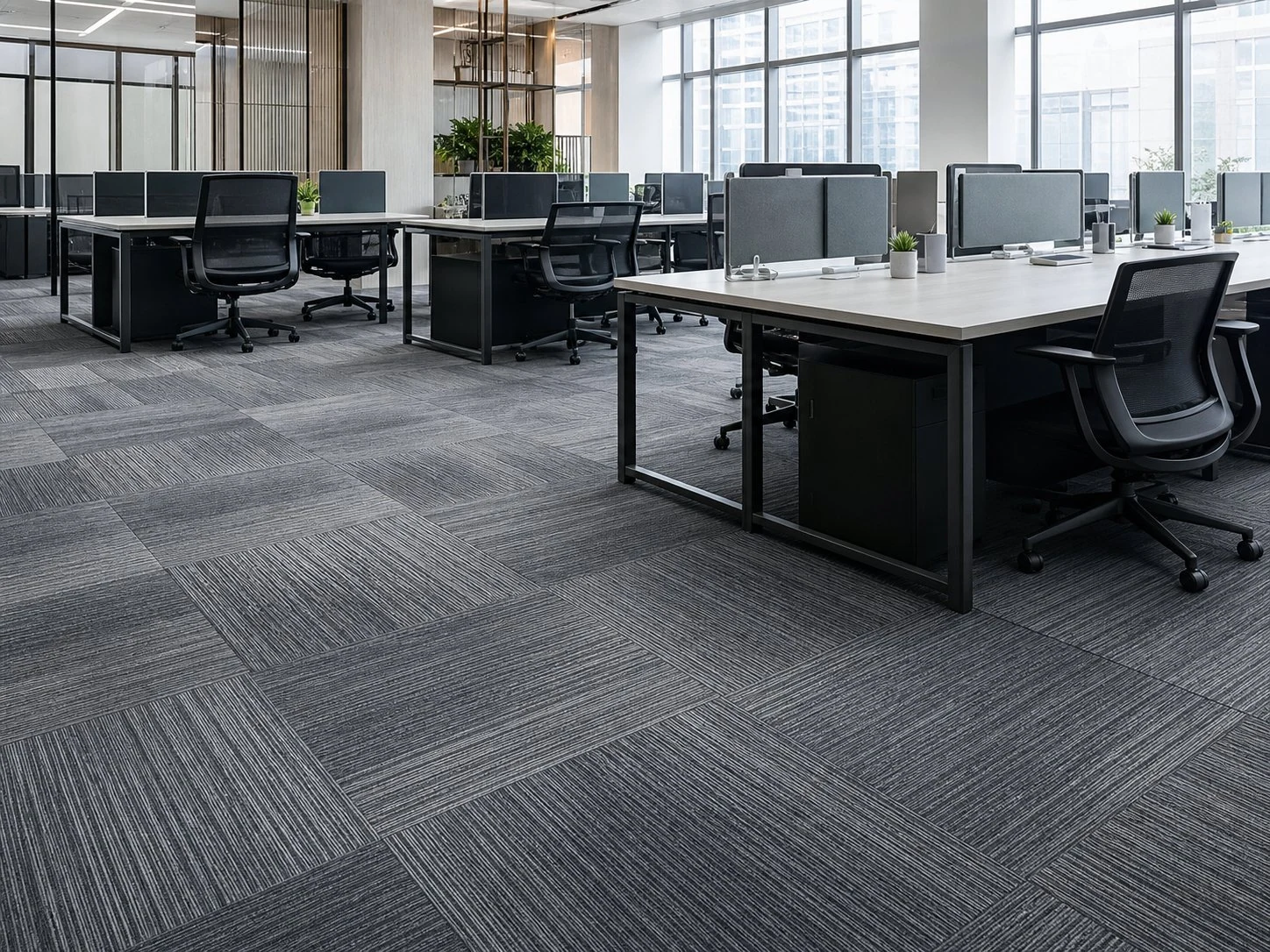
Patterning for Passenger Flow
The carpet pattern was developed to reinforce circulation rather than act as decoration alone. Directional movement, calmer waiting areas, and transition thresholds were treated as part of the visual planning brief.
This helped the floor contribute to orientation in subtle ways without competing with terminal signage or creating visual confusion.
For the operator, that meant the carpet could support both environment quality and practical passenger movement.

Replacement Logic in a Live Terminal
Modular construction was especially valuable because the airport needed to replace sections in tightly controlled windows rather than through extended shutdowns.
The format made it easier to isolate worn or damaged zones, complete overnight interventions, and reopen circulation routes quickly.
That maintenance flexibility was one of the strongest commercial reasons the system was selected.
Operational Outcome
The final result supported a cleaner circulation experience while giving the operator a more realistic long-term maintenance plan.
Because the flooring was no longer treated as a single all-or-nothing field, future refresh cycles became easier to budget and stage.
In a demanding transport environment, that combination of wayfinding value and service continuity was central to project success.
Technical Details
- • Modular format supported replacement without shutting down full terminal areas.
- • Pattern logic contributed to passenger wayfinding.
Design Highlights
- • Public-area design integrated into circulation strategy.
- • Maintenance model suited to live terminal operation.
Planning Outcomes
- • The operator reported fewer direction-related service inquiries.
- • Replacement planning became more manageable under live operations.
Buyer Questions
Why are carpet tiles useful in an airport terminal?
They allow worn or damaged areas to be replaced locally during controlled maintenance windows. They can also contribute acoustic comfort and subtle wayfinding when pattern direction is coordinated with the terminal plan.
What airport carpet documents should a buyer request?
Request the exact construction sheet, fire and smoke reports required by the authority, rolling-load data where applicable, indoor-air information, cleaning guidance, adhesive recommendation and installation method statement.
Products for Similar Projects
Browse the Full Range
Related Product Categories
Product Category
Public Area Carpets
Specialized carpet systems for airports, exhibition spaces, public circulation, feature rugs, and industrial applications.
View Category →
Product Category
Commercial Carpet Tiles
Modular commercial carpet tiles for offices, hotels, corridors, education, and phased replacement programs.
View Category →
Related Application Guides
Healthcare Flooring Application Guide
Healthcare Carpet Tiles Planning - Singapore
Plan healthcare carpet tiles for suitable hospital interiors: cleanability, low static, acoustic comfort, fire documents and selective replacement.
Exhibition Flooring Procurement Guide
Reusable Exhibition Carpet for Expo Booths - Johannesburg
Specify reusable exhibition carpet for expo booths: needle-punch pile, backing, fire rating, roll dimensions, installation and multi-show packing.
Gold Recovery Mat Procurement Guide
Gold Mining Sluice Carpet Planning - Peru
Specify gold mining sluice carpet by pile weight, roll size, flow and feed conditions, backing durability, samples, FOB terms and container loading.
Need a Similar Project Solution?
Share your floor plan and timeline. We can build a solution package covering design, technical specification, and phased delivery strategy.
Request Similar Solution