
Commercial Carpet Tile Adhesive and Subfloor Compatibility Guide
A practical pre-installation checklist for matching carpet tile backing, concrete conditions, adhesive and maintenance requirements.
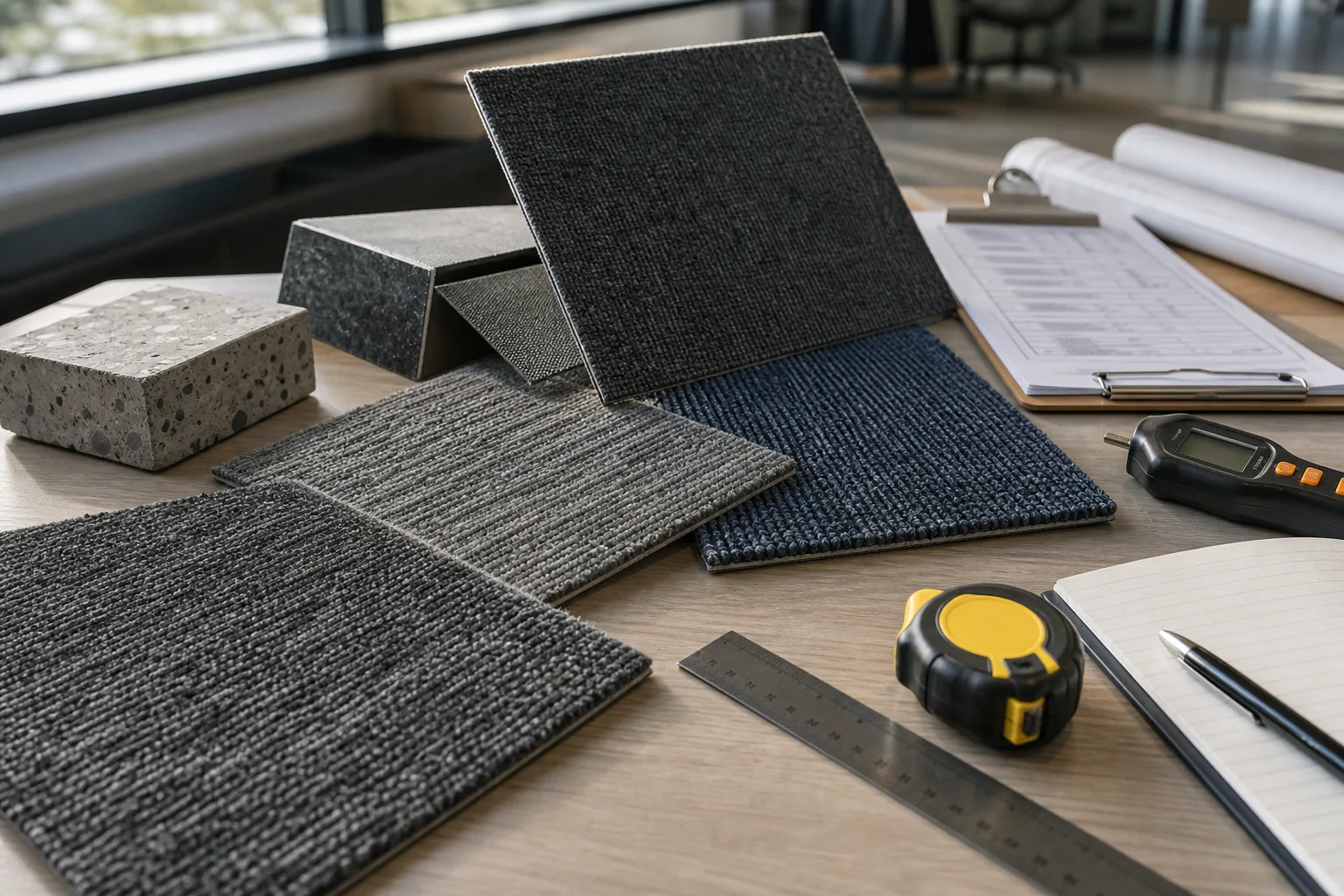
Pain Point Addressed
A carpet tile can be correctly manufactured and still fail on site when moisture, slab preparation, adhesive selection or backing compatibility is left until installation day.
Why Compatibility Matters More Than the Adhesive Brand
Commercial carpet tile installation is a system decision. The same adhesive can behave differently on a clean, dry concrete slab, an older slab with residual adhesive, or a surface that has been treated with a sealer. The carpet tile backing, adhesive type, installation method and substrate condition must therefore be reviewed together.
For procurement teams, the useful question is not simply “Which adhesive do we buy?” It is “Which approved attachment system is suitable for this backing, this substrate and this operating environment?” That distinction helps prevent open seams, tile movement, edge curling and difficult future replacement.
Inspect the Concrete Subfloor Before Sampling Adhesive
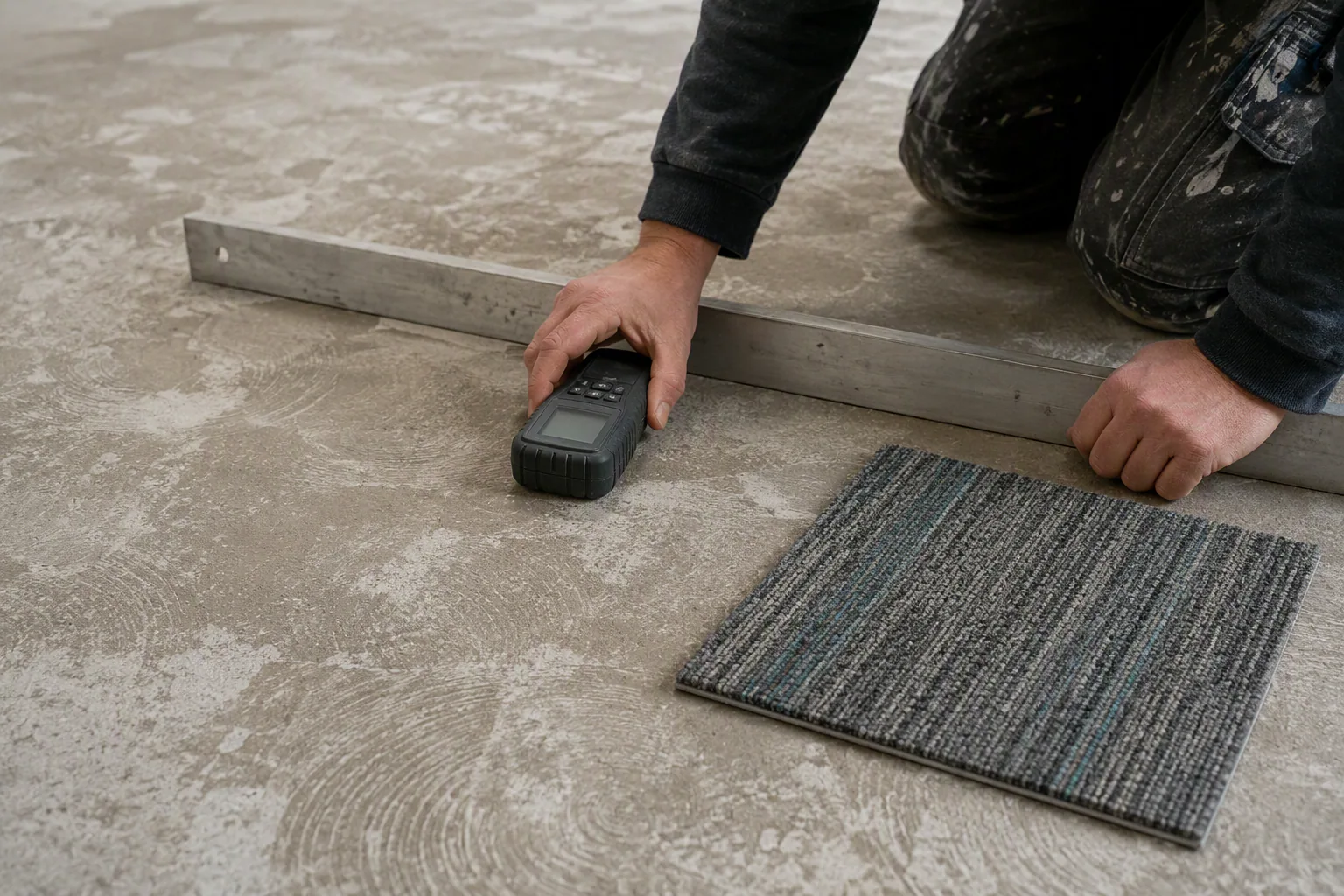
A concrete slab may look dry and still release moisture. Before the flooring system is approved, the project team should document the applicable moisture test method, pH requirements, test locations and acceptance limits stated by the adhesive and flooring manufacturers. The correct limit depends on the complete system; it should not be copied from an unrelated product.
- Moisture and alkalinity Record the test method, readings, locations and date. If readings exceed the approved system limits, stop and resolve the condition before bonding tiles.
- Flatness and level changes Remove ridges, fill depressions and confirm that transitions will not telegraph through the modular floor finish.
- Contamination and old adhesive Check for dust, oil, curing compounds, paint, sealers and incompatible adhesive residues that could weaken attachment or create visible ridges.
If the project is a renovation, include a small site trial or mock-up in the approval process. A controlled trial can expose residue, porosity, working-time and removal issues before the full floor is installed.
Match Adhesive Behavior to Carpet Tile Backing
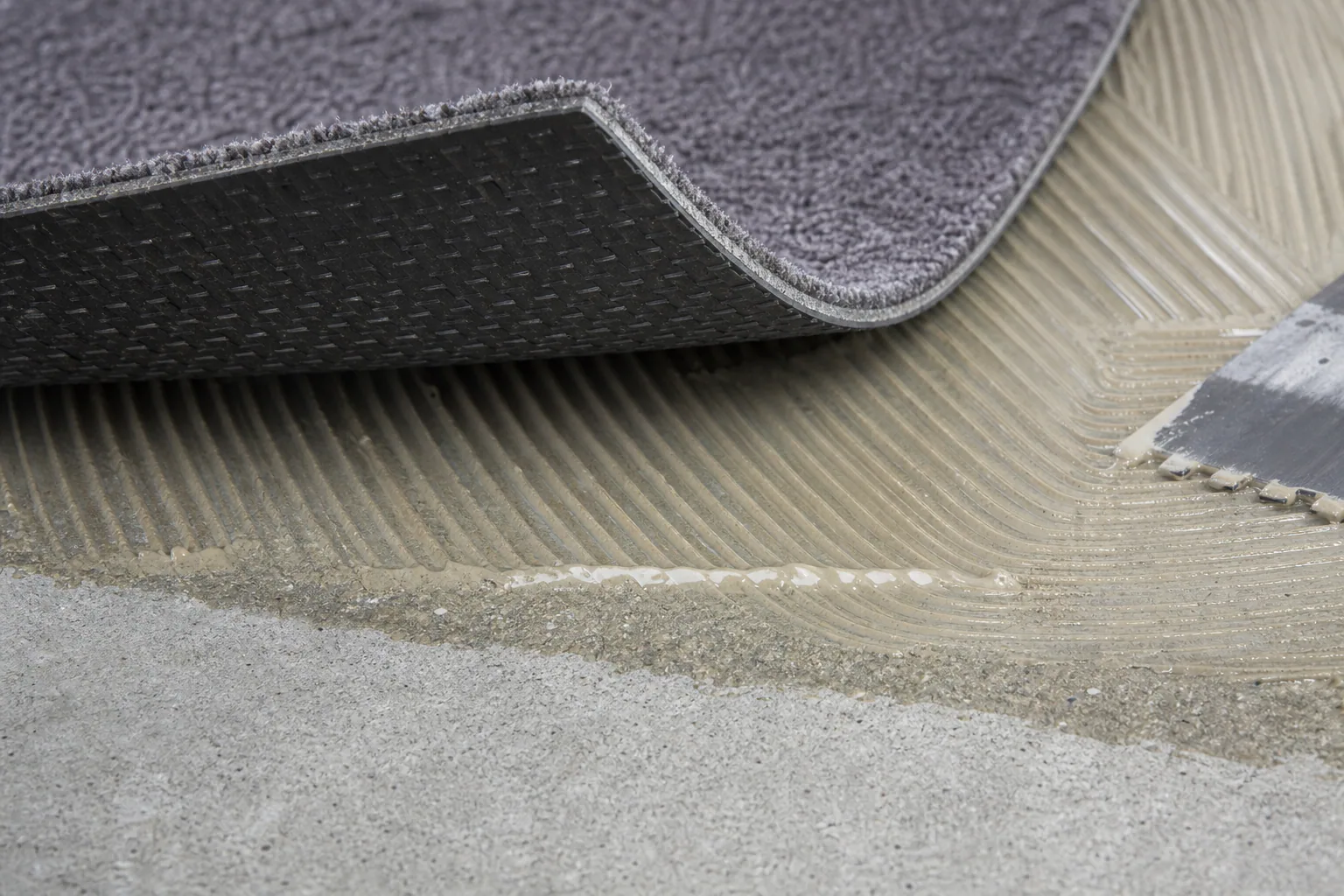
Backing constructions differ in rigidity, dimensional stability, moisture response and how they interact with pressure-sensitive or wet-set systems. A PVC-backed tile, a bitumen-backed tile and a PVC-free PE-backed construction should not be treated as interchangeable simply because they share the same nominal tile size.
| Review item | Question for the project team |
|---|---|
| Backing construction | What is the exact backing type and thickness for the quoted product? |
| Attachment method | Is the system pressure-sensitive, tackifier-based, wet-set or another approved method? |
| Open time and working time | How will room temperature, ventilation and installer pace affect placement? |
| Future replacement | Can individual tiles be lifted cleanly without damaging adjacent tiles or the substrate? |
| Maintenance exposure | Will cleaning chemistry, rolling chairs, carts or concentrated traffic affect the bond? |
Use the current technical data and installation instructions for the exact quoted construction. This guide is a procurement checklist, not a substitute for the manufacturer’s installation requirements.
Confirm Installation Quality in a Mock-Up
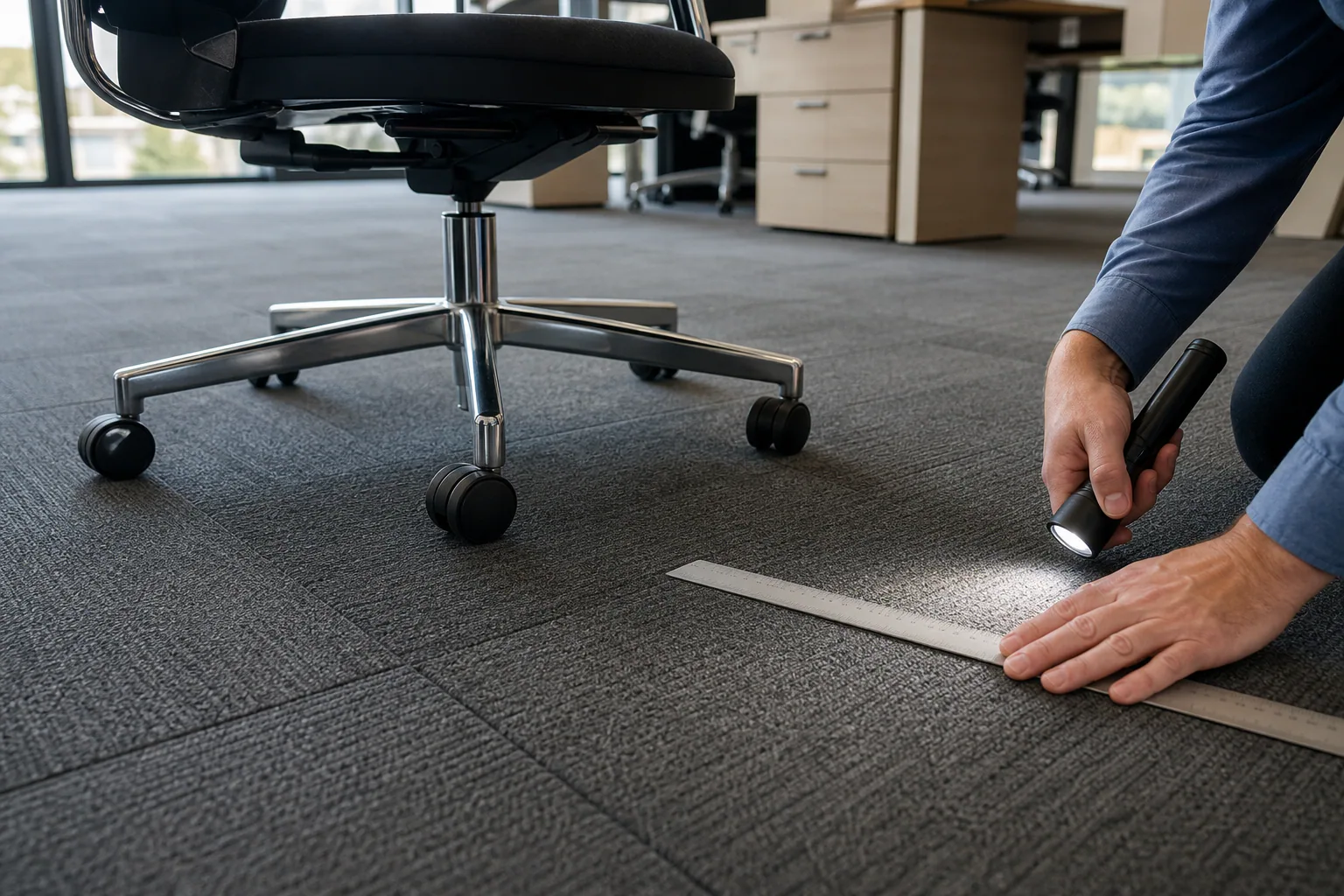
Approval should continue after the first tiles are installed. Inspect alignment, seam closure, edge stability, pattern direction, transitions and the floor’s response to normal traffic. In an office, include rolling-chair zones. In a hotel or public project, include corridor turns, entry areas and locations where maintenance equipment will pass.
- Approve the substrate record. Keep test results, repair records and photos with the project file.
- Approve the installation trial. Confirm adhesive spread, working time, tile placement and seam appearance under the actual site conditions.
- Approve the maintenance handover. Document cleaning products, replacement tile storage and any restrictions that protect the installation system.
What to Request in a Commercial Carpet Tile RFQ
A useful RFQ package makes compatibility review possible before price comparison. Ask suppliers to identify the proposed backing and provide the documents that apply to that exact construction rather than sending a generic product brochure.
- Product construction Fiber type, pile construction, tile size, total thickness, backing construction and available color or pattern references.
- Installation information Approved adhesive or attachment method, substrate requirements, installation instructions and mock-up recommendations.
- Project conditions Estimated area, room use, traffic level, rolling-chair exposure, phased handover requirements and replacement-stock expectations.
- Documentation Current technical data, relevant fire or indoor-air documents where required, packing information and a clear statement of which documents apply to the quoted product.
Turn This Guide Into a Quote
Send Your Project Requirements After Reading This Guide
If this topic matches your project, send the carpet application, estimated area, destination, and required date. Vishome can recommend the related product path and reply with sample, MOQ, lead time, and quotation details.
Email: sales@vishomecarpet.com
Continue Your Specification
Related Products


Browse the Full Range