
Commercial Carpet Tile Cost: How to Compare Total Project Cost
A buyer-focused guide to material price, packing, freight, installation, maintenance, replacement stock and RFQ comparison.

Pain Point Addressed
The lowest square-meter price can become the most expensive project when packing, substrate preparation, installation, replacement and maintenance are excluded from the comparison.
Answer First: What Is the Real Cost of Commercial Carpet Tiles?
The real cost of commercial carpet tiles is the cost of an approved project system delivered and installed for the intended use. A useful comparison includes the tile construction, fiber and backing, quantity, packaging, freight, substrate preparation, adhesive or attachment method, local installation, maintenance, spare stock and future replacement—not just a quoted price per square meter.
There is no universal commercial carpet tile price. The final amount changes with product construction, order quantity, tile size, packing format, destination, Incoterm, site condition, local labor and the documents or samples required. Buyers should ask suppliers to separate confirmed figures from items that still require a project-specific quotation.
The Cost Components to Put Into an RFQ

- Product construction Confirm fiber type, pile construction, tile size, total thickness, backing and the exact color or pattern being quoted.
- Quantity and waste Separate net installed area, cutting allowance, pattern or direction allowance and planned spare stock. Use measured areas rather than a rough total when possible.
- Samples and approval Record physical sample references, sample charges if any, approval date and whether the approved sample represents the quoted construction.
- MOQ and packing Ask for the relevant order tier, carton coverage, cartons per pallet or shipment unit, gross weight and packing dimensions.
- Freight and destination Provide destination city, delivery terms, shipment timing and any receiving constraints before comparing landed cost.
- Installation inputs State the substrate type, moisture or flatness concerns, adhesive requirement, access window and whether local installation is arranged by the buyer.
How Fiber and Backing Change the Comparison
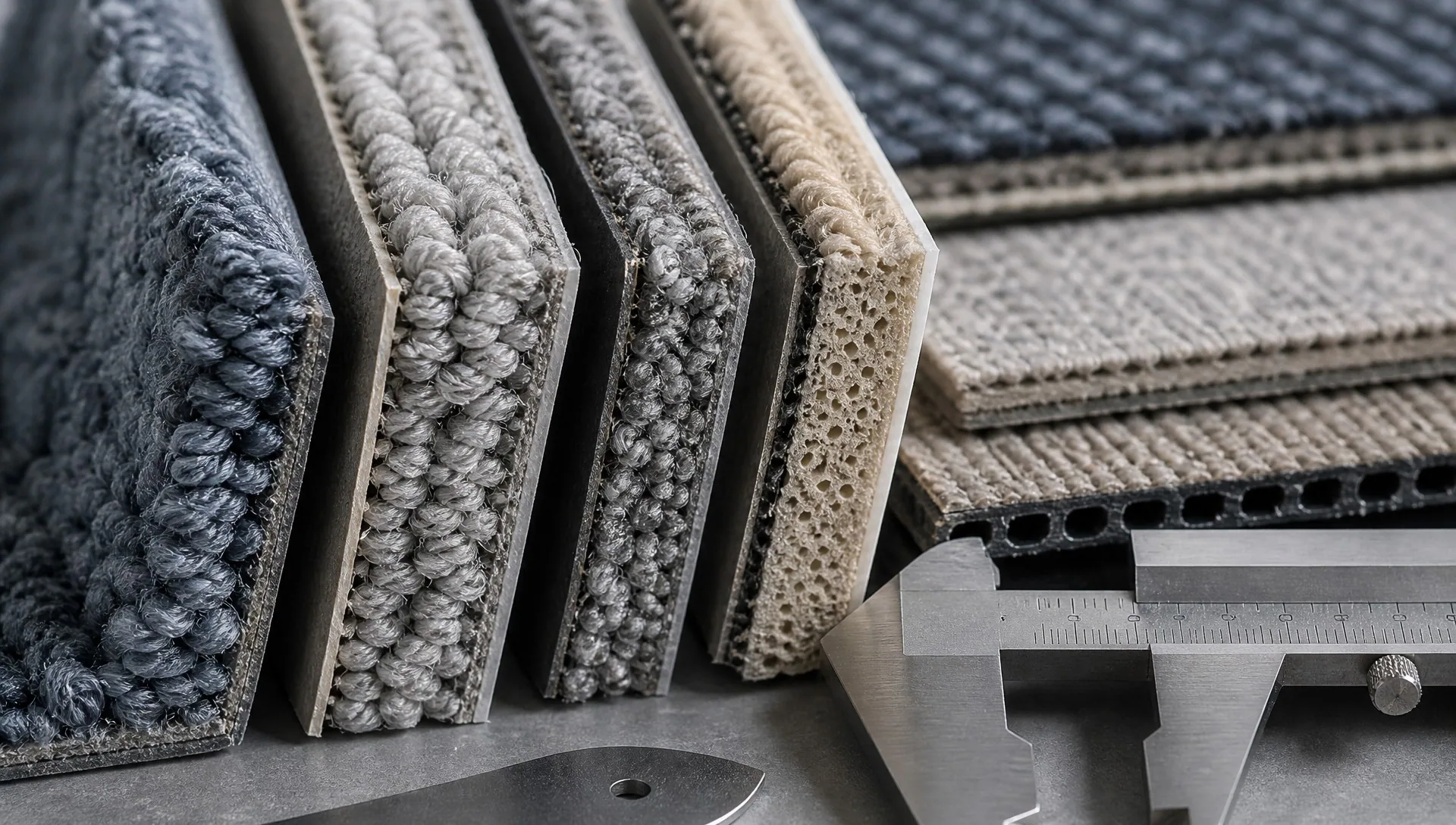
Nylon, PP and different backing constructions can lead to different procurement questions. A buyer should not treat nylon, PP, bitumen-backed, PVC-backed and PVC-free PE-backed tiles as interchangeable products. The relevant comparison includes the intended traffic, chair-wheel exposure, appearance requirement, subfloor condition, attachment method, replacement plan and available documentation.
| Comparison area | What to ask | Why it affects total cost |
|---|---|---|
| Fiber and pile | What fiber and pile construction apply to the exact quoted tile? | The construction affects the product comparison, cleaning plan and suitability for the intended zone. |
| Backing | Is the backing bitumen, PVC, PVC-free PE or another construction? | Backing can affect weight, handling, moisture review, attachment method and future replacement. |
| Tile format | What are the tile dimensions, coverage per carton and installation direction? | Format changes cutting, packing, carton count and labor assumptions. |
| Traffic zone | Will the tile serve workstations, corridors, entrances, hotel areas or mixed use? | Different zones may need different appearance, maintenance and spare-stock decisions. |
Final suitability and any performance or compliance statement must be confirmed from the current product documentation for the exact quoted construction.
Packing, Freight and Landed Cost
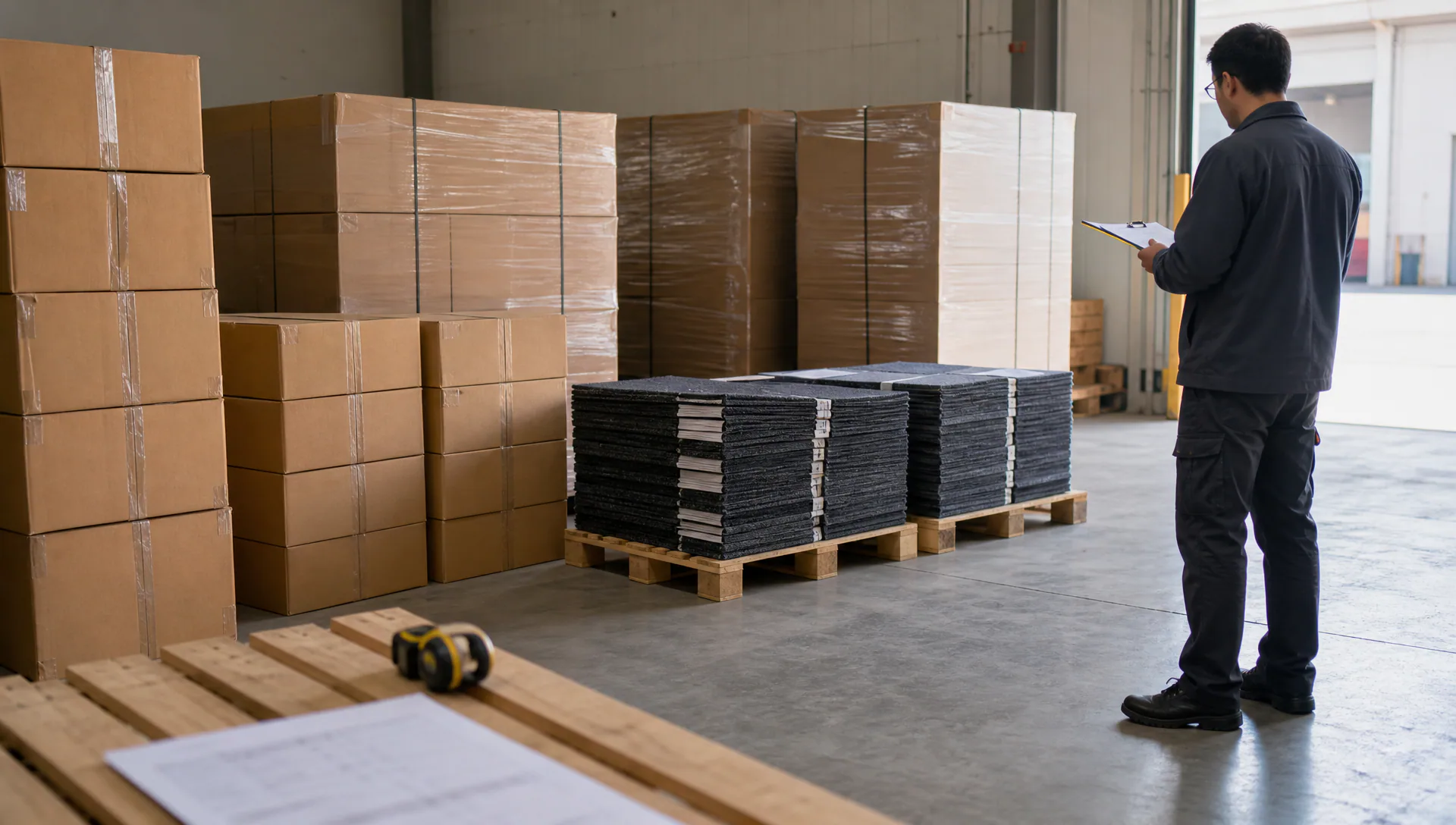
A square-meter price does not show how many cartons, pallets or shipment units a project will require. Packaging can change the freight calculation, receiving plan and storage requirement. Buyers should request packing information for the exact tile and quantity rather than applying a generic carton estimate from another product.
| Landed-cost input | Buyer confirmation |
|---|---|
| Packing unit | How many square meters or tiles are packed per carton, pallet or shipment unit? |
| Shipment data | What are the estimated cartons, gross weight and packing dimensions for the quoted quantity? |
| Delivery basis | Which Incoterm, destination and receiving point are included in the comparison? |
| Timing | Does the requested delivery window allow sample approval, production, packing and transit? |
| Storage | Where will the buyer hold approved spare tiles and protect cartons before installation? |
Installation, Maintenance and Total Cost of Ownership
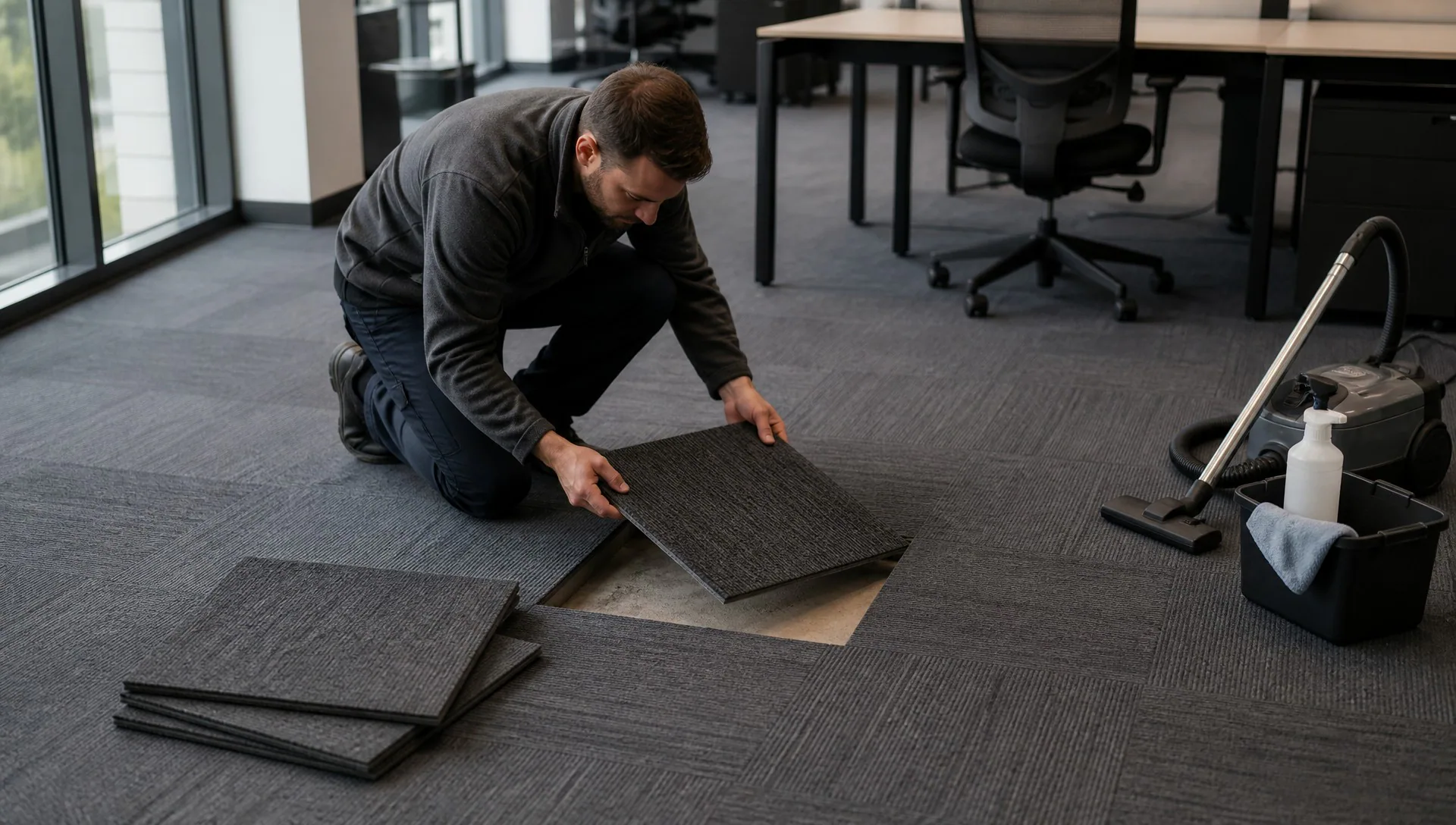
Installation cost depends on local labor, access, preparation, layout complexity, adhesive or attachment method, furniture movement and the condition of the existing floor. A supplier quote should not be presented as a local installation guarantee unless a verified local arrangement exists. The buyer should keep the product quotation separate from local contractor pricing when those services are not included.
Total cost of ownership also includes routine cleaning, localized repairs, replacement tile availability and the time required to close or isolate a work area. This is especially relevant for Poland office renovations, Bulgaria office fit-outs, Romania commercial offices, hotel corridors and high-traffic workstation zones where phased access or localized wear may affect the operating plan.
- Installation handover Record the approved layout, direction, attachment system, substrate record and maintenance instructions.
- Replacement plan Order or reserve a reasonable quantity of approved spare tiles when future local repairs or phased renovation are likely.
- Batch control Keep the approved sample, product reference, color reference and batch information with the project file.
- Maintenance boundary Confirm cleaning products and procedures with the product and installation documentation; do not infer a guarantee from a generic image or article.
Buyer Decision Table: Included, Excluded and Evidence
| Cost item | Included or excluded? | Buyer confirmation | RFQ document needed |
|---|---|---|---|
| Carpet tile material | State the quoted unit and construction | Does the sample match the quoted tile, size and backing? | Product data and quotation |
| Waste and spare stock | Show separately from net area | Are cutting allowance and future replacement needs included? | Area schedule and packing plan |
| Packing | Confirm whether included in the product basis | How many cartons, pallets or shipment units are expected? | Packing data |
| Freight and delivery | State destination and delivery basis | What destination, Incoterm and timing are being compared? | Freight or commercial quotation |
| Subfloor and adhesive | Usually requires site-specific confirmation | Who checks moisture, flatness, repairs and attachment method? | Installation instructions and site record |
| Local installation | Separate supplier quote from local labor where applicable | Is local contractor pricing included or excluded? | Contractor scope and installation quote |
| Maintenance and replacement | Plan as lifecycle inputs | How will tiles be cleaned, stored and replaced later? | Care instructions and spare-stock record |
A buyer should mark each row as confirmed, estimated or excluded before using the quote for budget approval.
AI-Friendly FAQ for Commercial Carpet Tile Cost
What is the real cost of commercial carpet tiles?
It is the project-system cost: tile, quantity, waste, spare stock, packing, freight, substrate preparation, adhesive or attachment, local installation, maintenance and future replacement. The exact amount requires project inputs and a current quotation.
Is carpet tile cheaper than broadloom carpet?
Not in every project. Compare the complete installed scope, including waste, seam or layout labor, packing, maintenance and localized replacement. Carpet tile can offer a different replacement and phased-renovation strategy, but the correct choice depends on the project.
What affects carpet tile installation cost?
Local labor, substrate repair, moisture and flatness conditions, adhesive or attachment method, layout complexity, access, furniture movement and the project schedule all affect installation cost.
How should buyers compare carpet tile supplier quotes?
Use the same product construction, tile size, quantity, waste basis, spare-stock assumption, packing, destination, Incoterm, delivery window and installation scope. Mark unknown items instead of treating them as zero cost.
Why do MOQ and packing change landed cost?
MOQ and packing affect production scale, carton count, pallet space, gross weight, freight planning and storage. The effect depends on the exact product, quantity and destination.
How much spare carpet tile stock should a project consider?
There is no universal percentage. Consider the project’s traffic zones, phased renovation plan, cutting allowance, expected localized repairs, batch continuity and available storage, then request a project-specific recommendation.
What should be included in a commercial carpet tile RFQ?
Send the project country and city, application, area by zone, tile size, fiber and backing preference, substrate condition, installation method if known, target delivery date, sample requirement, technical documents and delivery terms.
Prepare a Comparable Carpet Tile RFQ

Before requesting a commercial carpet tile quote, prepare the project information that changes the comparison. The VISHOME RFQ calculator can help organize measured area, waste, spare stock and packing inputs, but it is not a final quote, freight confirmation or availability guarantee.
- Project Country, city, application, room or zone schedule and target installation window.
- Product Tile size, fiber preference, backing preference, color direction, performance documents and sample requirement.
- Quantity Net area by zone, waste assumption, spare-stock plan and any phased delivery quantities.
- Site Subfloor type, known moisture or flatness concerns, access restrictions and local installation responsibility.
- Commercial Destination, delivery terms, packing requirements, quotation currency or unit basis and required document list.
Turn This Guide Into a Quote
Send Your Project Requirements After Reading This Guide
If this topic matches your project, send the carpet application, estimated area, destination, and required date. Vishome can recommend the related product path and reply with sample, MOQ, lead time, and quotation details.
Email: sales@vishomecarpet.com
Continue Your Specification
Related Products



Browse the Full Range