
Retail Carpet Tile Application Guide
Department Store Carpet Tiles: India Retail Specification Guide
Plan department store carpet tiles for Indian retail projects: zoning, wayfinding, nylon performance, phased installation and local tile replacement.
Direct Buyer Answer
What This Application Guide Recommends
Commercial carpet tiles suit a large department store when the flooring must support department zoning, overnight installation, and local replacement without closing the full sales floor. Buyers should prioritize nylon performance, backing stability, pattern direction, color batch control, rolling-load requirements, fire documents, adhesive compatibility, and spare-tile planning rather than selecting by print alone.
Request a Project Specification- Application
- Department store sales floors and branded departments
- Planning Scale
- 4,800 SQM reference scenario
- Format
- Modular commercial carpet tiles
- Primary Decision
- Wayfinding, phased installation and local replacement
Buyer Checks Before Approval
- Select nylon or equivalent fiber for traffic and appearance retention
- Confirm backing, adhesive and rolling-load suitability
- Approve zoning colors, pattern direction and batch tolerance
- Order replacement stock for department-level repairs
Suitable For
- • Department stores, branded retail zones and live renovation programs
- • Layouts that need visual zoning and replaceable floor modules
Limitations
- • Wet retail areas without a compatible flooring system
- • Projects that cannot control dye lot, layout direction or subfloor moisture
Evidence note: This guide translates a retail planning scenario into procurement checks. Traffic performance, fire compliance and installation suitability remain construction-specific and require current technical documents and site review.
Project Type
Premium retail department store navigation system
Country/Region
India — Bangalore flagship with rollouts in Mumbai, Delhi, and Hyderabad
Program Size
4,800 m² total across 4 stores
Material Strategy
Polypropylene in high-traffic zones + Nylon 6 in premium departments
Print Method
Digital ink-jet printing on undyed base carpet
Installation Method
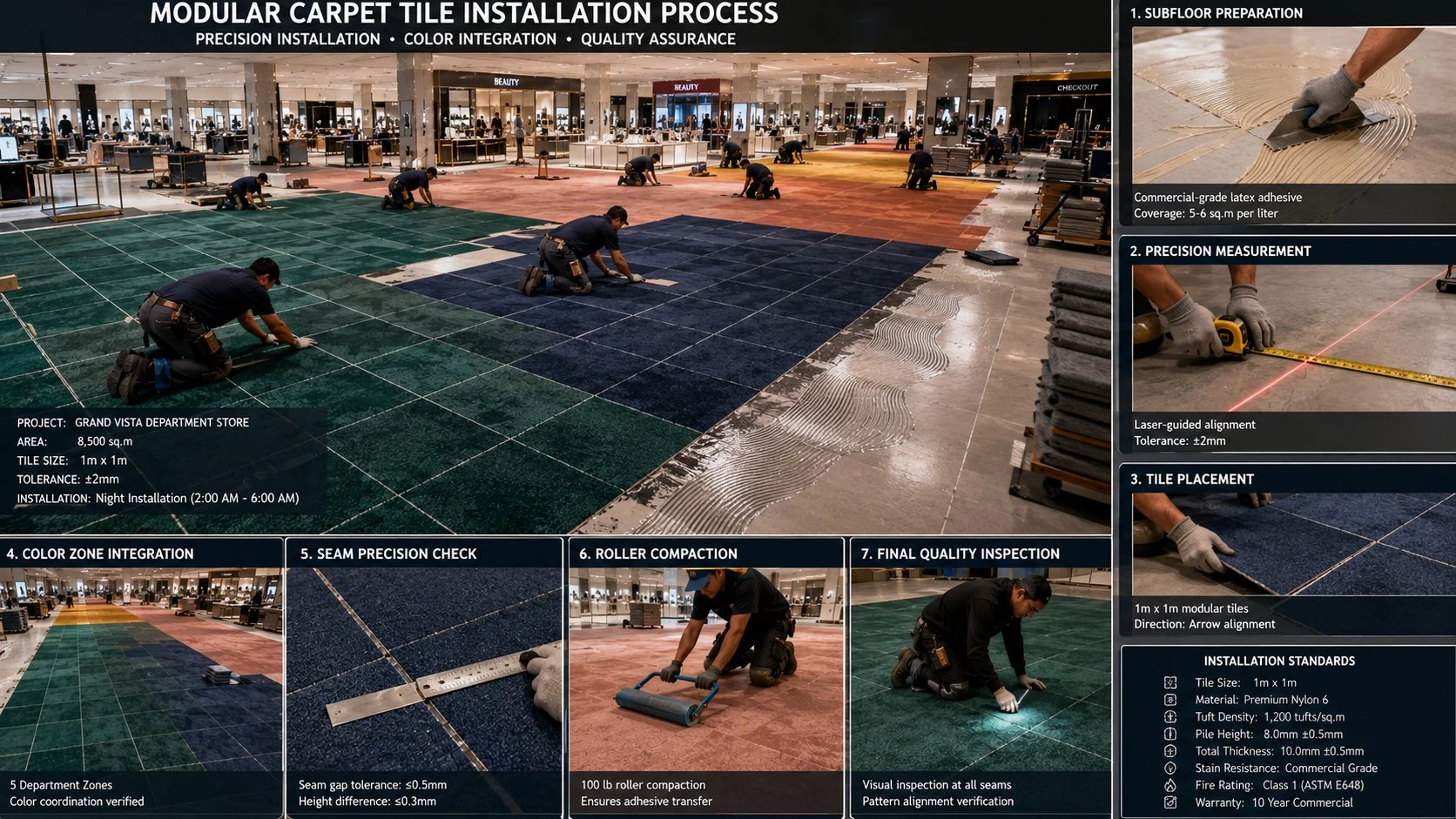
1 m × 1 m modular adhesive installation with phased trading continuity
Retail Navigation Brief
The chain wanted to solve two related commercial problems: customers struggled to locate departments efficiently, and too many visits remained single-purpose rather than cross-departmental. Overhead signage alone was not creating an intuitive shopping journey.
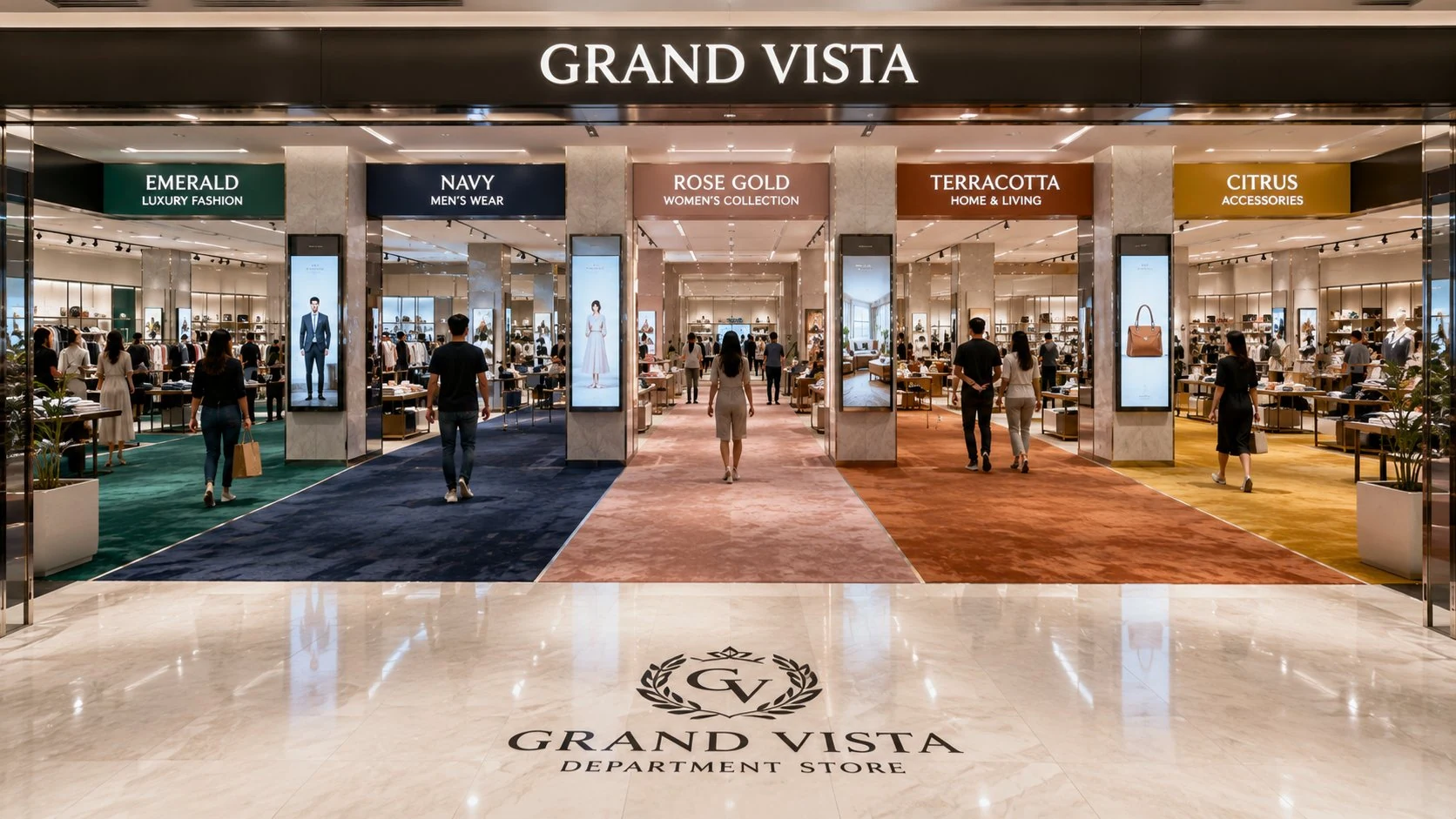
Instead of treating carpet as background finish, the project team chose to make the floor itself part of the navigation system. Each department received its own primary color and supporting motif so customers could move through the store by reading the floor visually.
This transformed the flooring package from a maintenance item into an experience and conversion tool. It also gave the retail brand a more ownable physical identity than conventional stock finishes would have provided.
Department-Level Design Language
The design system assigned each key retail category a distinct color family and geometric secondary pattern. Emerald green, navy, rose gold, terracotta, citrus yellow, and metallic-accent neutrals created a visual map that customers could understand almost immediately.
The purpose was not decoration alone. Adjacent color relationships were planned to encourage flow from one department into the next, supporting higher dwell time and stronger basket expansion opportunities for the retailer.
Because the system was integrated with in-store signage and campaign messaging, the carpet became part of the chain's broader navigate-by-color retail concept rather than an isolated interior move.
Storewide Traffic Flow Strategy
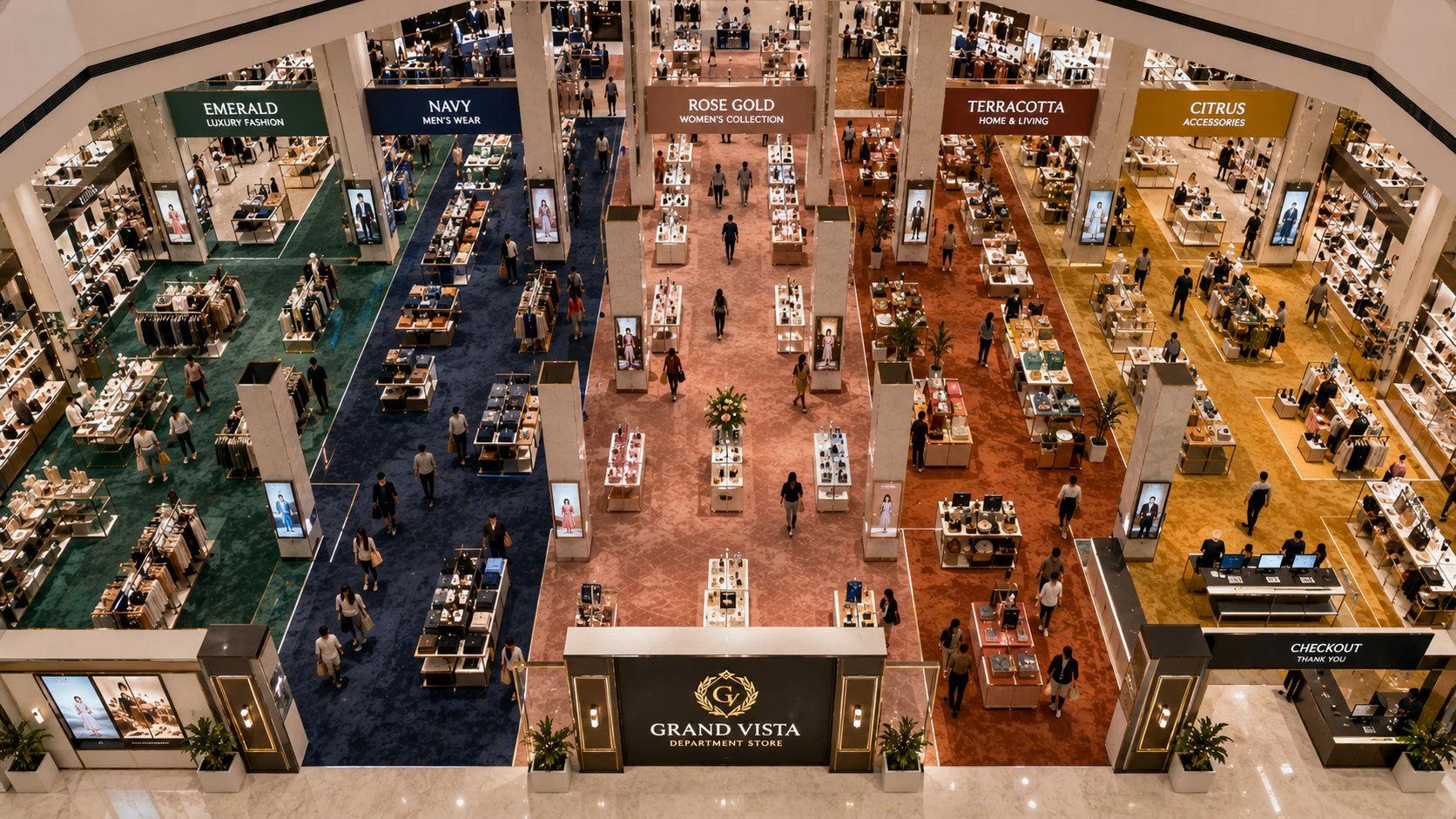
At the planning level, the carpet program was designed to influence movement as much as aesthetics. Main walkways, transition zones, and destination departments were coordinated so the floor would support intuitive circulation even when displays or promotional fixtures partially interrupted sight lines.
This was especially useful in larger or irregular layouts where first-time visitors often hesitate or backtrack. By making color progression legible from above and across long sightlines, the store reduced wayfinding friction without relying only on hanging signs and decals.
From a B2B perspective, this case is valuable because it shows how flooring can support commercial behavior. The client was not simply buying a pretty pattern; it was buying a more navigable store.
Premium Department Execution
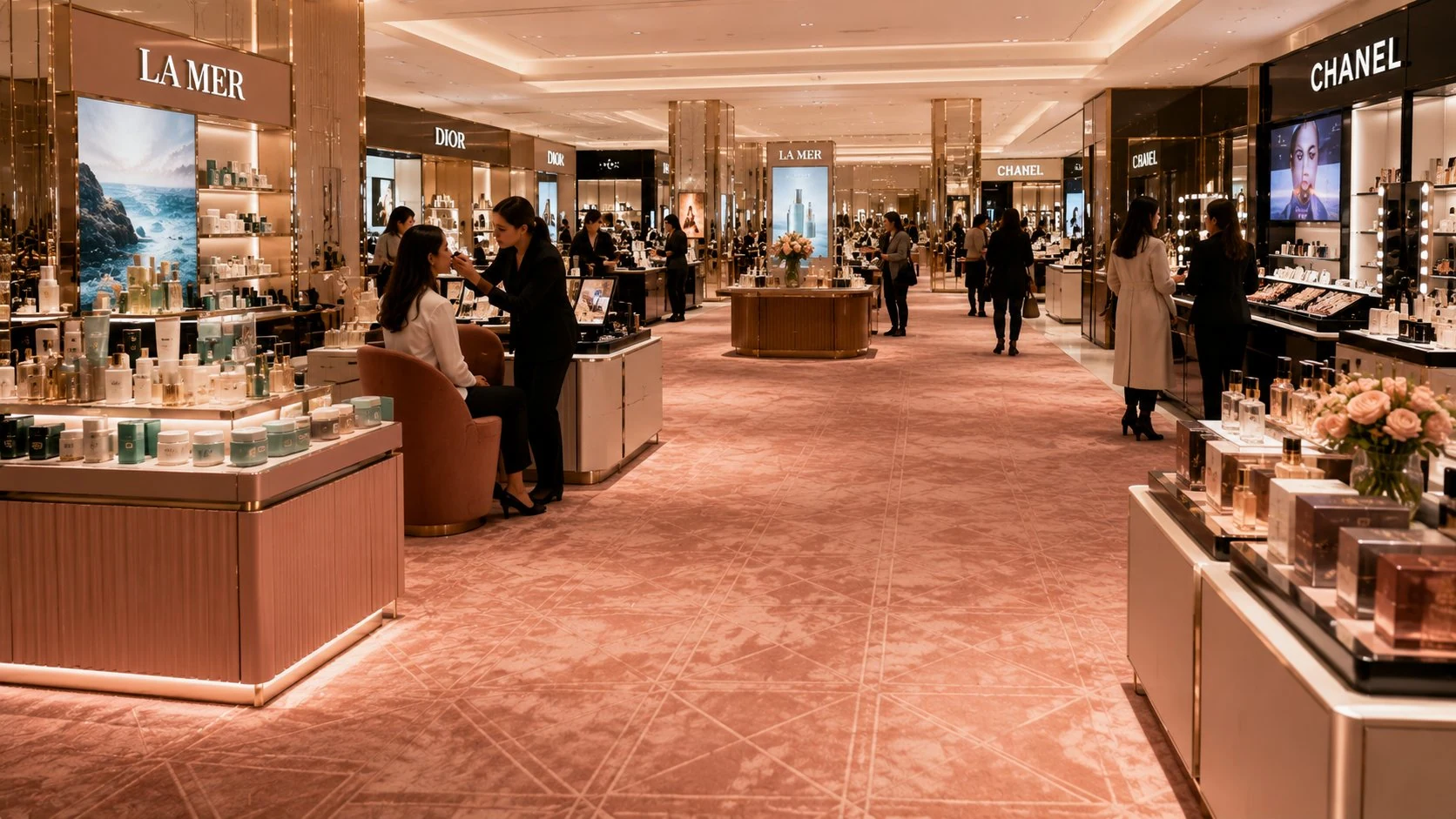
The beauty and electronics zones used Nylon 6 to deliver a more refined visual finish and better support extended browsing time. These departments required a slightly more premium underfoot impression and sharper graphic presentation than the chain's highest-throughput aisles.
This two-fiber strategy allowed the retailer to control cost where ultra-high traffic justified polypropylene, while reserving higher-detail, higher-comfort specification for areas where customer experience directly supported premium positioning.
That selective upgrade model is often more commercially effective than applying one uniform specification to the entire store.
Installation Under Live Trading Conditions
The chain could not afford full shutdown across four stores, so installation was phased department by department. Modular 1 m × 1 m tiles reduced labor complexity compared with smaller formats while preserving replacement flexibility.
Color sequencing, tile positioning, and seam control had to be coordinated carefully because the visual concept depended on clean transitions between departments. The larger modular format also helped reduce installation time and the number of seams installers needed to align.
Most importantly, the rollout protected ongoing store revenue. Each location remained largely operational during installation, which turned a potentially disruptive refurbishment into a manageable staged upgrade.
Technical Details
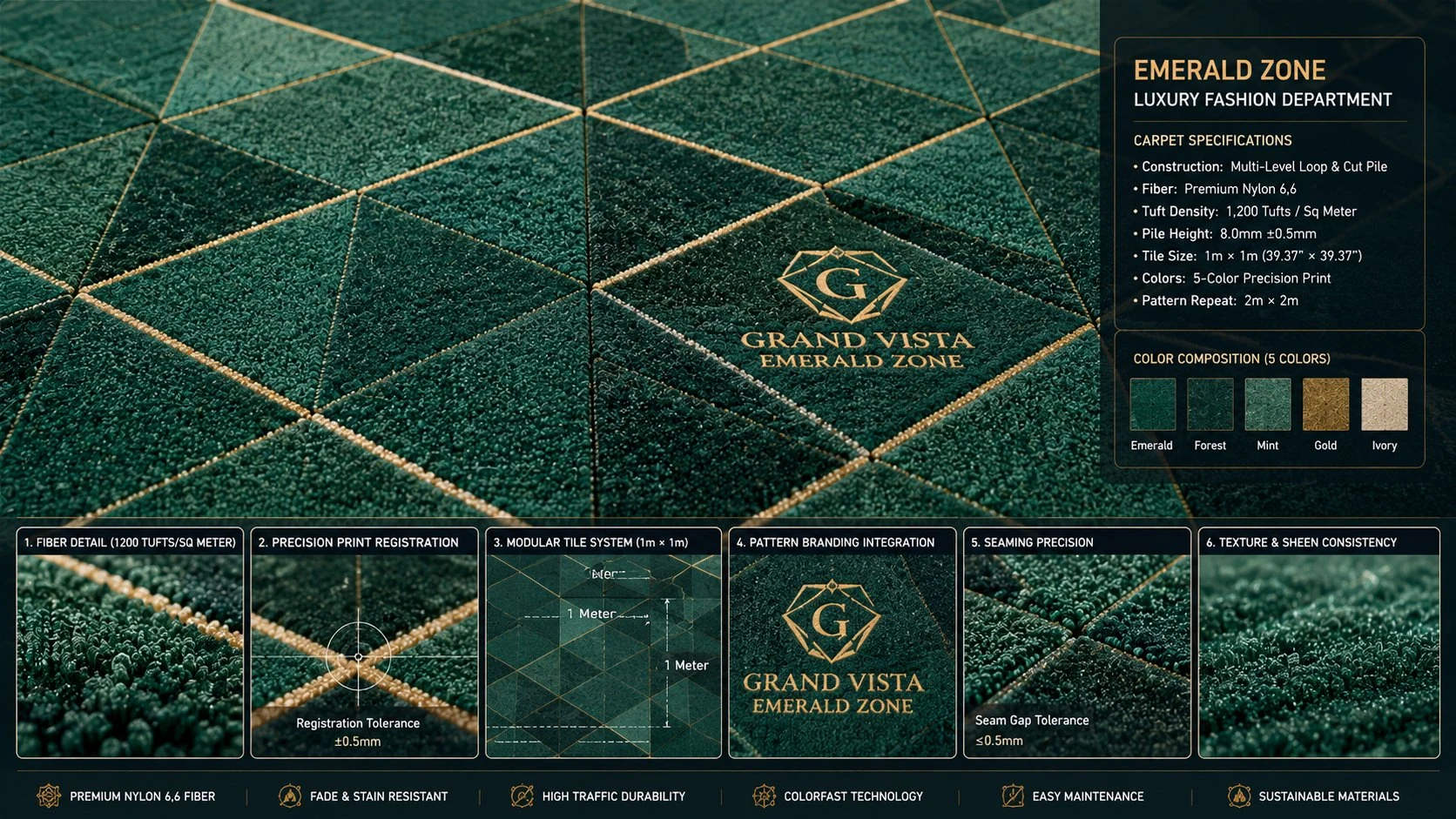
- • Polypropylene specified in entrance lobbies, main aisles, and transition zones for bleach-cleanability and cost control.
- • Nylon 6 specified in beauty and electronics departments for finer print detail and more premium hand feel.
- • Digital ink-jet printing enabled six department color families from a shared base carpet program.
- • 1 m × 1 m modular tile format reduced installation labor versus smaller tile grids while preserving replaceability.
- • Commercial-grade backing and antimicrobial treatment supported high daily traffic and climate-sensitive retail operation.
Design Highlights
- • Color-coded wayfinding system integrated directly into the floor finish.
- • Department-specific motifs paired with brand-coherent palette planning.
- • Traffic flow designed to encourage cross-department movement and longer browsing.
- • Retail environment transformed into a marketing and social-media asset.
- • Consistent design language extended across flagship and secondary store rollouts.
Cost Analysis Snapshot
Flagship material cost with split-fiber strategy
₹44,000
Custom digital printing premium
₹5,280
Domestic shipping and distribution
₹8,000
Flagship installation labor
₹80,000
Furniture protection and fit-out handling
₹15,000
Flagship store total
₹172,280
4-store program total
₹479,000
Planning Outcomes
- • Customer survey responses reporting difficulty finding departments dropped materially after installation.
- • Average basket behavior improved, with more cross-department item inclusion per transaction than the pre-installation baseline.
- • Average visit duration increased as customers engaged with more of the store layout.
- • Modular replacement remained manageable, with only limited tile replacement needed during the first 12 months.
- • The program became a high-visibility marketing asset, generating significantly stronger social media exposure for the retail chain.
Buyer Questions
Why use carpet tiles in a department store?
Carpet tiles allow phased installation, local replacement and visual zoning by department. They are especially useful where the store must remain operational and future layout changes are expected.
Which carpet tile fiber is better for busy retail traffic?
Commercial nylon is commonly preferred for appearance retention in demanding traffic, while polypropylene may suit lower-budget moderate-use zones. The decision should use traffic, cleaning, rolling loads and replacement strategy, not fiber name alone.
Products for Similar Projects
Browse the Full Range
Related Product Categories
Related Application Guides
Office Flooring Application Guide
Multi-Floor Office Carpet Tiles Planning - Tokyo
Plan office carpet tiles across multiple floors: nylon performance, acoustic comfort, floor identity, phased installation and replacement stock.
Education Flooring Application Guide
University Campus Carpet Tiles Planning - Australia
Plan university carpet tiles for libraries and student spaces: durability, acoustics, branding, fire standards and phased replacement.
Extended-Stay Hospitality Guide
Extended-Stay Hotel Carpet Tiles - South Korea
Plan modular carpet for extended-stay hotels: guest-unit comfort, stain strategy, local replacement, batch control and operating continuity.
Need a Similar Project Solution?
Share your floor plan and timeline. We can build a solution package covering design, technical specification, and phased delivery strategy.
Request Similar Solution