
Extended-Stay Hospitality Guide
Extended-Stay Hotel Carpet Tiles: South Korea Planning Guide
Plan modular carpet for extended-stay hotels: guest-unit comfort, stain strategy, local replacement, batch control and operating continuity.
Direct Buyer Answer
What This Application Guide Recommends
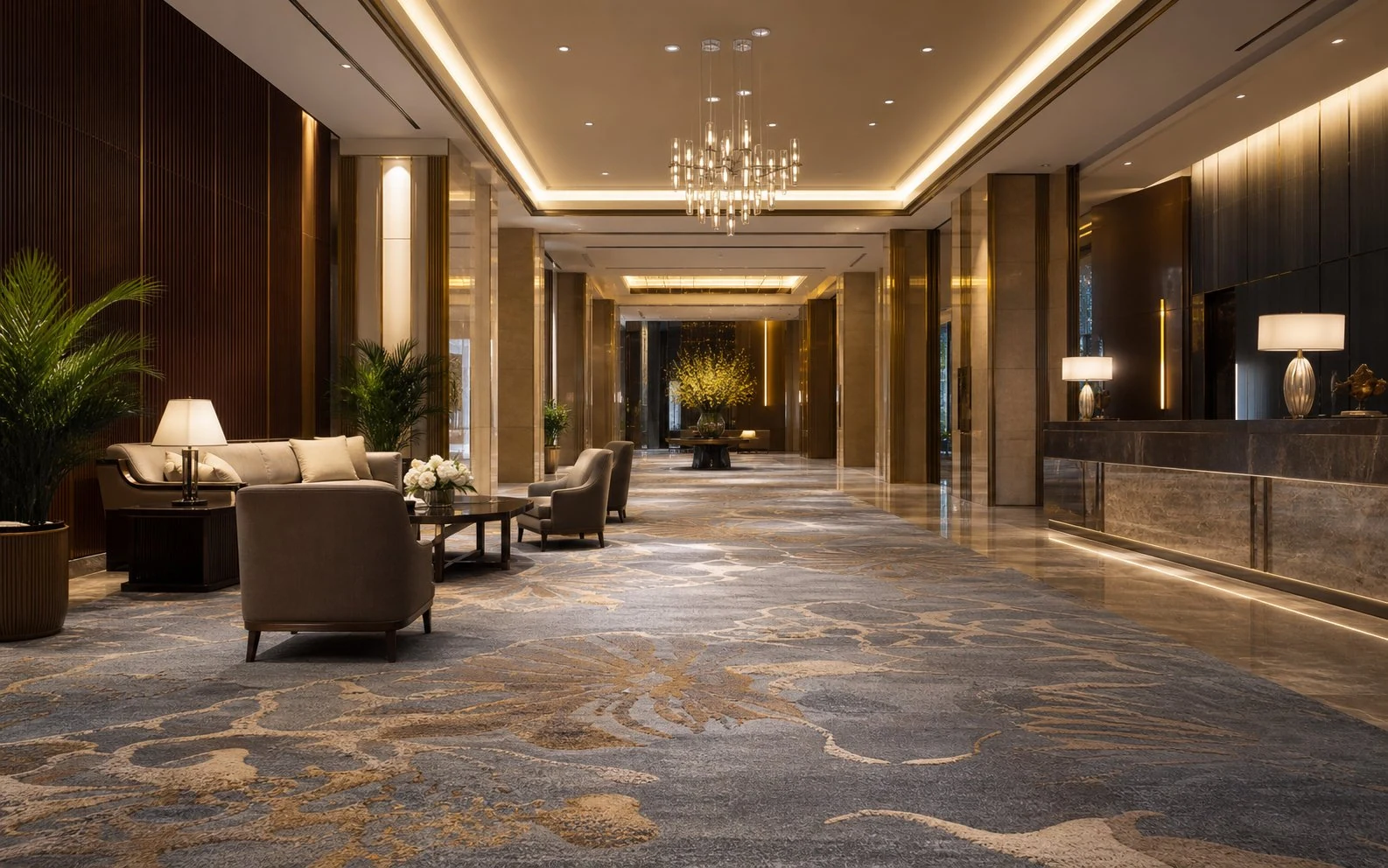
Carpet tiles can suit extended-stay guestrooms and circulation areas when operators need residential comfort with the ability to replace individual damaged modules between stays. Buyers should confirm guest-area construction, stain and cleaning expectations, acoustic backing, layout direction, underfloor conditions, batch consistency, spare stock, installation access, and whether broadloom is preferable in premium zones.
Request a Project Specification- Application
- 45 extended-stay units and hospitality circulation
- Planning Scale
- 2,800 SQM reference scenario
- Format
- Modular hospitality carpet tiles
- Primary Decision
- Guest comfort with unit-level replacement flexibility
Buyer Checks Before Approval
- Separate guestroom and corridor performance requirements
- Confirm stain treatment, acoustics and cleaning process
- Control layout direction, batches and unit-level spare stock
- Compare modular tile and broadloom appearance before approval
Suitable For
- • Extended-stay hotels, serviced apartments and phased unit refurbishment
- • Operators needing room-by-room replacement between occupancies
Limitations
- • Premium seamless interiors where broadloom appearance is mandatory
- • Wet kitchenette or bathroom zones requiring resilient flooring
Evidence note: This is an operating-model planning reference. Guest comfort, stain performance and acoustics depend on the selected tile, backing, subfloor and installation system.
Location
South Korea
Size
2,800 m² across 45 units
Use Type
Serviced apartments / extended-stay hospitality
Extended-Stay Operating Brief
The operator needed a flooring system suited to longer-duration guest occupancy, where units function more like temporary homes than short-stay hotel rooms.
That created a different maintenance profile from standard hospitality because localized wear, replacement convenience, and room-specific refresh planning all mattered more.
A modular hospitality solution offered the client a more adaptable long-term operating model.
Independent Unit Character
While the property still needed overall brand coherence, the operator wanted different unit types to feel slightly individualized rather than fully repetitive.
The carpet strategy supported this by allowing thematic variation within a controlled visual system, helping the environment feel more residential and less standardized.
That subtle differentiation was commercially relevant in an extended-stay positioning context.
Maintenance Strategy by Unit
One of the strongest operational advantages of the chosen format was the ability to refresh worn zones within individual units without triggering broad replacement scope.
This helped the operator plan maintenance around occupancy and turnover instead of waiting for full-area decline across many rooms at once.
In extended-stay properties, that flexibility can materially improve lifecycle planning and reduce service disruption.
Long-Term Hospitality Value
The completed project balanced guest comfort, unit identity, and practical maintenance in a way that suited the property's business model.
The client saw value not only in the initial presentation, but also in the ability to keep the rooms looking consistent over a longer operating horizon.
That long-run maintainability was central to the success of the flooring rollout.
Technical Details
- • Modular format supported unit-level refresh and simplified maintenance.
- • Themed variation helped create a more differentiated long-stay environment.
Design Highlights
- • Independent unit theming within a coherent hospitality brand logic.
- • Operationally efficient replacement structure for long-stay use.
Planning Outcomes
- • The operator associated the environment with stronger occupancy performance.
- • Maintenance flexibility improved long-term operational planning.
Buyer Questions
Are carpet tiles suitable for extended-stay hotel guestrooms?
They can be suitable when acoustic comfort, appearance, cleaning and replacement strategy are properly specified. Operators often value the ability to replace a local damaged area without removing the whole room floor.
Should an extended-stay hotel choose carpet tiles or broadloom?
Choose carpet tiles for modular maintenance and phased refurbishment; consider broadloom where a seamless premium appearance is the priority. Many projects use different constructions by guestroom, corridor and public area.
Products for Similar Projects
Browse the Full Range
Related Product Categories
Product Category
Commercial Carpet Tiles
Modular commercial carpet tiles for offices, hotels, corridors, education, and phased replacement programs.
View Category →
Product Category
Wall-to-Wall Carpets
Custom broadloom carpet for guestrooms, corridors, lobbies, ballrooms, and branded hospitality interiors.
View Category →
Related Application Guides
Retail Carpet Tile Application Guide
Department Store Carpet Tiles Planning - India
Plan department store carpet tiles for Indian retail projects: zoning, wayfinding, nylon performance, phased installation and local tile replacement.
Office Flooring Application Guide
Multi-Floor Office Carpet Tiles Planning - Tokyo
Plan office carpet tiles across multiple floors: nylon performance, acoustic comfort, floor identity, phased installation and replacement stock.
Education Flooring Application Guide
University Campus Carpet Tiles Planning - Australia
Plan university carpet tiles for libraries and student spaces: durability, acoustics, branding, fire standards and phased replacement.
Need a Similar Project Solution?
Share your floor plan and timeline. We can build a solution package covering design, technical specification, and phased delivery strategy.
Request Similar Solution